Japan has unveiled two advanced RIKEN supercomputers powered by NVIDIA GB200 NVL4 systems and Quantum-X800 InfiniBand networking. These platforms, scheduled to go online in 2026, are designed to accelerate research in AI, quantum computing, life sciences, climate forecasting, and manufacturing innovation. The effort strengthens Japan’s push for sovereign, next-generation computing leadership.
NVIDIA and RIKEN Strengthen Japan’s Scientific Infrastructure
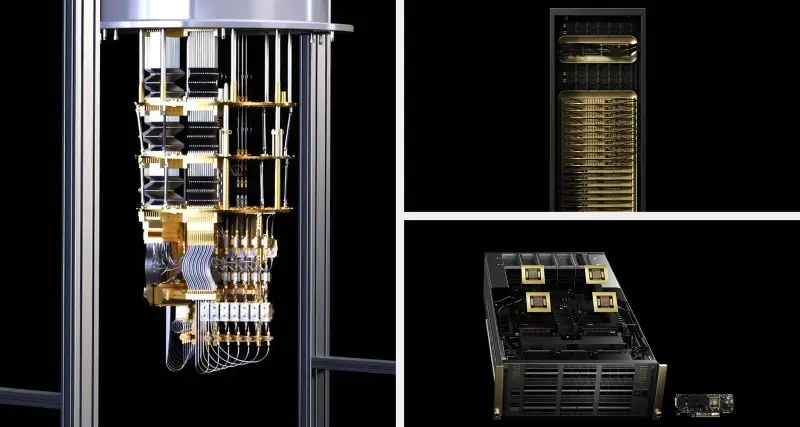
RIKEN, Japan’s national research institute, is integrating NVIDIA’s newest accelerated computing platform into two major supercomputers—one dedicated to AI for science and another focused on quantum computing. Both machines rely on the GB200 Blackwell architecture, one of the world’s most advanced GPU designs for large-scale scientific and industrial research.
In public statements, leaders from both organizations emphasized the systems’ role in shaping future scientific breakthroughs. NVIDIA’s Ian Buck highlighted Japan’s readiness for “a new era in computing,” while RIKEN’s Satoshi Matsuoka framed the collaboration as a key component of a unified AI-quantum-HPC ecosystem.
AI Supercomputer: Advancing Life Sciences and Climate Research
The first of the two systems will deploy 1,600 NVIDIA Blackwell GPUs, all interconnected using NVIDIA Quantum-X800 InfiniBand networking. This machine supports Japan’s “AI for Science” initiative, and it will be central to several research domains.
Primary Scientific Focus Areas
Researchers plan to use the AI supercomputer to accelerate work in:
-
Life sciences and medical modeling
-
Climate and weather forecasting
Because these workloads demand rapid data throughput and high-precision GPU acceleration, the Blackwell NVL4 platform offers performance improvements crucial for scientific accuracy and real-time analysis.
Quantum Supercomputer: Boosting Hybrid Research Capabilities
A second RIKEN system featuring 540 NVIDIA Blackwell GPUs will focus on quantum algorithms, hybrid simulations, and quantum-classical workflows.
This machine builds on Japan’s emerging quantum research ecosystem and supports long-term efforts to develop practical applications for quantum computing in physics, materials engineering, and next-generation cryptography.
Researchers expect this system to serve as a critical testing ground for hybrid AI-quantum techniques, especially those requiring GPU-accelerated emulation before deployment on quantum hardware.
A Unified Platform Linking AI, HPC, and Quantum Computing
RIKEN plans to use NVIDIA CUDA-X to support more than 400 GPU-accelerated libraries and tools. This software stack enhances AI-HPC fusion research, enabling both traditional simulations and advanced AI models to run more efficiently on the same hardware.
Furthermore, RIKEN is collaborating with NVIDIA on floating-point emulation techniques that allow scientific applications to access the full power of Tensor Cores, strengthening performance in climate analysis, fluid dynamics, and genomics.
System Comparison
| Feature | AI for Science System | Quantum Research System |
|---|---|---|
| GPUs | 1,600 NVIDIA Blackwell GPUs | 540 NVIDIA Blackwell GPUs |
| Networking | Quantum-X800 InfiniBand | Quantum-X800 InfiniBand |
| Primary Purpose | Climate, life sciences, manufacturing, automation | Quantum algorithms, hybrid simulation |
| Platform | GB200 NVL4 | GB200 NVL4 |
How This Connects to FugakuNEXT
Both new systems will serve as proxy development environments for FugakuNEXT, Japan’s flagship successor to the world-renowned Fugaku supercomputer.
FugakuNEXT will combine Fujitsu MONAKA-X CPUs with NVIDIA GPU technologies using NVLink Fusion, enabling high-bandwidth connections between the two architectures. The new system is expected to deliver up to 100× the performance of today’s CPU-based machines.
With deployment targeted for 2030, FugakuNEXT is positioned to influence global research by blending classical computing, accelerated AI, and future quantum capabilities into a unified platform.
Economic and Strategic Importance for Japan
Japan has committed ¥10 trillion (≈$65 billion) to AI and next-generation computing investments through 2030. This includes major public-private initiatives led by companies like NTT and SoftBank.
The new RIKEN machines directly support this national strategy by expanding domestic high-performance computing infrastructure and increasing sovereignty over critical technologies.
These systems also strengthen Japan’s ability to compete globally, as supercomputing capacity influences leadership in pharmaceuticals, climate science, automation, mobility, and advanced materials.
Applications That Will Benefit Society
The capabilities provided by the two new supercomputers are expected to impact several real-world fields.
Examples of Societal Impact
-
Faster climate and weather forecasting will support emergency planning and community protection.
-
Improved AI-driven life sciences research may accelerate drug discovery and disease modeling.
Because these supercomputers support large-scale simulations, they also provide essential tools for industrial sectors working on energy efficiency, next-generation manufacturing, and robotics.
Operational Timeline and Future Outlook
The two new RIKEN supercomputers will become operational in spring 2026, enabling immediate research benefits across Japan’s scientific institutions.
Meanwhile, FugakuNEXT remains on track for deployment by 2030, representing a monumental step toward zetta-scale performance levels.
Together, these systems mark Japan’s transition from traditional CPU-centric designs to hybrid architectures that blend AI, GPU acceleration, classical HPC, and future quantum computing. This shift positions the country to drive global scientific discovery for decades to come.
Sources: NVIDIA.
Prepared by Ivan Alexander Golden, Founder of THX News™, an independent news organization delivering timely insights from global official sources. Combines AI-analyzed research with human-edited accuracy and context.