The Ministry of Defence and Defence Secretary Dan Jarvis have signed a UK-Estonia defence roadmap that will increase the British deployment in Estonia from approximately 800 to 1,200 personnel from April 2027.
The roadmap was signed in Tallinn on 16 July 2026 by Dan Jarvis and Estonian Defence Minister Hanno Pevkur. It covers military cooperation, defence industry links, capability development and emerging technology.
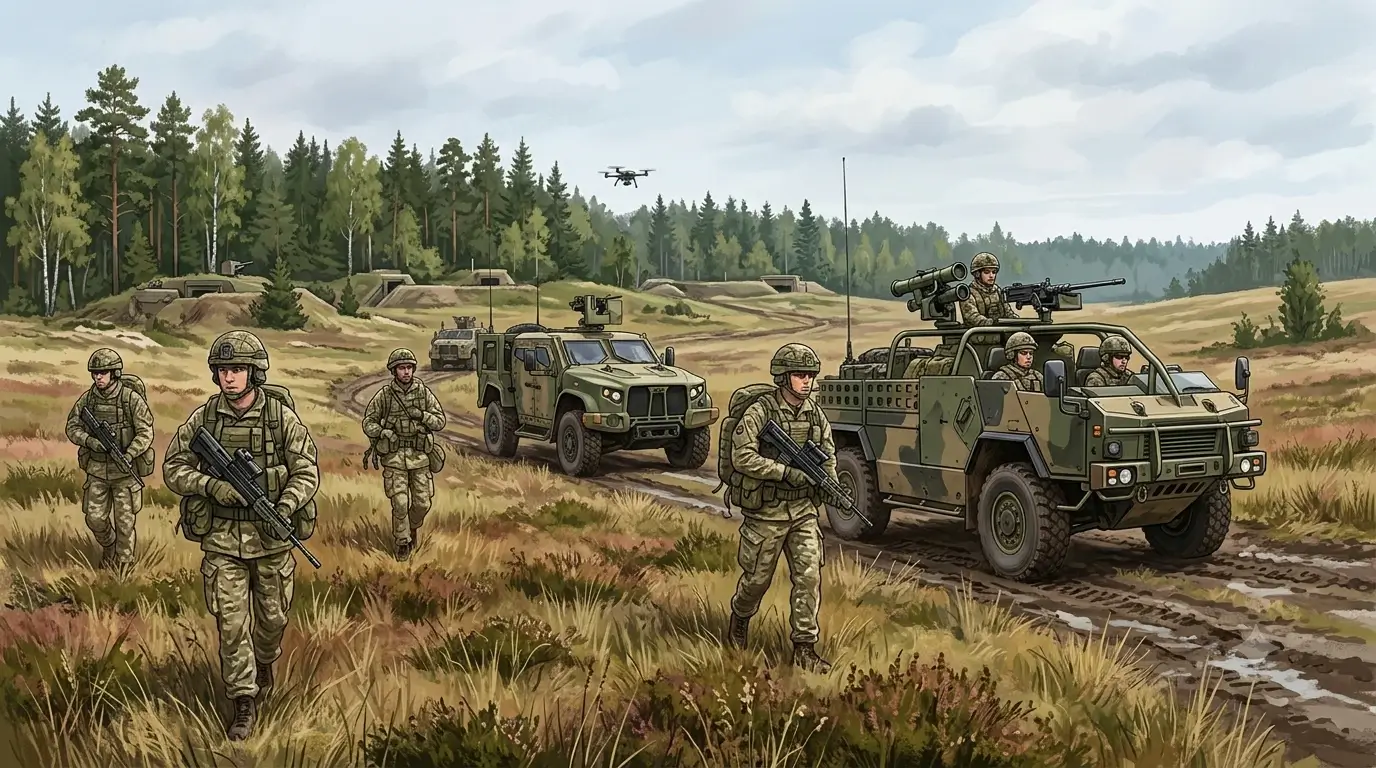
The agreement will change the structure of the UK’s contribution to NATO’s Forward Land Forces in Estonia. British personnel will move from an Armoured Battlegroup model to a Mobile Anti-Armour Force designed for Estonia’s operational environment.
UK and Estonia Launch New Defence Roadmap
The agreement establishes a longer-term framework for cooperation between the two countries across defence operations, military capabilities, industry and innovation. It builds on the presence of British forces in Estonia and their role within NATO’s regional defence arrangements.
The roadmap also covers cooperation through the Joint Expeditionary Force, which brings the UK and Estonia together with other northern European partners. The two governments said the arrangement would support collective defence and continued coordination between participating nations.
- Military cooperation: Joint planning and operational coordination will be developed further.
- Defence industry: The countries will pursue closer links involving equipment and capability development.
- Innovation: Work will expand across battlefield technology, digital systems and military research.
Estonia Deployment to Increase From 2027
The UK deployment will rise to 1,200 personnel when the new force structure begins in April 2027. The additional personnel will provide greater specialisation and resilience within the British contribution to NATO’s presence in Estonia.
An entire British Army brigade based in the United Kingdom will remain at readiness to reinforce Estonia when required. Equipment and ammunition for that reinforcement force will begin to be positioned in Estonia during 2026 to reduce its response time during a crisis.
Mobile Force Designed for Modern Warfare
The Mobile Anti-Armour Force will use highly mobile vehicle platforms and operate within the British Army’s reconnaissance and strike approach. It will be able to deploy and disperse more rapidly than the current armoured formation.
The force design followed analysis and joint wargaming conducted with Estonia. The Ministry of Defence said the assessment also considered lessons from the war in Ukraine, including the effects of surveillance, precision weapons and uncrewed systems.
UK Force Changes
| Indicator | Current Position | Planned Change |
|---|---|---|
| Personnel | Approximately 800 | 1,200 from April 2027 |
| Force structure | Armoured Battlegroup | Mobile Anti-Armour Force |
| Operating model | Armoured formation | Mobile and dispersed force |
Advanced Equipment and Forward Stockpiles
The redesigned force will be equipped with mobile vehicles, advanced weapons and high-technology drones. Intelligence, surveillance and reconnaissance systems will be connected with command networks, precision fires and expanded uncrewed capabilities.
Equipment and ammunition stocks will be positioned in Estonia to support the deployed force and the UK-based reinforcement brigade. The arrangements are intended to give British units greater endurance and allow additional forces to respond more rapidly.
- Mobility: Vehicle platforms will allow personnel to move and respond more quickly.
- Survivability: Dispersal, deception and adaptability will reduce exposure to surveillance and attack.
- Lethality: Precision fires and networked targeting will support coordinated battlefield action.
- Endurance: Forward-positioned stocks will support operations and reinforcement.
Wider Capabilities to Be Modernised
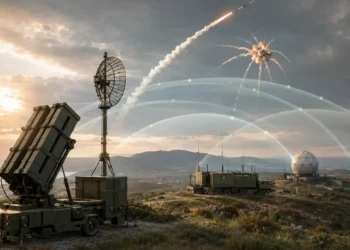
The roadmap includes further upgrades to the UK’s wider Forward Land Forces contribution. Existing Multiple Launch Rocket Systems will be improved to provide more precise effects, while Short Range Air Defence capabilities will continue to be maintained.
Future rotations will introduce additional technology and equipment as new capabilities become available. The Ministry of Defence said this approach would allow the force to continue changing without waiting for another complete restructuring.
Defence Technology Cooperation
The UK and Estonia will expand work on emerging military technologies and battlefield innovation. Cooperation will include ASGARD, the UK programme combining artificial intelligence, digital targeting and advanced command-and-control systems.
The programme is intended to connect battlefield information with targeting and decision-making systems. Under the roadmap, the two countries will examine how these capabilities can be developed and used alongside their wider military cooperation.
Roadmap Supports NATO Regional Defence
The British force will remain part of NATO’s Forward Land Forces, which provide multinational defence and deterrence across the alliance’s eastern members. The larger deployment will operate alongside Estonian forces and other allied units.
The agreement also maintains the UK commitment to a reinforcement brigade held at readiness in Britain. Cooperation through NATO and the Joint Expeditionary Force will continue to link the bilateral roadmap with wider regional defence planning.
Ministerial Comments
Dan Jarvis MBE MP, Defence Secretary said;
“We are strengthening our deployment in Estonia to defend NATO territory and deter Russian aggression. This new roadmap reflects the realities of warfare today and shows how we are modernising our forces to meet the threats we face.”
Hanno Pevkur, Estonian Minister for Defence said;
“Next year nearly 1,200 British soldiers will arrive in Estonia, equipped with modern weaponry that is well suited to the local environment. In addition, an entire British Army brigade in the United Kingdom will continue to be maintained at constant readiness to come to our assistance if needed.”
The UK-Estonia defence roadmap establishes a larger British deployment, a mobile force structure and closer cooperation on equipment, technology and military planning. From April 2027, the UK contribution in Estonia will increase to 1,200 personnel, supported by forward-positioned stocks and a reinforcement brigade in Britain. The arrangement will operate through NATO structures and continued regional coordination under the Joint Expeditionary Force.
Sources: Ministry of Defence and Dan Jarvis MBE MP.
Prepared by Ivan Alexander Golden, Founder of THX News, an independent news organisation delivering timely insights from global official sources. Combines AI-analysed research with human-edited accuracy and context.