
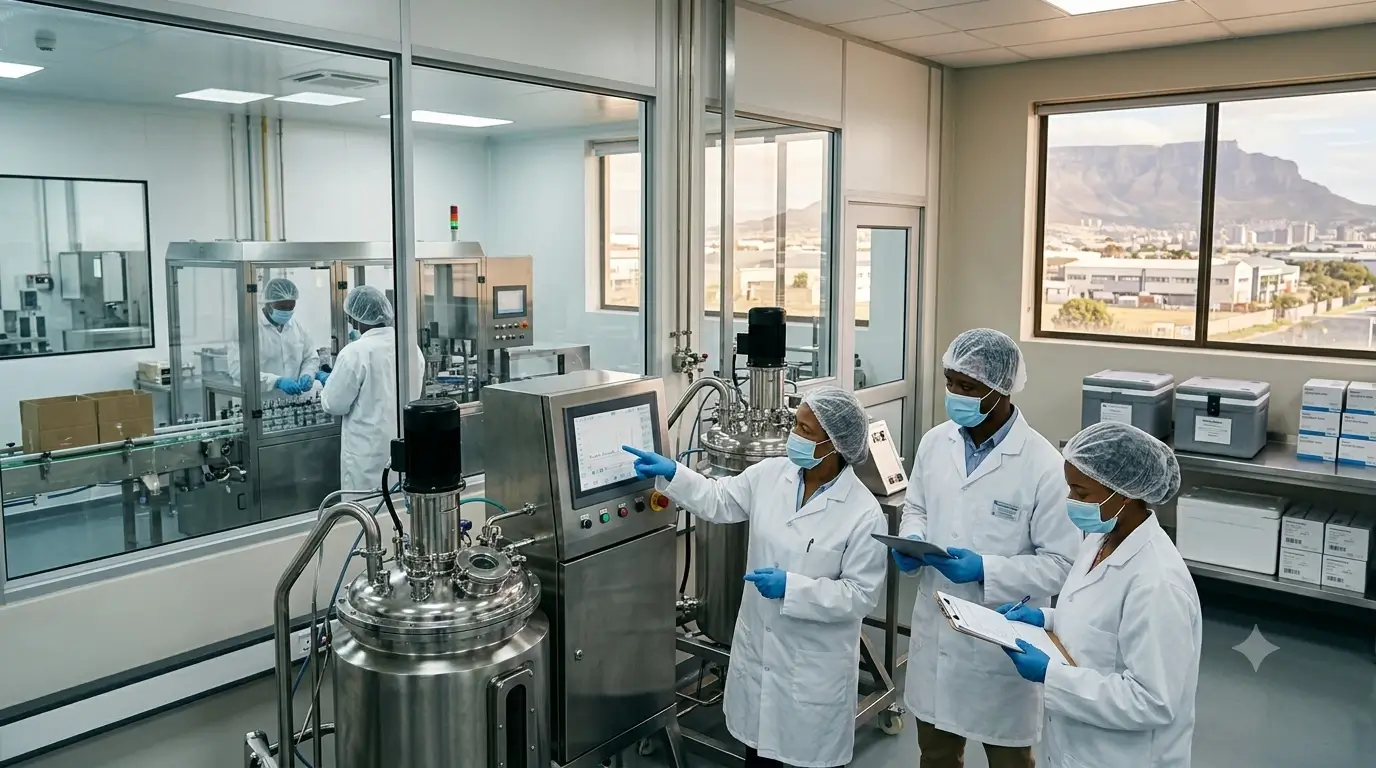
The African Development Bank Group has finalised financing of up to $15 million for Biovac to expand vaccine production in Cape Town, South Africa.
The project could raise Biovac’s annual capacity to 500 million doses while establishing Africa’s first end-to-end oral cholera vaccine production operation.
The African Development Bank announced the agreement on 24 July 2026 to advance African vaccine production through a new multi-vaccine facility in Cape Town. The Southern African project will expand domestic production, strengthen health security, create skilled employment and reduce the continent’s dependence on imported vaccines.
Cape Town Facility Expands Vaccine Capacity
The loan will support a wider expansion programme intended to increase Biovac’s total annual manufacturing capacity to as many as 500 million doses. The company has served as South Africa’s principal vaccine supplier for more than two decades and currently employs over 300 people.
Once completed, the facility is expected to make Biovac Africa’s first end-to-end producer of oral cholera vaccine. It will also enable South Africa to produce an inactivated polio vaccine locally for the first time.
In addition, the African Development Bank said Biovac would become the first manufacturer on the continent to produce inactivated polio vaccine through international technology-transfer partnerships. Participating organisations include Sanofi, the International Vaccine Institute, Biological E Limited, EuBiologics and Bharat Biotech.
The new facility is scheduled for completion in 2028. Production will initially focus on oral cholera vaccines, followed by vaccines targeting polio, pneumonia and meningitis.
Investment Supports African Health Sovereignty
Africa currently imports more than 99% of the vaccines it uses, despite carrying a substantial share of the global burden from vaccine-preventable diseases. Consequently, governments and development institutions have increased efforts to establish reliable pharmaceutical production within the continent.
The African Union aims to produce 60% of vaccines used across Africa locally by 2040. Therefore, the Biovac expansion supports a broader continental strategy covering health security, industrial development, technology transfer and regional supply chains.
Solomon Quaynor, African Development Bank Group Vice President for Private Sector, Infrastructure and Industrialisation
“This investment in Biovac is about much more than expanding vaccine production capacity. It is about building Africa’s health sovereignty, strengthening regional value chains, and creating industrial capabilities that will enable the continent to respond more effectively to future health emergencies.”
Quaynor said the project would help shift Africa from being predominantly a consumer of imported vaccines towards becoming a producer of critical health products. Moreover, domestic manufacturing could improve the continent’s ability to respond when international supply chains face disruption.
Planned Vaccine Production and Outcomes
| Project Area | Planned Outcome |
|---|---|
| Annual manufacturing capacity | Up to 500 million vaccine doses |
| Initial vaccine | End-to-end oral cholera vaccine production |
| Additional vaccines | Polio, pneumonia and meningitis vaccines |
| Employment | Approximately 340 full-time jobs |
| Facility completion | Expected during 2028 |
Skilled Jobs Strengthen Southern African Industry
Beyond its public health role, the project is expected to create approximately 340 full-time positions. The African Development Bank estimates that women will fill around 43% of these roles, while young people will account for about 30%.
Biovac already has a workforce in which women hold approximately half of all positions. As production expands, the company will also increase training in vaccine manufacturing, regulatory science and quality control.
The training programme will involve partnerships with local universities and regional institutions. As a result, the investment could support a larger pool of African scientists, technicians and regulatory specialists with experience in advanced biological manufacturing.
The project may also generate opportunities for suppliers, logistics providers, laboratories and professional services across Southern Africa. These wider industrial links are important because vaccine manufacturing requires dependable systems for testing, packaging, storage, transport and regulatory oversight.
Morena Makhoana, Biovac Chief Executive Officer
“The project will shift the narrative from majority-imported vaccines to majority-exported vaccines. This is part of changing that reality permanently. This is what Africa’s health sovereignty looks like in practice.”
Makhoana said the African Development Bank’s involvement reflected a shared objective to change the continent’s relationship with health security. Biovac has already delivered more than 450 million vaccine doses to Southern African countries, including routine childhood and COVID-19 vaccines.
Financing Links Production With Regional Demand
The facility is expected to connect with Africa’s emerging vaccine-financing architecture. This includes Gavi’s African Vaccine Manufacturing Accelerator, a $1.2 billion mechanism created to encourage sustainable vaccine production on the continent.
The accelerator provides milestone payments when African manufacturers reach World Health Organization prequalification. It can also provide per-dose payments for qualifying vaccines supplied through UNICEF procurement processes.
These mechanisms could help African manufacturers compete with established international producers while building dependable demand for locally made vaccines. However, manufacturers must still meet international standards covering safety, quality, performance and regulatory compliance.
Kennedy Mbekeani, African Development Bank Director General for Southern Africa and Country Manager for South Africa
“This project allows one of Africa’s most experienced manufacturers to scale up exactly where the need is greatest: vaccines that protect children from cholera, polio, pneumonia and meningitis.”
The African Development Bank is joining a syndicate of development finance institutions supporting the expansion. The International Finance Corporation leads the syndicate, while the Human Development Accelerator programme is providing a long-term quasi-equity facility.
The European Union-backed programme is implemented by the European Investment Bank in partnership with the Gates Foundation. Grants and technical support from additional global health partners will fund technology transfers and help Biovac introduce further vaccines.
Continental Production Could Improve Emergency Readiness
Expanding local vaccine manufacturing could reduce exposure to international supply shortages during epidemics and other public health emergencies. The COVID-19 pandemic highlighted how competition for limited global supplies could leave African countries waiting for essential medical products.
Local production does not remove the need for international cooperation. Nevertheless, it gives African governments, health organisations and procurement agencies more options when responding to disease outbreaks or maintaining routine immunisation programmes.
The Biovac facility could also support regional trade by supplying vaccines to countries beyond South Africa. Cape Town’s manufacturing and transport infrastructure provides a base from which products could reach markets across Southern Africa and other parts of the continent.
Furthermore, successful production could encourage additional investment in African pharmaceutical facilities. This would support the African Union’s localisation target while advancing industrialisation, scientific research and skilled employment.
Production Timeline Will Shape Impact
The $15 million agreement represents a targeted step towards expanding vaccine production in South Africa and strengthening health resilience across the continent. Its significance will depend on the facility meeting its 2028 completion schedule, securing regulatory approvals and establishing reliable production at scale.
For Southern Africa, the investment combines public health planning with industrial development and workforce training. More broadly, Biovac’s expansion could demonstrate how development finance, technology partnerships and African manufacturing capacity can work together to reduce long-term dependence on imported vaccines.
Sources: African Development Bank Group.
Prepared by Ivan Alexander Golden, Founder of THX News, an independent news organization delivering timely insights from global official sources. Research combines AI-assisted analysis with human-edited accuracy and context.