
South Africa is accelerating workforce training to support a projected boom in critical minerals production as global demand rises for energy transition materials.
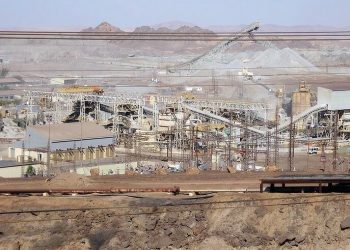
South Africa’s critical minerals strategy is reshaping workforce development across Southern Africa, linking training programmes, foreign investment and industrial policy ahead of African Mining Week 2026. The government aims to convert vast mineral reserves into jobs, infrastructure and long-term economic resilience.
National Strategy Links Minerals to Employment
South Africa views critical minerals as a cornerstone of economic recovery and industrialisation, particularly in a region grappling with high unemployment. President Cyril Ramaphosa’s 2026 State of the Nation Address described mining as a “sunrise industry,” citing ore reserves valued at more than R40 trillion.
Meanwhile, the mining sector already supports roughly 900,000 jobs, making it one of the country’s largest employers. According to Statistics South Africa’s Quarterly Labour Force Survey, unemployment stood at 31.4% in Q4 2025, with youth unemployment reaching 43.8%. The government therefore frames skills development as essential to ensure new mining investment translates into real employment gains.
Furthermore, public programmes such as the Presidential Employment Stimulus and Community Work Programme are being expanded to prepare young people for technical roles in mining and related industries. The real-world effect is to create a pipeline from temporary public work into permanent positions in emerging sectors.
International Partnerships Expand Skills Ecosystem
Foreign cooperation is playing a growing role in workforce readiness. In mid-February 2026, the European Union partnered with South Africa’s Energy and Water Sector Education and Training Authority and the Council for Scientific and Industrial Research to establish a skills platform focused on critical minerals and battery value chains.
The initiative includes €2 million in funding and forms part of the EU–South Africa Clean Trade and Investment Partnership, under which €15.5 billion has been committed to support energy transition industries.
Additionally, bilateral trade between the EU and South Africa reached approximately €45 billion in 2024, underscoring the economic stakes of the partnership.
- TVET expansion: Strengthening technical colleges to support mining and processing industries
- Specialised training: Focus on battery minerals, refining and recycling
- Work placements: Internships and industry partnerships for graduates
- Career pathways: Structured entry routes into critical mineral sectors
Private companies are also investing in research capacity. Anglo American has announced plans to create a Global Institute of Critical Minerals Research and Innovation linking universities in South Africa, the United Kingdom and other mining hubs.
Comment
Duncan Wanblad, CEO of Anglo American stated the company aims to support the country’s development agenda.
“We want to contribute to South Africa’s agenda of empowering the next generation of miners while unlocking the country’s full mining potential.”
Projected Investment and Reserve Potential
| Indicator | Value | Context |
| Estimated mineral reserves | R40 trillion+ | Government valuation cited in State of the Nation Address |
| Target investment | R2 trillion | Planned critical minerals investment over five years |
| EU partnership funding | €15.5 billion | Clean Trade and Investment Partnership commitments |
| Youth employment goal | 1.8 million opportunities | Target by 2030 linked to industrial growth strategy |
African Mining Week as Continental Platform
African Mining Week 2026, scheduled for 14–16 October in Cape Town, will convene policymakers, investors and mining firms from across Africa. Organisers highlight that the continent holds roughly 30% of global critical minerals needed for clean energy technologies.
The conference theme — “Mining the Future: Critical Resources, Sustainability and Community Development” — reflects a broader shift toward local beneficiation and workforce development. Analysts including the International Energy Agency estimate global demand for critical minerals could quadruple by 2040, intensifying competition among producing regions.
Regional and Continental Implications
Southern Africa’s success in developing skills could determine whether the region captures more value from mineral extraction rather than exporting raw ore. Moreover, research from institutions such as Brookings suggests that adding processing and manufacturing could increase the value of African mineral production by roughly three-quarters by 2040.
Additionally, workforce readiness is increasingly tied to energy security and industrial diversification across the continent. Countries rich in lithium, cobalt and rare earths are seeking to build domestic supply chains rather than relying on foreign processing capacity.
Moving Forward
South Africa’s strategy illustrates how critical minerals policy is evolving beyond extraction toward skills, research and value-chain development. By aligning public programmes, foreign partnerships and private investment, the government aims to position the country as a global hub for energy transition materials.
If successfully implemented, the approach could reshape Southern Africa’s industrial landscape while providing a model for other African economies seeking inclusive growth from natural resources.
Sources: Energy Capital & Power, Statistics South Africa, South African Government, European Union.
Prepared by Ivan Alexander Golden, Founder of THX News, an independent news organization delivering timely insights from global official sources. Combines AI-analyzed research with human-edited accuracy and context.