
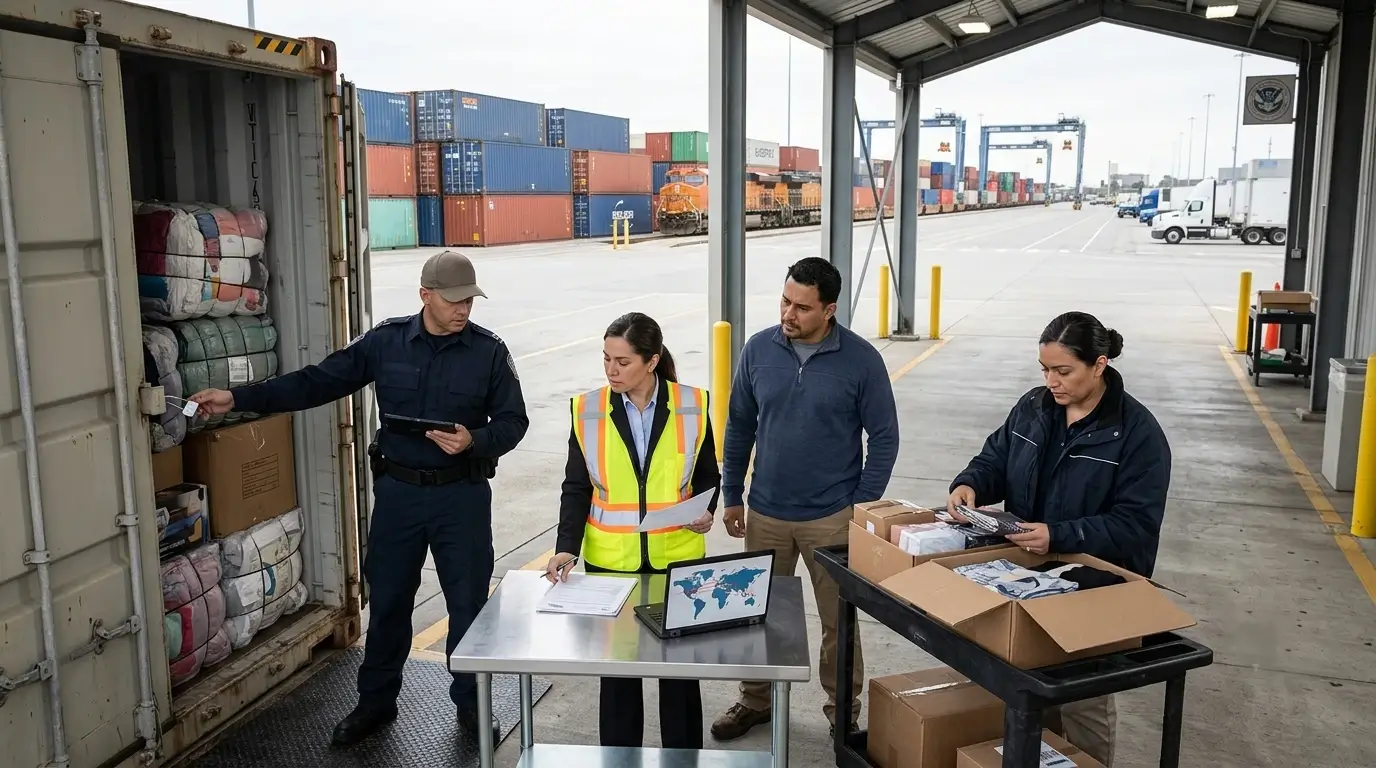
President Donald Trump directed the United States Trade Representative on July 23, 2026, to impose Section 301 tariffs on goods from 60 economies over failures to prohibit or effectively enforce restrictions on imports produced with forced labor. The measures apply differentiated tariff rates, product exemptions and planned textile quotas intended to encourage stronger import enforcement.
The presidential memorandum follows investigations launched by the Office of the United States Trade Representative in March 2026. USTR determined in June that the identified policies and enforcement practices were unreasonable, burdened or restricted U.S. commerce, and were therefore actionable under Section 301 of the Trade Act of 1974.
US Orders Forced Labor Tariffs Across 60 Economies
The White House memorandum directs USTR to impose tariffs on imports from each economy covered by the investigations. The list includes major U.S. trading partners such as Canada, Mexico, the United Kingdom, the European Union, Japan, South Korea and India.
USTR opened the 60 investigations on March 12, 2026, to examine whether the economies had failed to impose or effectively enforce prohibitions on goods produced wholly or partly with forced labor. On June 2, USTR determined that the practices examined in each investigation burdened or restricted U.S. commerce.
The resulting tariffs create a direct trade consequence for the identified enforcement failures. However, the memorandum also provides different rates and exemptions based on existing import controls, trade commitments and potential effects on the U.S. economy.
Investigations Cover UK, Canada and Major Trading Partners
The investigations cover economies across Europe, Asia, Africa, the Americas and the Middle East. USTR assessed each economy separately, although the July memorandum establishes a common implementation framework for implementing the responsive actions.
Canada, Mexico and the United Kingdom are assigned a 10 percent tariff rate, alongside Argentina, Bangladesh, Cambodia, Ecuador, El Salvador, Guatemala, Honduras, India, Indonesia, Jordan, Malaysia, Pakistan, Sri Lanka and Trinidad and Tobago. Meanwhile, other economies are subject to either an adjusted tariff calculation or the standard 12.5 percent rate.
Tariff Rates Vary Across Trading Partners
The presidential memorandum divides the 60 economies into three principal tariff categories. According to the White House and USTR, those categories reflect existing forced-labor import restrictions, enforcement levels and commitments made through trade arrangements.
| Indicator | Tariff Treatment | Context |
|---|---|---|
| 10 percent tariff | Applied to 18 economies | USTR assigned this rate to economies with import prohibitions, partial regimes or relevant trade commitments, including Canada, Mexico and the United Kingdom. |
| MFN-adjusted tariff | Total duties capped at 10 or 12.5 percent | The White House directed adjusted treatment for the European Union, Taiwan, Japan, South Korea and Switzerland based on existing Most-Favored Nation tariff rates. |
| 12.5 percent tariff | Applied to remaining investigated economies | USTR must impose the rate on economies not included in the 10 percent or MFN-adjusted categories. |
Section 301 Tariff Rate Table
For European Union and Taiwanese products, the combined MFN and Section 301 tariff will generally total 10 percent. For products from Japan, South Korea and Switzerland, the combined rate will generally total 12.5 percent.
Where an existing MFN tariff already meets or exceeds the applicable threshold, the additional Section 301 tariff will be zero. Therefore, the real-world duty added to individual products will depend on their existing tariff treatment rather than a uniform additional charge.
Product Exemptions Address Economic Risks
The memorandum directs USTR to exempt products listed in an accompanying annex. The White House said the exemptions reflect possible domestic supply shortages, wider economic disruption and whether tariffs would effectively encourage stronger forced-labor import controls.
Additionally, exemptions may apply to products that cannot be produced domestically in sufficient quantities or obtained reasonably from alternative sources. Accordingly, some imports from investigated economies will remain outside the new tariff framework.
Exemption Criteria and Eligible Products
The White House identified five principal exemption grounds:
- Domestic supply: Raw materials may be exempt where tariffs could make adequate U.S. supply unavailable.
- Economic disruption: USTR may exclude products capable of causing economy-wide disruption if additional duties are applied.
- Limited alternatives: Exemptions cover goods that cannot be produced sufficiently in the United States or obtained from other sources.
- Enforcement incentives: Selected exemptions may encourage trading partners to implement commitments or strengthen forced-labor import prohibitions.
- Limited effectiveness: Products may be excluded where tariffs would not substantially help eliminate the practices identified by USTR.
Textile Quotas Support US Cotton and Inputs
The memorandum also directs USTR to establish tariff-rate quotas for Bangladesh, Cambodia, Indonesia and Malaysia when implementation becomes feasible. The initial quotas will operate for three years and will connect tariff-free access for specified textile and apparel volumes to the use of U.S. textile goods or cotton.
USTR said the mechanism is intended to reduce reliance on inputs from sources considered more likely to involve forced labor. Until the quotas are established, the affected textile and apparel imports will remain subject to the applicable 10 percent Section 301 tariff.
Textile and Apparel Quota Framework
The quotas will permit qualifying volumes of specified textile and apparel products to enter the United States without the new Section 301 tariff. Eligibility will be based on each participating economy’s imports of U.S. cotton or textile inputs.
The memorandum states that establishing the quotas was not immediately feasible but was expected to become feasible by September 1, 2026. USTR must publish Federal Register notices setting out the mechanism and effective dates.
USTR Will Implement and Review the Measures
USTR is responsible for modifying the Harmonized Tariff Schedule of the United States and publishing the required implementation notices. The memorandum also permits the Trade Representative to recommend modifications or termination of tariffs, exemptions or quotas, subject to presidential direction and Section 307 of the Trade Act.
The measures are structured as 60 separate tariff actions rather than one indivisible tariff program. Consequently, the memorandum states that a legal ruling affecting one economy’s tariff should not automatically invalidate actions applying to the others.
Stakeholder Comments Informed Final Measures
- Written submissions: USTR reported receiving more than 1,600 comments on the proposed tariff actions.
- Public testimony: More than 100 witnesses provided testimony during USTR hearings held on July 7, 8 and 9, 2026.
- Policy advice: The Trade Representative advised the President on tariff rates, product exemptions and tariff-rate quotas after reviewing the submissions and testimony.
- Economic considerations: The White House memorandum states that potential economic harm and tariff effectiveness were considered before the final directives were issued.
The July 23 memorandum turns USTR’s findings into tariffs covering 60 economies, while preserving exemptions and differentiated treatment intended to limit specific domestic economic effects. Its stated objective is to encourage trading partners to establish and effectively enforce prohibitions on imports made wholly or partly with forced labor.
Implementation will now depend on USTR tariff notices, HTSUS modifications and the future establishment of textile and apparel quotas.
Sources: White House Presidential Memorandum, USTR Final Action, USTR Fact Sheet.
Prepared by Ivan Alexander Golden, Founder of THX News, an independent news organization delivering timely insights from global official sources.
Research combines AI-assisted analysis with human-edited accuracy and context.