The Ministry of Defence has selected Tekever’s AR5 surveillance drone for the British Army under a programme worth up to £400 million over 10 years, Defence Secretary Wes Streeting announced.
The initial order covers six AR5 aircraft, with the programme allowing delivery of up to 24 drones by 2029. Subject to contract signature and final approvals, the new capability is expected to begin entering Army service later in 2026.
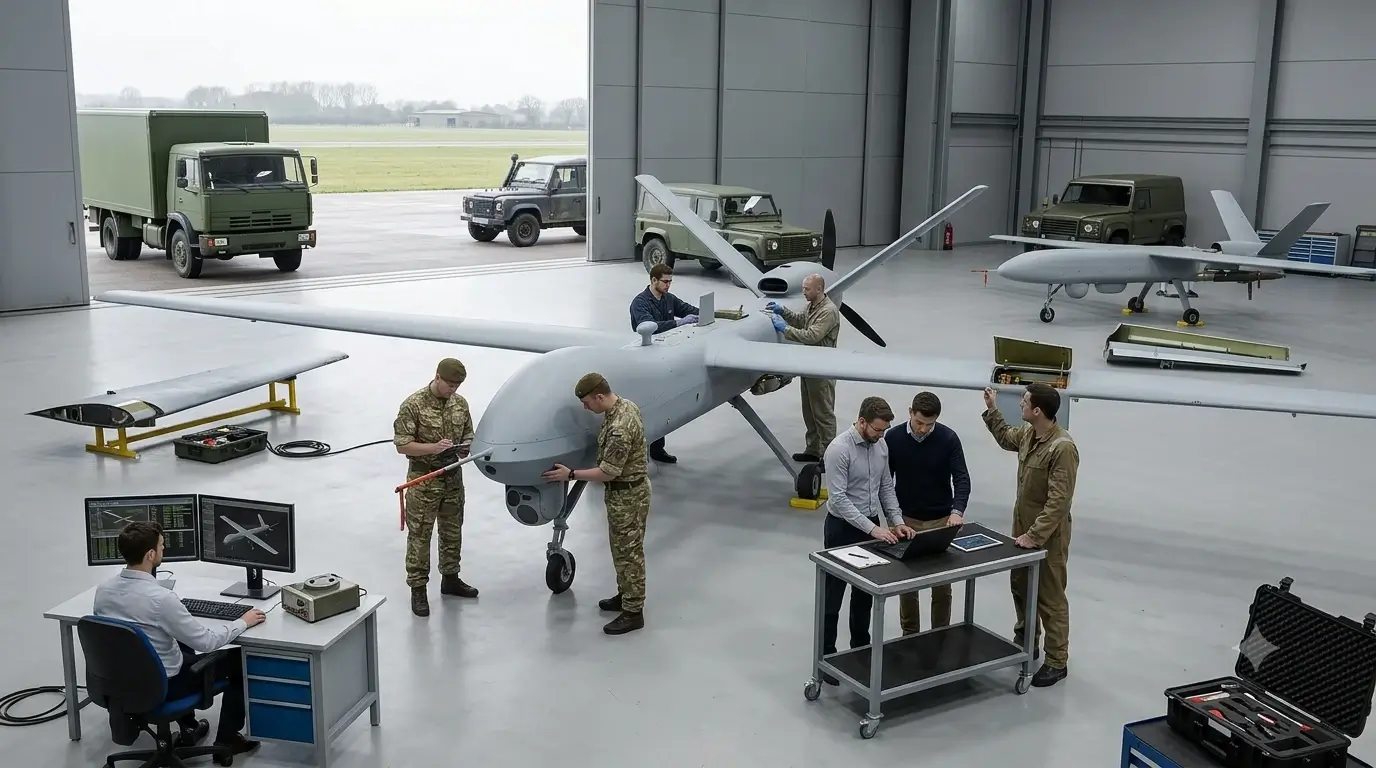
The aircraft will be manufactured at Tekever’s planned manufacturing facility in Swindon, with the wider contract supporting company sites across South West England and Wales. The programme will also provide support for at least five years, with options available to extend that period.
British Army selects new surveillance drones
The AR5 has been selected to replace the Army’s Watchkeeper surveillance aircraft, which has been in service since 2014 and is approaching the end of its operational life. The replacement will provide commanders with updated intelligence, surveillance and reconnaissance capability during military operations.
Tekever’s aircraft has already been used by Ukraine’s Armed Forces during the country’s defence against Russia’s invasion. The Ministry of Defence said this operational use informed the selection of a system designed to respond to changing battlefield threats.
- Replacement system: AR5 will succeed the Army’s Watchkeeper surveillance fleet.
- Operational role: The aircraft will gather intelligence for commanders and deployed troops.
- Entry into service: Initial capability is planned for later in 2026.
Improved battlefield intelligence and troop protection
The AR5 can carry up to 50kg of surveillance equipment, including cameras and sensors. Its longer flight endurance will allow the aircraft to remain over an operational area for extended periods and provide commanders with continuing intelligence.
The Ministry of Defence said the system offers improved sensor capability, reliability and endurance compared with equipment previously used by the Army. Information gathered by the drones will support battlefield decisions and help military personnel identify emerging threats.
- Payload capacity: Up to 50kg of cameras, sensors and surveillance equipment.
- Intelligence supply: Data can be delivered to commanders during active operations.
- Extended endurance: Longer flights will support sustained observation of operational areas.
Delivery timetable and contract arrangements
The first order will provide six aircraft, while later phases could increase the fleet to 24 by 2029. The planned agreement has a potential value of £400 million across a 10-year period.
Contract signature and final approvals are still required before the full programme proceeds. The programme includes at least five years of support, while extension options will allow the Ministry of Defence to continue the arrangement if required.
Contract and Delivery Summary Table
| Indicator | Programme Detail | Context |
|---|---|---|
| Initial order | Six AR5 drones | First delivery phase |
| Maximum fleet | Up to 24 drones | Planned by 2029 |
| Contract value | Up to £400 million | Over 10 years |
| Service entry | Later in 2026 | Subject to approvals |
UK manufacturing and regional employment
The drones will be built at Tekever’s planned manufacturing facility in Swindon. The wider programme is expected to sustain and create hundreds of jobs across the company’s UK operations, including sites in South West England and Wales.
The Ministry of Defence said the investment will expand domestic defence production while maintaining engineering and technology work within the UK. They also said the agreement would contribute to employment growth and increase industrial capacity in the defence sector.
UK Production and Employment Summary
| Area | Activity | Expected Effect |
|---|---|---|
| Swindon | Drone manufacturing | New production capacity |
| South West England | Tekever operations | Jobs supported |
| Wales | Company sites | Employment sustained |
| UK defence sector | Technology development | Industrial growth |
Sovereign capability and defence industrial growth
The programme will place the development, manufacture and continuing support of the Army’s surveillance aircraft within Tekever’s UK operations. This arrangement is intended to maintain domestic expertise and allow the system to evolve as operational requirements change.
Tekever described the CORVUS programme as a long-term partnership between government and industry rather than a single aircraft purchase. The company said the approach would support continuing improvements in autonomy and surveillance capability for Army personnel.
Stakeholder Comments
Wes Streeting, Defence Secretary, said:
“Proven in Ukraine and designed to protect British soldiers globally, we’ve chosen the UK-based Tekever AR5 drone to supply our personnel with kit that will keep them ahead of emerging threats.
This investment will support our troops on deployment, while driving re-industrialisation and backing British innovation.”
Karl Brew, Tekever UK Managing Director, said:
“CORVUS represents a major step change in delivering cutting edge autonomy to the British Army. This isn’t about a platform, it’s about building and sustaining sovereign capability that stays one step ahead of our adversaries.
Through CORVUS, Tekever aims to create a new type of partnership between government and industry where we will ensure a constant cycle of capability evolution that delivers decisive advantage to our end users.”
The AR5 programme will replace the Army’s Watchkeeper fleet with aircraft offering longer endurance, greater sensor capacity and improved reliability. Six drones are included in the initial order, with up to 24 planned by 2029. Subject to final approvals, service entry is expected to begin later in 2026, while UK manufacturing and long-term support will sustain employment across Tekever’s UK operations.
Sources: Ministry of Defence.
Prepared by Ivan Alexander Golden, Founder of THX News, an independent news organisation delivering timely insights from global official sources. Combines AI-analysed research with human-edited accuracy and context.