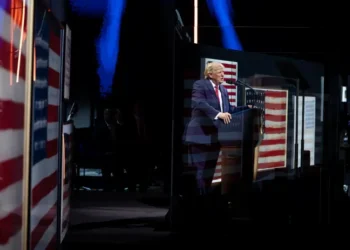

The White House issued a proclamation marking the 217th birthday of President Abraham Lincoln on February 12, 2026, highlighting his Civil War leadership and role in preserving the Union and ending slavery. The statement outlines Lincoln’s biography, wartime actions, and constitutional legacy, and links his historical record to present-day governance themes.
The proclamation was released as part of the federal government’s annual recognition of President Abraham Lincoln’s birth on February 12, 1809. It frames the commemoration around Civil War leadership, emancipation policy, and national unity, drawing directly from the official White House text.
White House Proclamation Marks Abraham Lincoln Birthday
The White House proclamation states that the nation is observing the 217th birthday of President Abraham Lincoln, the 16th President of the United States. It identifies his leadership during the Civil War and his actions to preserve the Union as the central reason for the commemoration.
Additionally, the document recounts Lincoln’s early life in Kentucky, his self-education, and his progression through roles including attorney, state representative, and Member of Congress. However, the proclamation focuses primarily on his presidential decisions during the Civil War period and their national impact.
Biographical Record and Historical Milestones
According to the White House proclamation, Lincoln was born on February 12, 1809, and rose from frontier beginnings to national office through law and politics. The statement notes his debates with Stephen Douglas in the late 1850s as a turning point in national visibility, a documented historical milestone reflected in congressional archives.
Meanwhile, the proclamation references his election in 1860, the subsequent secession of Southern states, and his wartime leadership across four years of conflict. The real-world effect cited is preservation of the Union under federal authority, a matter recorded in National Archives Civil War and presidential records.
Civil War Leadership and Emancipation Actions Cited
The proclamation states that Lincoln led the country through the Civil War and issued the Emancipation Proclamation, a wartime executive action dated January 1863 and preserved in National Archives records. It also credits him with championing passage of the Thirteenth Amendment, ratified in December 1865, which abolished slavery in the United States.
Additionally, the document links these actions to measurable institutional outcomes: emancipation policy affecting enslaved populations in Confederate-held territory and a constitutional amendment ending slavery nationwide. However, the proclamation presents these as historical facts of record rather than policy debate, maintaining a commemorative framing.
Primary Historical Actions Referenced by White House
| Indicator | Recent Movement | Context |
|---|---|---|
| Birth anniversary | 217th birthday observed | White House proclamation dated February 12, 2026 |
| Emancipation Proclamation | Reaffirmed in proclamation text | Executive war measure issued January 1863, documented by National Archives |
| Thirteenth Amendment | Credited to Lincoln’s advocacy | Ratified December 1865, recorded in U.S. constitutional records |
| Civil War leadership | Formally highlighted | White House text cites Union preservation during 1861–1865 war period |
Legacy Framing and Current Governance References
The proclamation states that the current administration is honoring Lincoln’s legacy through constitutional enforcement, law and order policy, and protection of civil liberties. Additionally, it references tariffs and domestic industry protection as policies Lincoln supported historically, a claim also documented in historical tariff legislation debates from the 19th century.
Meanwhile, the document connects Lincoln’s phrases on democratic government to present institutional continuity. The claim is supported by direct quotation lineage from the Gettysburg Address, preserved by the Library of Congress, with the real-world effect being continued use in federal civic language and education. The neutral synthesis is that the proclamation blends verified historical record with present policy positioning in a commemorative format.
Oversight and Historical Record References
- Primary text source: White House presidential proclamation dated February 12, 2026
- Constitutional actions: Thirteenth Amendment ratification recorded by National Archives
- Executive wartime order: Emancipation Proclamation preserved in federal archives
- Historic speeches: Gettysburg Address text held by Library of Congress
In Conclusion
The official proclamation marking the Abraham Lincoln birthday commemoration presents a source-based summary of his biography, Civil War leadership, and emancipation actions. It relies on established historical records and named constitutional measures while linking legacy themes to current governance language.
The document functions as a formal federal observance notice, combining verifiable milestones, dated executive actions, and constitutional outcomes with present-day institutional messaging.
Sources: White House Presidential Proclamation.
Prepared by Ivan Alexander Golden, Founder of THX News, an independent news organization delivering timely insights from global official sources.
Combines AI-analyzed research with human-edited accuracy and context.