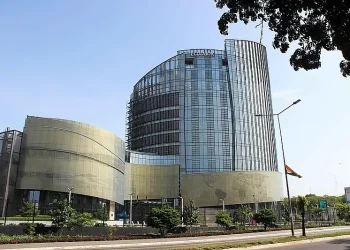
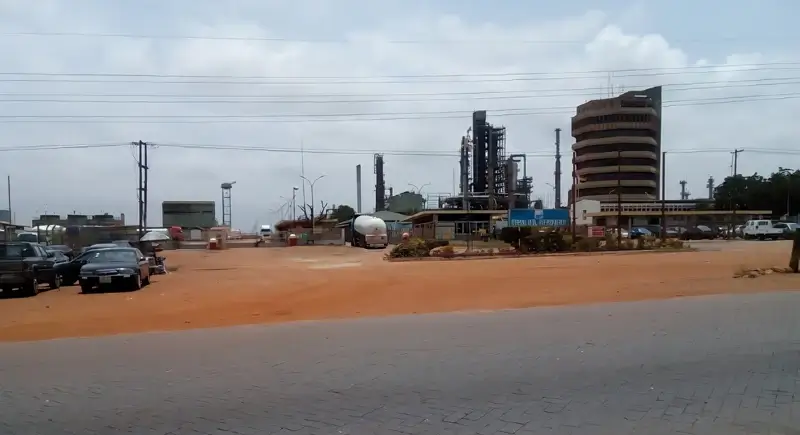
African energy innovation is increasingly shaping how national oil companies approach growth, technology, and sustainability across the continent. Collaboration between African producers is becoming central to improving energy security and industrial resilience.
That shift was underlined as Algeria’s Sonatrach and Ghana’s GNPC signed a new research and development partnership. The agreement places African energy innovation at the centre of upstream strategy, with APPO acting as the coordinating platform.
Introduction
A new memorandum of understanding between Algeria’s Sonatrach and the Ghana National Petroleum Corporation was signed in Brazzaville under the auspices of APPO. Announced on 8 January 2026, the agreement establishes a framework for joint research, development, and innovation in Africa’s oil and gas sector.
The partnership is designed to strengthen African energy innovation by sharing expertise, assessing joint opportunities, and supporting sustainable hydrocarbon development across multiple regions.
APPO-facilitated partnership framework
The agreement was signed at APPO headquarters in Brazzaville, reflecting the organisation’s growing role as a continental coordination hub. Under the leadership of Secretary General Farid Ghezali, APPO facilitated discussions and formalised cooperation between Sonatrach and GNPC.
The framework sets out structured mechanisms for technical collaboration, expertise exchange, and coordinated project assessment. As a result, African energy innovation is positioned as a shared objective rather than a purely national effort.
Research and development priorities
The scope of cooperation focuses on advanced upstream technologies aimed at improving efficiency and recovery. These areas are expected to strengthen local technical capacity and reduce reliance on external operators.
- Advanced seismic and subsurface technologies
- Artificial intelligence-enabled reservoir analysis
- Digital wells and digital oilfields
Core R&D focal areas
| Exploration technologies | High-definition seismic processing, 4D seismic, and stratigraphic analysis |
| Production optimisation | Enhanced oil recovery, real-time reservoir modelling, and asset life extension |
| Digitalisation | Integrated digital oilfields and data-driven operational systems |
Energy transition and environmental integration
Beyond core upstream activity, the MoU integrates environmental and transition-related priorities. Cooperation will include carbon footprint reduction, low-carbon industrial solutions, and hydrogen-related technologies.
In addition, the partnership addresses water management, waste treatment, and air pollution mitigation. This approach reflects a transition-in-place model, aligning African energy innovation with emissions management while continuing hydrocarbon development.
Implications for Ghana’s energy strategy
For Ghana, the agreement supports efforts to revitalise oil production and expand gas development. The country has 17 oil and gas projects planned by 2027, alongside initiatives to monetise over 2.1 trillion cubic feet of gas resources.
Access to Sonatrach’s technical expertise is expected to influence recovery rates, field longevity, and gas utilisation. As a result, African energy innovation directly links to government revenue, power generation reliability, and industrial feedstock availability.
- Upstream field redevelopment
- Gas processing and monetisation
Algeria’s role as a continental energy partner
Algeria is advancing a five-year hydrocarbon investment programme valued at up to $60 billion. The plan prioritises exploration, production stability, and downstream modernisation, alongside selected low-carbon initiatives.
By pairing capital investment with structured R&D cooperation, Sonatrach positions itself as a technical partner to African peers. This reinforces African energy innovation through shared know-how rather than external dependency.
Ghana upstream data
| Metric | Value | Notes |
|---|---|---|
| Proven oil reserves | ~660 million barrels | Down from peak; output declined from 71.4 million barrels in 2019 to ~36 million barrels estimated for 2025 |
| 2025 production (Jan–Sep) | 27.93 million barrels | Vs. 32.9 million barrels in 2024; average ~100,000 bpd |
| Jubilee field 2026 start | ~70,000 bpd gross | After J-74 well online; part of $2 billion expansion with 20 wells planned (5 in 2026) |
| Gas reserves | 2.1 trillion cubic feet | Focus on monetization via Atuabo plant (150 mmscf/d) + new 150 mmscf/d plant approved |
| Projects pipeline | 17 oil/gas by 2027 | ~$3.5 billion capital pledged in 2025; includes OCTP Phase 2 |
Algeria/Sonatrach data
| Metric | Value | Notes |
|---|---|---|
| Recent discoveries | 13 new oil fields (Jan–Aug 2025) | Via 7,824 km² 2D + 7,768 km² 3D seismic; 466,156 meters drilled (+15% YoY) |
| Investment plan | $60 billion (2026–2030) | 80% oil/gas; upstream focus + downstream/refining; endorsed Jan 2026 |
| Gas flaring target | <1% by 2030 | Across 200 fields |
APPO context
-
15 members: Algeria, Angola, Benin, Cameroon, Chad, Congo, DR Congo, Côte d’Ivoire, Egypt, Equatorial Guinea, Gabon, Libya, Niger, Nigeria, South Africa
-
Mission: Coordinate hydrocarbon cooperation, R&D, knowledge sharing for energy security and diversification; HQ Brazzaville
Industry Comments
NJ Ayuk, Executive Chairman of the African Energy Chamber, said;
“This MoU shows that African national oil companies are investing in innovation to secure the continent’s energy future. Research and technology are essential to producing oil and gas more efficiently and sustainably, while supporting Africa’s broader development needs.”
Moving Forward
The Sonatrach-GNPC partnership highlights a shift toward collaboration-driven African energy innovation. By focusing on research, technology, and sustainability, the agreement supports more efficient use of existing resources.
As APPO-backed cooperation expands, similar models could shape how African producers approach investment, resilience, and long-term energy security across the continent.
Sources: African Energy Chamber and African Petroleum Producers Organization.
Prepared by Ivan Alexander Golden, Founder of THX News, an independent news organization delivering timely insights from global official sources. Combines AI-analyzed research with human-edited accuracy and context.