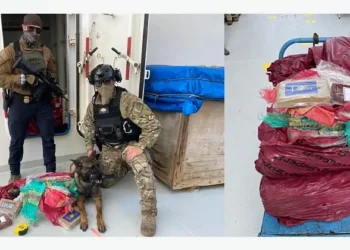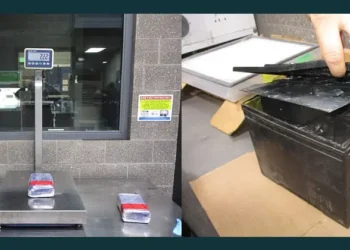

U.S. Customs and Border Protection officers in Louisville intercepted three express shipments from Hong Kong and Taiwan that contained counterfeit luxury goods valued at more than $18 million, seizing watches, hats, and jewelry destined for buyers in New York, Texas, and Houston.
CBP’s latest seizures highlight a growing flow of counterfeit parcels entering major U.S. hubs, especially during the holiday shopping period when online demand accelerates. The Louisville inspections reflect broader national enforcement trends as CBP targets express shipments linked to high-value brand violations and consumer-safety risks.
CBP’s Louisville Interceptions and Shipment Details
Officers conducted targeted inspections on December 5 and December 8, uncovering large quantities of counterfeit watches and apparel. Two shipments from Hong Kong contained Cartier, Audemars Piguet, Moncler, and Chrome Hearts items, while a third from Taiwan held 160 counterfeit Rolex watches. These parcels were headed to residential and commercial addresses in three states.
The seizures align with CBP’s holiday-season warnings about the surge in fraudulent goods. However, officers continue to intercept high-value fakes despite increasingly fragmented shipping patterns. Meanwhile, CBP’s public messaging stresses that counterfeit items can compromise consumer safety and undermine legitimate U.S. businesses.
| Indicator | Recent Movement | Context |
|---|---|---|
| Estimated MSRP if genuine | $18.6 million | Reflects luxury-brand targeting through express-consignment channels |
| Shipments involved | Three parcels | Originated from Hong Kong and Taiwan, routed to U.S. homes |
| Top counterfeit brands | Rolex, Cartier, AP | Consistently among CBP’s most frequently seized watch labels |
- Consumer concern: rising online listings for discounted “luxury” goods
- Retail behavior: demand spikes sharply during holiday shopping periods
- Public sentiment: growing awareness that counterfeit products pose safety risks
Breakdown of Counterfeit Items and Destination Cities
The parcels contained 400 counterfeit Cartier watches, dozens of branded hats, and nearly 200 high-value Rolex models. Additionally, each shipment was bound for a different U.S. metro area, suggesting a dispersed distribution network. This pattern reflects how counterfeiters leverage scattered delivery routes to reduce inspection risk.
Officers note that luxury-watch replicas increasingly arrive in consolidated quantities despite heightened enforcement activity. Furthermore, the destinations—Staten Island, Irving, and Houston—match known retail and resale-market hotspots where counterfeit goods often enter secondary circulation.
How CBP Identified and Seized the Counterfeits
CBP’s Centers of Excellence and Expertise authenticated the parcels and confirmed that each item carried infringing trademarks. Officers then exercised their authority to detain, seize, and ultimately destroy the goods in accordance with federal import regulations. However, officials emphasize that such seizures represent only a portion of the counterfeit flow reaching U.S. consumers.
The agency reports that counterfeit shipments now arrive in smaller, more fragmented quantities. Additionally, enhanced targeting algorithms allow CBP to identify patterns linked to repeat shippers and suspicious routing. These tools strengthen enforcement while keeping parcel-processing times manageable for legitimate trade.
Intellectual Property Rights and e-Recordation Requirements
CBP’s actions rely on brand owners recording their trademarks with the agency’s e-Recordation system. This enables officers to quickly verify authenticity during inspections. Meanwhile, the agency notes that counterfeiters increasingly mimic legitimate packaging, requiring officers to apply both technical analysis and field experience.
The recordation framework also supports enforcement against misclassification, false origin labels, and valuation discrepancies. These violations contribute to broader trade-compliance risks affecting supply chains, consumer trust, and national revenue collection.
Consumer Safety, Holiday Risk, and Economic Impact
The counterfeit economy imposes wide-ranging economic and safety costs across the United States. CBP warns that fake electronics, toys, and medications regularly pose hazards including fire risks, chemical exposure, and improper dosage. Therefore, consumers are urged to avoid deals that appear unusually cheap or lack verifiable seller information.
Meanwhile, national figures show the scale of the issue. In fiscal year 2025, CBP seized nearly 79 million counterfeit items valued at a notional $7.3 billion if genuine. These numbers illustrate both effective border enforcement and the size of the U.S. counterfeit market, which analysts estimate results in billions of dollars in lost sales and tax revenue annually.
National Counterfeit Trends and FY 2025 Data
CBP’s FY 2025 statistics demonstrate that counterfeit apparel, electronics, toys, and medications remain among the most commonly seized categories. However, analysts note that luxury-watch replicas are becoming more prominent due to online resale platforms. Additionally, forecasts suggest that the global counterfeit market could reach nearly $1.8 trillion by 2030 if current trends continue.
These shifts underscore why CBP highlights consumer education during peak shopping seasons. The agency encourages individuals to verify sellers, avoid suspicious deals, and understand the risks of purchasing goods through unvetted online marketplaces.
Broader U.S. and Global Counterfeit Market Context
International studies estimate that counterfeit goods account for roughly 2.5–3 percent of global trade, with the United States serving as a major destination market. Although seizures disrupt illicit networks, counterfeiters leverage global manufacturing hubs, low-cost shipping, and online storefronts to maintain distribution channels.
Additionally, enforcement agencies across multiple countries report rising parcel volumes linked to cross-border e-commerce. This shift requires customs authorities to refine targeting strategies and collaborate with brand owners to strengthen rights-protection systems.
Why Demand and Online Platforms Sustain the Market
Consumers often purchase counterfeit goods knowingly in search of lower-cost luxury alternatives. Meanwhile, online marketplaces provide fast, frictionless access to counterfeit listings, making enforcement more complex. Additionally, counterfeiters exploit social-media storefronts, encrypted messaging platforms, and third-party sellers to mask their operations.
As a result, CBP’s enforcement actions, while impactful, represent one component of a broader effort involving consumers, brands, marketplaces, and regulatory agencies. The Louisville seizures illustrate how counterfeit networks adapt to shipping trends yet remain vulnerable at key inspection points.
In Conclusion
The Louisville seizures highlight both the effectiveness of CBP’s inspection strategies and the scale of counterfeit shipments entering the United States. The intercepted parcels, valued at more than $18 million, demonstrate ongoing efforts to protect consumers and legitimate businesses during a period of heightened online shopping.
At the same time, national trends show that counterfeiters continue to exploit fragmented shipping channels and online marketplaces. Therefore, CBP’s enforcement work remains essential to reducing risks while broader economic, digital, and consumer-behavior factors continue to shape the counterfeit landscape.
Sources: U.S. Customs and Border Protection, OECD, National Intellectual Property Rights Coordination Center.
Prepared by Ivan Alexander Golden, Founder of THX News™, an independent news organization delivering timely insights from global official sources.
Combines AI-analyzed research with human-edited accuracy and context.