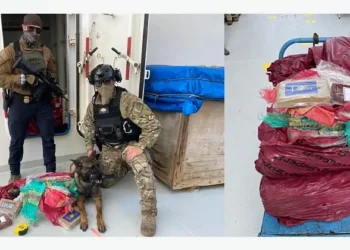

A sweeping Homeland Security operation in San Antonio has resulted in more than 150 arrests at an after-hours nightclub authorities say was frequented by individuals tied to cross-border criminal activity. The multi-agency raid uncovered drugs, weapons, and cash as investigators targeted suspected transnational networks.
The enforcement action, involving ICE Homeland Security Investigations, the FBI, and 14 partner agencies, forms part of a broader federal strategy to disrupt criminal organizations operating across South Texas. Officials say the venue’s late-night activity, foreign patronage, and previous intelligence reporting made it a focal point for the operation.
The U.S. Department of Homeland Security confirmed that a Nov. 16, 2025 search warrant at the San Antonio nightclub led to more than 150 arrests, including individuals with pending federal investigations. Authorities stated that the operation was designed to address concerns about illicit trafficking, document fraud, and suspected gang-related activity concentrated at the site.
Operation Overview and Main Findings
According to DHS, the raid resulted in 27 people being labelled as suspected Tren de Aragua affiliates, along with the recovery of cocaine, three firearms, and roughly $35,000 in cash. Officials described the action as one of the most extensive Homeland Security task force operations executed in the region this year.
Nevertheless, public court filings and independent investigations have not yet provided detailed evidence confirming gang membership for many of those detained. Analysts caution that early identification can rely on informal intelligence, associations, or patterns of behaviour rather than prosecutable proof. This gap continues to fuel debate over the evidentiary standards used in large-scale enforcement operations.

How the Raid Unfolded
Investigators said the nightclub functioned as an underground after-hours venue drawing local residents, undocumented migrants, and individuals previously encountered during investigations into drug trafficking and human smuggling. The site had reportedly been under observation for months as agencies monitored suspected financial and criminal activity linked to the location.
Authorities highlighted several arrests involving individuals with outstanding warrants or ongoing investigations. However, a significant portion of those detained faced only immigration-related violations and had no documented criminal convictions. Advocates argue that such sweeps may blur the distinction between public safety threats and vulnerable individuals navigating migration systems.
Primary Outcomes of the Enforcement Action
| Category | Outcome Reported |
|---|---|
| Total arrests | More than 150 individuals detained |
| Suspected gang affiliates | 27 individuals identified by DHS |
| Seized narcotics | Cocaine recovered from premises |
| Recovered weapons | Three firearms confiscated |
| Cash seized | Approximately $35,000 collected as evidence |
The detainees included people from Venezuela, Mexico, and Central America, underscoring shifting regional migration dynamics. DHS officials said the operation was consistent with efforts to hinder transnational criminal groups that exploit migrant communities and underground nightlife venues.
Background on Tren de Aragua
Tren de Aragua is widely described by regional security analysts as a Venezuelan-origin criminal network involved in human trafficking, extortion, and narcotics distribution. The group has gained attention in the United States due to concerns about expanding operations across Latin America.
Yet researchers note that definitive evidence linking many U.S.-based detainees to the gang remains limited. Some individuals arrested in related operations have denied gang ties, and prosecutors have not always filed charges referencing gang activity. The absence of clear identifiers, such as consistent symbols or markings, further complicates verification.
Profiles Named in the Federal Release
The DHS release listed individuals with prior immigration violations, theft convictions, aggravated assault charges, or pending investigations. Several were previously removed from the U.S. but re-entered unlawfully. Even so, officials did not publish documentation confirming that these individuals were members of Tren de Aragua, and their alleged affiliations remain subject to further review.
Concerns Raised by Independent Analysts
- Evidence linking detainees to Tren de Aragua remains limited in public records.
- Gang identification may rely on intelligence indicators that lack consistent standards.
Community and National Significance
In San Antonio, reactions to the raid reflect a divided landscape. Some residents welcomed the heightened focus on organized crime, citing concerns over violence and drug activity. Others voiced anxiety that broad enforcement actions could intensify fear in immigrant communities, discouraging cooperation with local authorities.
Nationally, the operation aligns with the Trump administration’s efforts to escalate actions against violent transnational groups and expand multi-agency task forces across key border states. New directives emphasize rapid enforcement operations and coordination among federal, state, and local units to curb criminal networks viewed as emerging threats.
The Takeaway
The San Antonio raid highlights the tensions inherent in balancing public safety, immigration enforcement, and due-process protections. As individual cases advance through the system, more information may emerge about the evidence behind suspected affiliations and the accuracy of initial assessments.
Federal officials say similar operations are likely to continue throughout South Texas and other border-adjacent regions. Meanwhile, policymakers, community leaders, and civil rights advocates continue to debate the best strategies for distinguishing between criminal actors and individuals seeking safety or economic opportunity.
The full implications of the raid—both for the communities involved and for broader national enforcement strategies—will continue to develop as investigations proceed and federal priorities evolve.
Sources: US Department of Homeland Security.
Prepared by Ivan Alexander Golden, Founder of THX News™, an independent news organization delivering timely insights from global official sources. Combines AI-analyzed research with human-edited accuracy and context.