Global unity around Ukraine’s future sharpened this week as a coalition of key Western and allied leaders publicly responded to the evolving U.S. peace proposal. Their coordinated statement, released at a major summit in Johannesburg, signals growing diplomatic momentum while underscoring several non-negotiable principles that matter deeply to Canada’s foreign policy identity and international commitments.
Although the leaders welcomed Washington’s efforts to broker an end to the conflict, they also highlighted concerns that resonate strongly with Canadians who value fairness, sovereignty, and rules-based order. Their message is clear: peace cannot come at the cost of Ukraine’s security, territory, or democratic agency.
The announcement reflects a significant moment in ongoing international diplomacy. A broad coalition—including Canada, France, the United Kingdom, Germany, Italy, Spain, Finland, Norway, Portugal, Japan, and EU leadership—issued a firm response to the first draft of the 28-point U.S. peace plan. Their statement emphasizes caution, unity, and a shared belief that sustainable peace must respect sovereignty and long-standing international norms.
Introduction
The joint leaders’ statement, delivered during a Johannesburg summit on November 22, 2025, provided a coordinated reaction to the first draft of a U.S.-led 28-point peace proposal. Leaders welcomed American engagement but outlined essential conditions that must guide any settlement, including Ukraine’s security, territorial integrity, and the need for EU and NATO consent before implementing related provisions.
Leaders’ Reaction: A Delicate Balance Between Support and Caution
The statement represents a carefully calibrated response. On one hand, it applauds renewed U.S. efforts to find a pathway to peace. On the other, it highlights the risks inherent in proposals that could weaken Ukraine’s defensive capability or alter its internationally recognized borders.
Canadians familiar with the country’s long-standing support for global stability will recognize the importance of both threads.
Leaders stressed that borders must never be changed by force—a principle that echoes both Canadian foreign policy and broader democratic values. Moreover, they raised concerns about limitations proposed for Ukraine’s armed forces, warning that such measures could leave the country exposed to future aggression.
These warnings reflect lessons learned from past agreements, including the Minsk accords, which struggled due to asymmetric obligations and weak enforcement.
Why This Statement Matters for Canadians
For Canadians, this diplomatic moment is more than international theatre. It connects directly to core national values: sovereignty, collective security, and multilateral cooperation. Canadian readers may find that the leaders’ remarks mirror long-held views in Ottawa about ensuring an equitable peace.
This clarity matters even more in the context of a changing global landscape. As geopolitical pressures intensify, international unity becomes critical to deterring further instability. Consequently, the statement sends a message not only to Washington and Kyiv, but also to Moscow and global observers watching for cracks in allied cohesion.
What the U.S. Peace Plan Proposes
The U.S. draft peace plan circulating in late 2025 includes major security, political, and territorial components. While many details remain under review, several key elements sparked immediate scrutiny from European and allied leaders.
Some Components of the U.S. Proposal
- Potential limitations on Ukraine’s armed forces, including caps on troop numbers and heavy weapon systems.
- Suggestions that Ukraine should refrain from future NATO membership as part of the settlement.
- Territorial concessions or adjustments that may be required to finalise the agreement.
- Proposed elections in Ukraine within 100 days—an extremely tight timeline given ongoing conflict conditions.
These proposals raise complex questions. Canadian readers, who often value fairness and practical decision-making, may see the tension between the desire for rapid conflict resolution and the need to ensure long-term stability.
Leaders Involved in the Joint Statement
The diplomatic weight behind the statement comes from the breadth of signatories. Their collective position represents a sizable coalition, increasing pressure on all sides to consider the implications of any future peace terms.
| Leader | Country/Organisation | Main Emphasis |
|---|---|---|
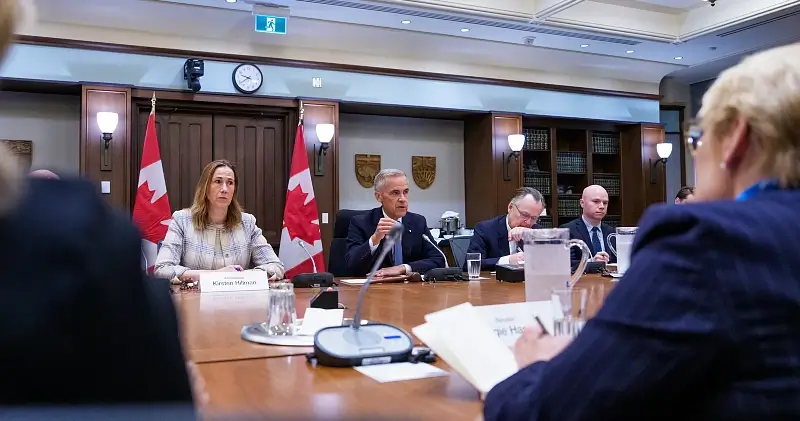
| Prime Minister Carney | Canada | Sovereignty, security guarantees |
| President Macron | France | Stronger enforcement, EU unity |
| Chancellor Merz | Germany | Border integrity, multilateral approval |
| Prime Minister Starmer | United Kingdom | Long-term stability |
| President von der Leyen | European Union | EU consent before implementation |
Renewed Economic Pressure
The Crackdown on Russia’s Shadow Fleet
Interestingly, the timing of the statement coincided with intensified efforts to disrupt Russia’s shadow fleet—a network of tankers circumventing oil price caps and sanctions. This alignment is not accidental. Instead, it reflects a coordinated diplomatic and economic strategy.
Canadian readers will appreciate the strategic rationale behind this move, especially given the country’s ongoing commitment to sanctions and international law. As oil revenues remain central to Russia’s war financing, targeting the shadow fleet increases pressure precisely when peace discussions are gaining traction.
Why the Shadow Fleet Crackdown Matters
- It reduces Russia’s revenue streams at a critical diplomatic moment.
- It strengthens Western leverage during negotiations on the peace plan.
- It demonstrates that economic and diplomatic strategies are deeply interconnected.
- It shows unity across sanctions, finance, and military policy areas.
Implications for Ukraine
For Ukrainians, the joint statement serves as reassurance that allied support remains firm. Although the U.S. proposal aims to end hostilities, the leaders stressed that Ukraine must not be pressured into an agreement that undermines its capacity to defend itself. The message is clear: any deal must protect Ukraine’s democratic future and sovereignty.
What Comes Next?
While supportive of American diplomatic leadership, the coalition of leaders emphasized that significant work remains. They stand ready to engage in further negotiations, but they insist that peace must be sustainable. This means ensuring that Ukraine’s armed forces remain capable, that borders remain intact, and that Europe’s institutional frameworks are respected.
Food for Thought
The leaders’ joint statement marks a pivotal moment in the search for peace in Ukraine. While optimism is growing, there is still a long road ahead. Canadian readers, familiar with the country’s tradition of fairness and diplomacy, will recognize the importance of the coalition’s stance: peace must be just, durable, and rooted in respect for sovereignty. Anything less risks repeating the mistakes of past conflicts.
Sources: Canadian Prime Minister.
Prepared by Ivan Alexander Golden, Founder of THX News™, an independent news organization delivering timely insights from global official sources. Combines AI-analyzed research with human-edited accuracy and context.