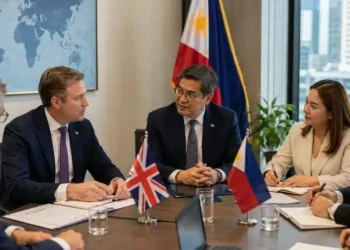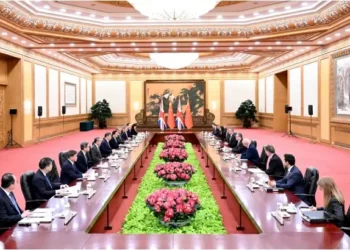

The 7th Pakistan-UK Dialogue on Arms Control, Non-Proliferation, and Disarmament recently convened, addressing key global security issues.
This round emphasized the importance of bilateral cooperation to mitigate risks associated with nuclear proliferation and emerging technologies.
Details of the 7th Pakistan-UK Dialogue
The recent dialogue between Pakistan and the UK, held to discuss arms control and non-proliferation, saw key figures Stephen Lillie and Tahir Andrabi leading the discussions. The focus was on various critical issues including disarmament and regional security.
Topics such as the UN General Assembly’s role in disarmament, reviews of international conventions like BTWC, CWC, and CCW, and the implications of emerging technologies were thoroughly discussed.
Strategic Importance of Bilateral Talks
The dialogue underscores the ongoing commitment of both nations to global security and stability. This bilateral engagement is crucial for developing strategies to counter nuclear threats and manage arms proliferation.
Since its inception in 2015, these dialogues have been pivotal in fostering cooperation and understanding between the two nations on sensitive security issues.
How Global Security and Technology Are Shaping Our World Today
The discussions also covered the peaceful uses of nuclear technology, which could potentially benefit sectors like energy and medicine in both countries. This aspect of the dialogue highlights the positive spin-offs of arms control negotiations.
Moreover, the dialogue addressed the need for updated international frameworks to manage the security implications of new technologies, linking arms control efforts to broader tech regulation trends.
Ongoing Collaborations and Upcoming Initiatives
The decision to continue these dialogues, with the next meeting scheduled in Islamabad in 2026, reflects a long-term commitment to these issues. This continuity is essential for maintaining momentum in bilateral security cooperation.
The ongoing dialogue series since 2015 has built a foundation of trust and mutual understanding, which is vital for addressing complex global challenges.
Highlights from the 7th Pakistan-UK Dialogue You Need to Know
| Category | Detail |
|---|---|
| Participants | Stephen Lillie (UK), Tahir Andrabi (Pakistan) |
| Focus Areas | Arms Control, Non-Proliferation, Disarmament, Regional Security |
| Next Meeting | Scheduled in Islamabad, 2026 |
Reactions and Expert Opinions
While no direct quotes from leaders or critics were provided in the press release, it is generally expected that industry leaders would support these dialogues as steps towards non-proliferation. Critics, however, might demand more concrete actions and verifiable disarmament commitments.
The discussions on emerging technologies and their regulation in arms control frameworks have been particularly noted by security analysts, highlighting the evolving nature of global security challenges.
What This Means for International Policy Moving Forward
The dialogue’s outcomes could influence future international policies, especially concerning the regulation of emerging technologies and the peaceful use of nuclear technology. These discussions help set the stage for more robust international treaties and cooperation.
Furthermore, the emphasis on multilateral export control regimes during the dialogue points to a more structured approach to international security in the future.
Additional Reading
Sources: Gov.uk, Sabah News, British High Commission Islamabad, and Business Recorder.
Prepared by Ivan Alexander Golden, Founder of THX News™, an independent news organization delivering timely insights from global official sources. Combines AI-analyzed research with human-edited accuracy and context.