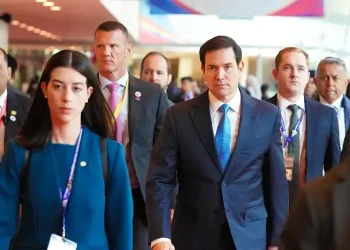

Secretary of State Marco Rubio met Hungarian Prime Minister Viktor Orbán in Budapest on February 16, 2026, and signed a U.S.–Hungary agreement aimed at facilitating civilian nuclear cooperation in Hungary. The joint press availability also covered bilateral investment and energy cooperation, as well as questions on Ukraine, China, and U.S. sanctions policy.
The event was held during Rubio’s visit to Hungary and followed a public signing ceremony referenced in the U.S. State Department transcript. Meanwhile, journalists from CBS News and Reuters pressed both leaders on China ties, election-related issues, sanctions waivers, and U.S. visa policy.
Details of the Seizure
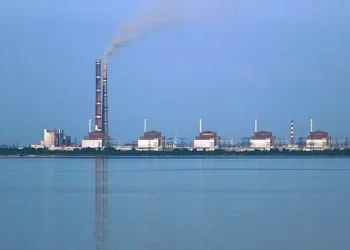
The U.S. State Department record shows the press availability included the signing of an agreement between the United States and Hungary to facilitate cooperation on Hungary’s civilian nuclear program. The State Department transcript identifies Rubio as the U.S. signatory and Hungarian Foreign Minister Péter Szijjártó as Hungary’s signatory.
Rubio described the moment as evidence of “action” rather than rhetoric and tied it to a prior White House meeting in November referenced during the remarks. Additionally, he said the agreement was intended to be the first of multiple collaboration steps in the coming years, particularly in energy-related areas, according to the State Department transcript.
The signed document was framed in the event as a civilian nuclear cooperation agreement between the U.S. Government and the Hungarian Government, with the ceremony presented as a formal marker of expanded energy cooperation. Meanwhile, Orbán listed energy domains—oil, gas, and nuclear—as areas where bilateral agreements were being pursued, according to the State Department transcript.
Both delegations also highlighted economics as a core track of cooperation. Orbán stated that “17 U.S. investments” had been decided in Hungary since “last year’s January,” calling it a decade-long record, while Rubio pointed to those investments as evidence that American firms were seeking opportunities in Hungary, according to the State Department transcript.
Verification Process
The U.S. State Department transcript describes the visit as part of ongoing bilateral engagement and includes references to a schedule that brought Rubio to Budapest after the Munich Security Conference. Additionally, Rubio repeatedly emphasized leader-level ties, saying the relationship between President Trump and Prime Minister Orbán had produced tangible outcomes, including policy decisions connected to energy cooperation.
When asked by CBS News about whether the United States was conditioning deeper cooperation on Hungary reducing ties with China, Rubio said the U.S. expectation was that countries act in their national interest, and he acknowledged that the United States itself maintains relations with China. However, he also said the U.S. view is that over-reliance on a single source for critical supply chains is not good for the world, according to the State Department transcript.
On sanctions waivers for Russian energy purchases, Rubio linked the policy posture to bilateral leadership relations and said the relationship “underpins” the President’s decision and would continue to do so while it remained a factor in bilateral relations, according to the State Department transcript.
Meanwhile, Orbán framed Hungary’s boundaries around NATO membership for security matters while supporting broad commercial engagement beyond security issues, according to the State Department transcript.
| Indicator | Recent Movement | Context |
|---|---|---|
| Civilian nuclear cooperation agreement | Signed in Budapest on Feb. 16, 2026 | Signing described in the U.S. State Department transcript as an agreement to facilitate civilian nuclear cooperation in Hungary |
| U.S. investments referenced by Hungary | “17” decisions since “last year’s January” | Prime Minister Orbán cited the figure during the joint press availability; Rubio referenced it as evidence of growing U.S. commercial interest, per the State Department transcript |
| Rubio travel context | Visit followed the Munich Security Conference | Rubio said he traveled from Munich and chose to stop in Budapest to build on bilateral engagement, per the U.S. State Department transcript |
Official Statement
Orbán described the moment as a “new golden age” in U.S.–Hungary relations and said he could not recall the relationship reaching such a high, balanced, and friendly level during his decades in politics, according to the U.S. State Department transcript. Additionally, he said Hungarians could travel to the United States without a visa again and referenced Hungary’s invitation to a “Peace Council,” with an inaugural meeting he said would take place in Washington later that week, according to the transcript.
Rubio echoed the “golden age” framing and said the relationship was close “in action” as well as rhetoric, pointing to the signed agreement as evidence. Meanwhile, he also addressed questions on Ukraine peace efforts, saying the United States was seeking to help end the war and describing renewed engagement that included technical-level military officials meeting “last week in the Middle East” and plans to restart talks in Geneva “later this week,” according to the U.S. State Department transcript.
In response to questions about China and Hungary’s domestic politics, Rubio emphasized that outcomes in Hungary are for Hungarian voters to decide while also stating plainly that the President and the Prime Minister have a close relationship that he said has been beneficial for bilateral ties. Reuters separately reported Rubio describing Trump as “deeply committed” to Orbán’s success ahead of Hungary’s April election.
Risks of Counterfeit Products
The joint press availability broadened beyond energy into policy disputes that can complicate allied coordination, especially where trade, sanctions, and security priorities overlap.
However, both leaders repeatedly framed disagreements as manageable through direct dialogue, with Orbán describing “open cards” and Rubio describing the need for seriousness in balancing state-to-state relationships, according to the U.S. State Department transcript.
Several risks and friction points were raised directly by named outlets during the Q&A. CBS News asked why the United States was not conditioning deeper cooperation on Hungary reducing extensive cooperation with China and asked about future U.S. engagement if Orbán were to lose the April election.
Reuters asked about Iran talks and about U.S. visa revocations tied to national security and foreign policy concerns, as well as Hungary’s approach to Chinese investment.
- Election-linked diplomacy: Reuters and CBS News both raised questions that linked the visit to Hungary’s April election, highlighting how leader-level alignment can become a focal point in bilateral messaging.
- China balancing question: CBS News explicitly asked about conditioning cooperation on Hungary’s China ties; Rubio responded by referencing national-interest decision-making and supply-chain diversification, per the State Department transcript.
- Sanctions and energy ambiguity: CBS News raised conflicting claims about the duration of a sanctions waiver related to Russian energy purchases; Rubio responded by tying the decision context to leadership relations, per the State Department transcript.
The exchange also included U.S. legal and security framing around visa policy and Iran diplomacy. Rubio said visas are “not a right” and that the State Department will revoke visas where a visitor’s presence is assessed as a threat to U.S. foreign policy or national security, while noting that removal proceedings involve other agencies and that the judiciary is a separate branch, according to the U.S. State Department transcript.
On Iran, Rubio described the difficulty of reaching a deal and said U.S. negotiators were traveling for meetings, adding that the President prefers negotiated outcomes while cautioning that talks would be hard.
Meanwhile, Orbán said Hungary’s NATO membership sets boundaries for security cooperation while supporting broader commercial engagement and discussing concerns openly with partners, according to the transcript.
In Conclusion
The Budapest press availability centered on a signed U.S.–Hungary civilian nuclear cooperation agreement and a broader message of tightened bilateral ties, as reflected in the U.S. State Department transcript. Additionally, the Q&A demonstrated that energy policy, sanctions posture, China engagement, and war-related diplomacy remain live issues shaping how that relationship is interpreted in public.
As the agreement moves from ceremony to implementation, the public record shows both governments framing cooperation as expanding, while named outlets continue to probe the durability and limits of alignment across security, trade, and political risk.
Sources: U.S. Department of State transcript, Reuters, Associated Press, and CBS News.
Prepared by Ivan Alexander Golden, Founder of THX News, an independent news organization delivering timely insights from global official sources.
Combines AI-analyzed research with human-edited accuracy and context.