
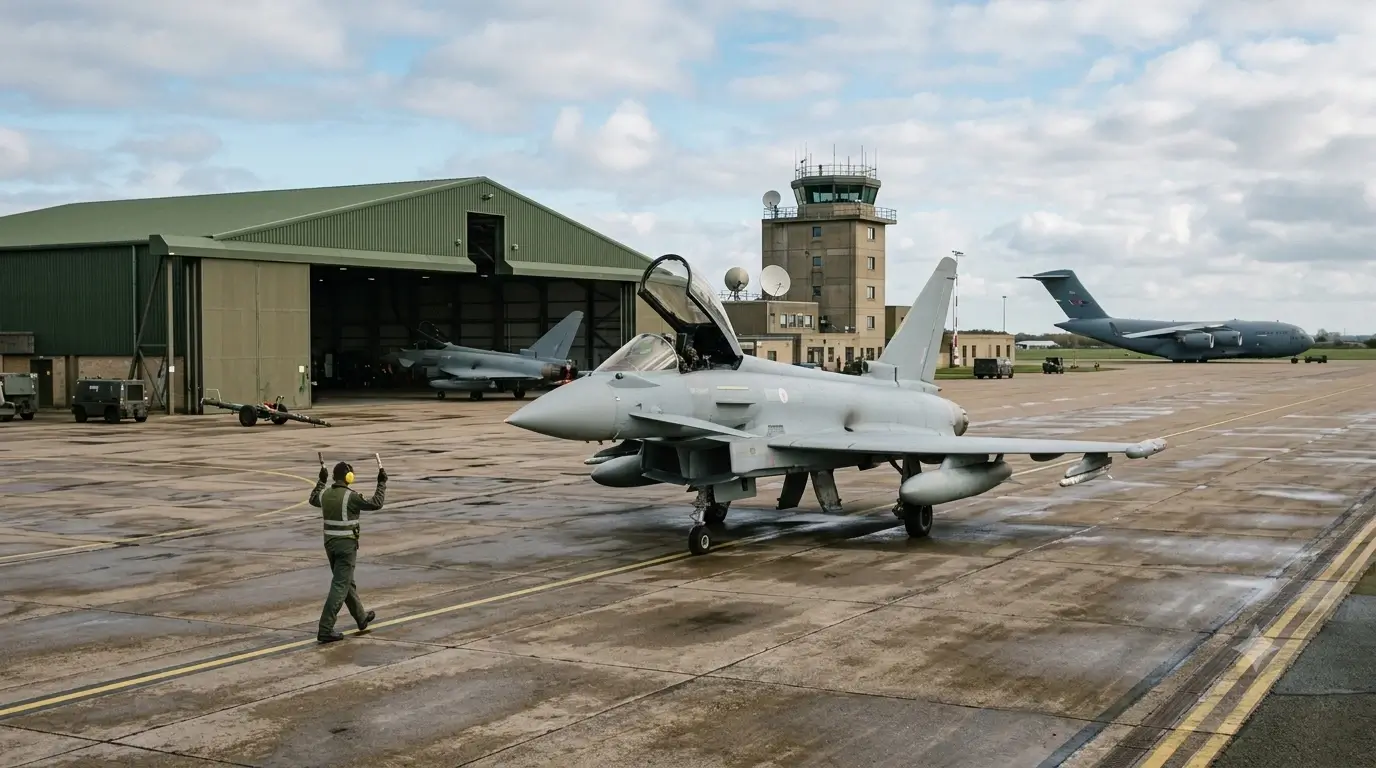
The Ministry of Defence confirmed that an RAF Rivet Joint aircraft was dangerously intercepted by two Russian fighter jets over the Black Sea last month, including one manoeuvre that triggered emergency systems aboard the aircraft. Defence Secretary John Healey MP condemned the incident after Russian Su-27 and Su-35 aircraft carried out repeated close passes during the unarmed RAF surveillance mission in international airspace.
The incident took place during a routine RAF surveillance flight over the Black Sea conducted as part of the United Kingdom’s contribution to NATO operations on the alliance’s Eastern Flank. The Rivet Joint aircraft was operating in international airspace and remained on mission despite the repeated interceptions.
According to the Ministry of Defence, one Russian Su-27 aircraft conducted six separate passes directly in front of the RAF aircraft while another Su-35 manoeuvred close enough to disable the aircraft’s autopilot system. UK officials later raised the matter formally with the Russian Embassy through diplomatic channels.
RAF aircraft intercepted during Black Sea mission
The Ministry of Defence said the RAF Rivet Joint aircraft was carrying out a planned reconnaissance mission over the Black Sea when it encountered two Russian fighter aircraft. Officials stated that the aircraft was unarmed and operating lawfully in international airspace during the flight.
The intercept involved repeated close approaches by Russian aircraft during the operation. Despite the manoeuvres, the RAF crew completed the planned mission and safely returned from the flight.
- Aircraft involved: RAF Rivet Joint reconnaissance aircraft alongside Russian Su-27 and Su-35 fighter jets.
- Operational area: International airspace above the Black Sea during a NATO-linked surveillance mission.
Russian aircraft carried out close manoeuvres
The Ministry of Defence stated that one Russian Su-35 aircraft flew close enough to trigger emergency systems aboard the RAF aircraft. Officials confirmed that the manoeuvre caused the Rivet Joint’s autopilot system to disengage during the encounter.
In a separate manoeuvre, a Russian Su-27 aircraft carried out six passes in front of the RAF aircraft. The Ministry of Defence said the aircraft approached to within six metres of the Rivet Joint’s nose during the intercept.
- Emergency response: RAF systems responded automatically after one Russian aircraft approached at close range.
- Intercept pattern: Russian aircraft conducted multiple close manoeuvres during the surveillance operation.
Black Sea Intercept Overview
| Indicator | Recent Movement | Context |
|---|---|---|
| Russian aircraft passes | Six close passes reported | According to the Ministry of Defence, one Su-27 repeatedly crossed directly in front of the RAF aircraft. |
| Aircraft proximity | Within six metres | Officials stated the Russian aircraft approached close to the nose of the Rivet Joint aircraft. |
| Emergency systems | Autopilot disengaged | The Ministry of Defence confirmed onboard emergency systems were triggered during one intercept. |
RAF crew completed planned surveillance flight
The Ministry of Defence said the RAF crew remained calm and professional throughout the incident despite the repeated interceptions. Officials confirmed that the aircraft completed its planned route before returning safely from the operation.
The Rivet Joint aircraft forms part of the RAF’s airborne reconnaissance capability and is used for electronic surveillance missions. The aircraft contributes to NATO situational awareness and regional monitoring operations.
UK government condemns Russian actions
Representatives from the Ministry of Defence and the Foreign, Commonwealth and Development Office formally démarched the Russian Embassy following the incident. UK officials described the actions of the Russian pilots as dangerous and unacceptable.
The government stated that the behaviour created unnecessary operational risk during a routine surveillance mission conducted in international airspace. Officials also linked the incident to wider concerns surrounding Russian military activity near NATO operations.
UK Response and NATO Context
| Indicator | Recent Movement | Context |
|---|---|---|
| Diplomatic response | Russian Embassy contacted | UK officials formally condemned the behaviour through diplomatic channels this week. |
| Mission status | Flight completed successfully | The RAF crew continued the planned surveillance operation despite the interceptions. |
| NATO involvement | Eastern Flank support operations | The aircraft was operating alongside wider NATO regional security activity. |
Ministerial Comments
John Healey MP, Defence Secretary said;
“This incident is another example of dangerous and unacceptable behaviour by Russian pilots, towards an unarmed aircraft operating in international airspace. These actions create a serious risk of accidents and potential escalation.”
“I would like to pay tribute to the outstanding professionalism and bravery of the RAF crew who continued with their mission despite these dangerous actions.”
“Let me be very clear: This incident will not deter the UK’s commitment to defend NATO, our allies and our interests from Russian aggression.”
Incident compared with previous Black Sea encounter
The Ministry of Defence described the latest intercept as the most dangerous Russian action involving a UK Rivet Joint aircraft since 2022. During that earlier incident, a Russian aircraft fired a missile near a British aircraft operating over the Black Sea.
Officials said the latest event reflected continuing operational tensions in the region. The Ministry of Defence stated that the latest encounter involved repeated unsafe manoeuvres during a routine surveillance mission.
Wider NATO and regional security context
The incident occurred amid ongoing Russian military activity across Eastern Europe and the High North. The Ministry of Defence stated that British aircraft, ships and personnel continue to operate alongside NATO allies in surveillance and operational monitoring missions.
The interceptions also followed recent UK operations involving Russian submarine activity near underwater infrastructure in the North Atlantic. British forces have continued participating in allied surveillance and deterrence operations across NATO operational areas.
The Ministry of Defence said the RAF aircraft incident over the Black Sea demonstrated continued close-intercept activity near NATO surveillance operations between Russian military forces and NATO surveillance missions operating in international airspace. UK officials formally condemned the behaviour of the Russian pilots and reaffirmed Britain’s commitment to supporting NATO surveillance and reconnaissance operations.
The RAF aircraft completed its surveillance mission safely despite repeated close manoeuvres and temporary disruption to onboard flight systems during the intercept.
Sources: Ministry of Defence and The Rt Hon John Healey MP.
Prepared by Ivan Alexander Golden, Founder of THX News, an independent news organisation delivering timely insights from global official sources. Combines AI-analysed research with human-edited accuracy and context.