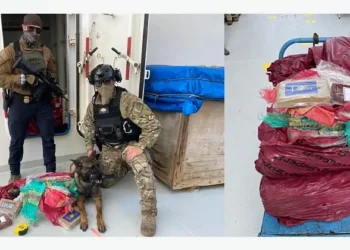
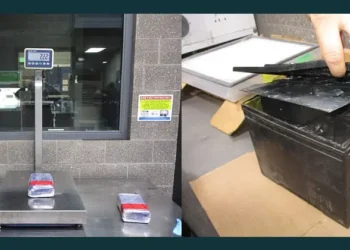
The U.S. Coast Guard (USCG) has achieved one of the largest maritime drug seizures in its history. Through Operation Pacific Viper, launched in early August, Coast Guard forces intercepted over 100,000 pounds of cocaine in the Eastern Pacific Ocean, disrupting cartel operations before the drugs reached American shores.
Operation Pacific Viper: A Surge in Maritime Defense
Operation Pacific Viper represents a concentrated surge of U.S. maritime forces targeting transnational cartels and human smuggling routes. Since its launch, the mission has averaged 1,600 pounds of cocaine interdicted daily, amounting to 34 successful interdictions across international waters.
Homeland Security Secretary Kristi Noem praised the operation’s results, describing it as “a crucial weapon in the fight against foreign drug traffickers.” She added that the operation fulfills the administration’s promise to protect American lives and “reestablish maritime dominance.”
Leadership and Determination on the High Seas
Rear Adm. Jeffrey Novak, deputy commander of the U.S. Coast Guard Pacific Area, credited the success to the dedication and precision of Coast Guard crews. “When we say the Coast Guard is accelerating counter-narcotics operations, we mean it,” he said.
Novak emphasized that the operation combines law enforcement authority with cutting-edge maritime technology, enabling rapid response and coordination with allied partners. Together, they are systematically dismantling narco-terrorist networks across the Eastern Pacific.
Record-Breaking Seizures Strengthen National Security
| Vessel | Seized Cargo | Estimated Value | Location |
|---|---|---|---|
| USCGC Hamilton | 76,000 lbs of illegal drugs | $473 million | Port Everglades, FL |
| Operation Pacific Viper Total | 100,000+ lbs of cocaine | N/A | Eastern Pacific Ocean |
The USCGC Hamilton’s offload in August marked the largest drug offload in Coast Guard history — 76,000 pounds of illegal narcotics, including 61,740 pounds of cocaine and 14,400 pounds of marijuana, valued at nearly half a billion dollars.
Protecting American Communities
Beyond interdictions, Operation Pacific Viper underscores the Coast Guard’s resilience and innovation during challenging circumstances. Earlier this week, Secretary Noem announced a funding measure — the One Big Beautiful Bill — ensuring Coast Guard personnel continue receiving pay despite the ongoing government shutdown.
This commitment allows service members to maintain operational readiness while safeguarding U.S. waters from transnational threats.
Key achievements so far include:
-
Disrupting multiple cartel supply chains before drugs reached U.S. shores.
-
Strengthening partnerships with regional allies to enhance maritime intelligence sharing.
A Continuing Mission of Vigilance
Operation Pacific Viper is far from over. Coast Guard officials have confirmed ongoing missions throughout the Eastern Pacific, supported by surveillance aircraft, maritime patrols, and advanced sensor technologies. These deployments ensure persistent pressure on trafficking networks seeking to exploit ocean trade routes.
As the mission continues, Secretary Noem reaffirmed that the Coast Guard remains a cornerstone of America’s homeland defense strategy. “The men and women of the Coast Guard are saving countless lives and standing as America’s first line of defense,” she said.
Whats Next?
With over 100,000 pounds of cocaine intercepted, Operation Pacific Viper signals a new phase in U.S. maritime law enforcement. The Coast Guard’s success showcases its global coordination, technological adaptability, and enduring resolve to combat criminal organizations that threaten public safety.
As the operation moves forward, its message is unmistakable: the United States will confront and dismantle drug networks at sea — before they reach American communities.
Sources: US Department of Homeland Security.
Prepared by Ivan Alexander Golden, Founder of THX News™