
The United Kingdom continues to frame security in Northern Europe as directly linked to its own national defence, with renewed emphasis on the Baltic and High North regions.
Against the backdrop of heightened Russian military activity, the UK has reiterated the importance of allied solidarity, NATO integration, and coordinated defence action across the Nordic–Baltic region.
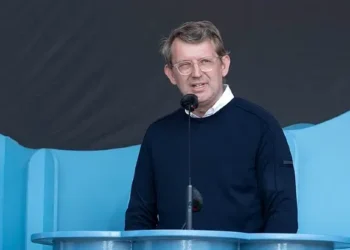
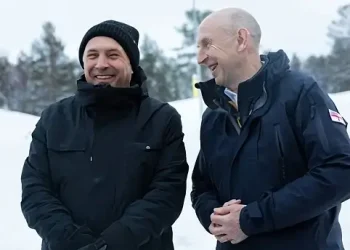
The Defence Secretary outlined these priorities during opening remarks delivered ahead of a press conference in Sweden, setting out the UK’s approach to shared security, cooperation, and deterrence alongside a close European ally.
Introduction
The Defence Secretary delivered opening remarks in Sweden on 14 January 2026 during a bilateral visit focused on defence and security cooperation. The remarks were published by the Ministry of Defence as an official transcript of the speech as delivered.
The statement addressed shared UK–Sweden security interests, developments in Northern Europe, and ongoing cooperation through NATO and UK-led defence frameworks. It also set the context for discussions with Swedish counterparts on regional security and defence collaboration.
Opening remarks in Sweden
The Defence Secretary described Sweden as a close ally of the United Kingdom, emphasising mutual defence commitments and shared values. He noted that both countries face common security threats and increasingly aligned strategic priorities.
The remarks highlighted that Baltic and High North security featured prominently in the UK’s most recent Strategic Defence Review. The region was presented as central to European stability and allied deterrence efforts.
Shared threat environment in Northern Europe
The Defence Secretary stated that Russia is rapidly re-establishing its military presence in the Baltic and High North, including reopening former Cold War bases. These developments were cited as shaping a new security environment for European nations.
He added that this evolving threat landscape requires closer coordination between European allies. The remarks framed current conditions as demanding stronger collective defence responses.
- Russian military activity in the Baltic and High North
- Reopening of former Cold War bases
European security and solidarity
The Defence Secretary emphasised that European security depends on European solidarity. He said that cooperation between nations is essential to strengthening collective deterrence and defence.
He also noted the breadth of existing cooperation between the UK and Sweden, describing it as both deep and expanding. The remarks positioned bilateral partnership as part of a wider European approach.
Joint Expeditionary Force and Baltic security
The speech highlighted the role of the UK-led Joint Expeditionary Force in supporting deterrence and crisis response in Northern Europe. The Defence Secretary said the framework enhances the ability of participating nations to act together quickly.
He confirmed that the UK would chair a meeting of Joint Expeditionary Force Chiefs of Defence Staff in Riga the following day. The meeting was described as part of ongoing efforts to develop new plans and activities.
Joint Expeditionary Force Cooperation
| Framework | UK-led multinational force focused on Northern European security and rapid response |
| Upcoming engagement | Chiefs of Defence Staff meeting chaired by the UK in Riga |
Ukraine and wider strategic context
The Defence Secretary linked European security directly to the outcome of the conflict in Ukraine. He stated that a secure Europe requires a strong Ukraine and warned that Russian success there would have wider consequences.
He thanked Sweden for its support for Ukraine, describing Swedish assistance as important both for current defence efforts and longer-term stability planning.
- Support for Ukraine as part of European security
- Shared assessment of risks if Russia prevails
NATO integration and allied operations
The remarks referenced Sweden’s recent accession to NATO and its growing role within the Alliance. The Defence Secretary said Sweden has become an active and integral contributor to NATO security operations.
He pointed to joint UK–Swedish air policing activities as an example of practical cooperation. These operations were presented as evidence of increasing interoperability between allied forces.
UK–Sweden Cooperation
| Framework | Status | Details |
|---|---|---|
| JEF Chiefs of Defence Staff Meeting | Scheduled (January 15, 2026, Riga) | UK chairs to develop new Baltic/High North plans, exercises and crisis response.chathamhouse+1 |
| Industrial/Procurement Cooperation | Active/Expanding | Discussions on joint production and innovation; Sweden’s 2026 defence budget hike (18%) aligns with NATO targets and enables more shared capabilities.16thcouncil+2 |
| NATO Eastern Flank Integration | Ongoing | UK and Swedish forces already fly joint air policing; further ISR and subsea monitoring missions planned.chathamhouse+1 |
Defence industrial and innovation cooperation
The Defence Secretary said that defence cooperation extends beyond operations to industrial partnership and innovation. He noted discussions aimed at strengthening collaboration in these areas.
He added that building together is as important as deterring together. The remarks framed industrial cooperation as supporting long-term defence capability.
Stakeholder Comments
Ministerial Comments
John Healey, Defence Secretary said;
“Sweden is a critical ally of the United Kingdom. We face the same threats, share the same values, and together we are stepping up our coordinated action to strengthen European security.”
In Conclusion
The Defence Secretary’s remarks in Sweden set out the UK’s approach to Northern European security, grounded in alliance cooperation, NATO integration, and regional deterrence. By emphasising shared threats, joint frameworks, and partnership with Sweden, the statement positioned Baltic and High North security as integral to wider European stability and the UK’s own defence posture.
Sources: Ministry of Defence, Chatham House, Britain’s World and The Rt Hon John Healey MP.
Prepared by Ivan Alexander Golden, Founder of THX News, an independent news organisation delivering timely insights from global official sources. Combines AI-analysed research with human-edited accuracy and context.