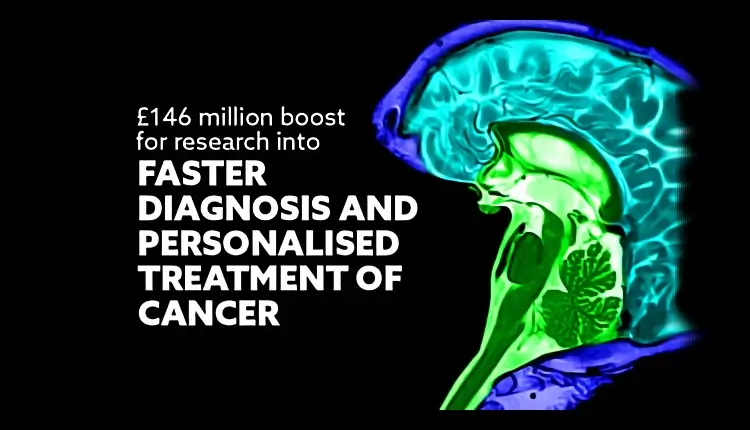
The UK government has announced significant investments in cutting-edge technologies aimed at improving cancer detection. These innovations, including AI-driven breast screening and advanced blood tests, are poised to transform the way cancer is identified and treated in the UK.
New Technologies in Cancer Detection
AI-Powered Breast Screening
A recent prospective evaluation by NHS Grampian, the University of Aberdeen, and Kheiron Medical Technologies has shown promising results with the use of AI in breast cancer screening.
The AI solution, known as Mia, has helped doctors detect an additional 12% of breast cancers compared to routine practice. This technology not only enhances detection rates but also reduces unnecessary recalls and workload by up to 30%.
Dr. Gerald Lip, who led the trial, highlighted that
“if you pick up cancer under 15mm, most women now will have a 95% survival rate.”
This early detection can significantly reduce stress and anxiety for patients by notifying them within 3 days instead of 14.
Multi-Cancer Blood Tests
In addition to AI, the UK government is also funding the development of multi-cancer blood tests. A £120 blood test, currently under development at Southampton University, has the potential to detect the 12 most common forms of cancer before symptoms appear.
This test, which is a variant of the PCR test used during the Covid pandemic, can identify cancers such as breast, prostate, and lung cancer without generating false positives.
Government Investment and Support
The government’s commitment to these technologies is part of a broader strategy to enhance the UK’s life sciences industry.
Health Secretary Wes Streeting emphasized that these advancements could be “transformative and potentially life-saving,” allowing for earlier detection and reducing lengthy waits for tests and scans.
The Broader Impact
GRAIL’s Galleri Test
Another significant initiative is the partnership between GRAIL and the NHS to introduce the Galleri multi-cancer early detection blood test. This test has shown the potential to detect over 50 types of cancer with a low false positive rate.
The UK aims to roll out this test to around one million people by 2025, which could reduce the number of cancers diagnosed at late stages by nearly half.
Innovative Devices Access Pathway (IDAP)
The government is also investing £10 million in the IDAP pilot scheme to support innovative medical technologies. This includes devices that can destroy liver cancer tumors using focused ultrasound waves and apps to manage Multiple Sclerosis.
These technologies are designed to ease pressure on the healthcare system and improve patient outcomes.
Main Benefits and Statistics
- Early Detection: Technologies like Mia and Galleri are designed to detect cancers at an earlier stage, significantly improving survival rates.
- Reduced Workload: AI augmentation can reduce the workload for medical staff by up to 30%, allowing for more efficient use of resources.
- Multi-Cancer Detection: The new blood tests can detect a wide range of cancers, including breast, prostate, and lung cancer, from a single blood sample.
Quotes
“AI has the ability to transform every industry, but there is perhaps no more powerful case than in healthcare, which impacts us all throughout our lives,”
said Jacob West, Managing Director of Healthcare and Life Sciences at Microsoft UK.
“The results of the prospective evaluation at NHS Grampian are clear evidence that AI, in partnership with clinicians, can play a vital role in improving patient outcomes”.
In Conclusion
The UK government’s investment in AI and blood test technologies marks a significant step forward in the fight against cancer.
These innovations promise not only to improve detection rates but also to enhance patient outcomes and reduce the burden on the healthcare system.
Sources: THX News, Department for Science, Innovation and Technology, Department of Health and Social Care, UK Research and Innovation, The Rt Hon Wes Streeting MP & The Rt Hon Peter Kyle MP.