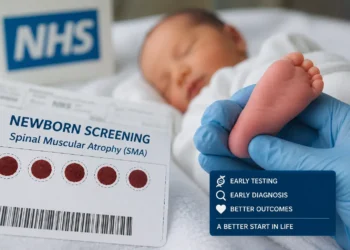

The Department of Health and Social Care, UKHSA, NHS England and the Department for Education announced, with Health and Social Care Secretary James Murray, a one-off MenB vaccine programme offering two doses to eligible young people in England from July 2026.
The programme applies in England ahead of the 2026 academic year. It covers Year 13 pupils and eligible under-25s starting university or residential further education for the first time this autumn.
Students will be offered two doses before moving into settings where close and prolonged contact can increase exposure to meningococcal bacteria. The NHS expects vaccinations to be available from the end of July, with bookings opening in mid-July.
MenB vaccination programme announced for students
The one-off programme will offer MenB vaccination to thousands of young people before the autumn term. It is designed to provide protection before students enter shared education and accommodation settings.
Eligible students will need two doses for protection. The first dose is expected from July, with the second dose given in August where timing allows.
Who will be eligible for the MenB vaccine
The offer includes people completing Year 13 in summer 2026 who were born between 1 September 2007 and 31 August 2008. It also includes people under 25 starting university or moving into some residential further education settings for the first time in autumn 2026.
- Year 13 pupils: all people in the eligible date-of-birth range will receive the offer, regardless of their education plans.
- New university entrants: under-25s starting university for the first time this autumn will be included.
- Residential further education: under-25s moving into some residential further education settings for the first time will also be covered.
- Exclusions: postgraduates and students starting a second or later year are not covered by this offer.
International students under 25 entering their first year of university are advised to receive their first dose in their home country where possible. The programme is focused on those at highest immediate risk before the new academic year begins.
Eligibility And Access Overview
| Indicator | Recent Movement | Context |
|---|---|---|
| Year 13 pupils | Included | DHSC said people completing Year 13 in summer 2026 within the stated birth range will receive the offer. |
| First-year university students | Included if under 25 | UKHSA said first-year university students face higher MenB risk than their peers. |
| Residential further education | Included in some settings | The government said under-25s moving into some residential further education settings for the first time are eligible. |
| Second-year and postgraduate students | Not included | DHSC said postgraduates and those starting a second or later year are outside this one-off offer. |
Why the programme is being introduced
The government said the programme follows the MenB outbreak in Kent earlier this year and a higher-than-normal number of clusters. Officials described the Kent outbreak as the largest and fastest-growing MenB outbreak recorded in the UK.
Officials said the response to the Kent incident has concluded. The new programme is being used while the government monitors evidence on whether there has been a change in how MenB affects people.
How the vaccine rollout will work
Those eligible in Year 13 will be contacted directly through the NHS App, text, email or letter, depending on the records held by the health service. Under-25s starting university for the first time will be able to book appointments directly with available pharmacies.
- First dose: vaccinations are expected to be available in England from the end of July 2026.
- Second dose: eligible students need a second dose at least four weeks after the first.
- Booking route: appointments are expected through participating community pharmacies once bookings open in mid-July.
- Public information: DHSC, NHS England and UKHSA will run messaging to support uptake among eligible groups.
The government said it will work with universities, colleges, NHS organisations, student representative groups and professional bodies. The aim is to support consistent information before students move into new education settings.
Evidence and public health context
UKHSA data showed 313 confirmed cases of MenB in England during 2024/25. The agency said this accounted for approximately 83% of all invasive meningococcal disease cases.
Meningococcal disease can be life-threatening and may lead to long-term disability, including amputations, hearing loss and brain damage. Officials said it is fatal in around 10% of cases.
MenB Public Health Indicators
| Indicator | Recent Movement | Context |
|---|---|---|
| Confirmed MenB cases | 313 in England during 2024/25 | UKHSA said MenB made up approximately 83% of invasive meningococcal disease cases. |
| Case severity | Fatal in around 10% of cases | DHSC said meningococcal disease can also cause life-changing disabilities. |
| Student timing | October to November peak | UKHSA said invasive meningococcal disease cases tend to peak in this period each year. |
| Infant vaccination evidence | Around 75% reduction in eligible vaccinated groups | Officials said UK infant programme evidence showed lower MenB disease among eligible vaccinated groups. |
Future vaccination policy under review
The government said the Joint Committee on Vaccination and Immunisation has already provided advice on how a one-off targeted MenB programme could be prioritised. Further advice is expected as officials assess whether recent outbreaks and clusters indicate a longer-term change in disease patterns.
Ministers said the current programme is focused on protecting those at highest immediate risk before the start of the new academic year.
Stakeholder Comments
James Murray, Secretary of State for Health and Social Care said;
“The Kent outbreak and recent clusters indicate a possible change to the way MenB affects people. While we assess the latest evidence, we are acting now to help protect young people at highest immediate risk as they enter university and residential colleges this autumn.”
Dr Thomas Waite, Deputy Chief Medical Officer said;
“Two doses of the MenB vaccine, at least four weeks apart are needed for maximum protection, and I encourage everyone who is attending university and further education for the first time this autumn to come forward for their first dose as soon as possible.”
Baroness Jacqui Smith, Minister for Skills said;
“Starting university or college is an exciting milestone. This vaccination programme means students can focus on their studies and new experiences, knowing they have taken an important step to protect their health.”
Caroline Temmink, Director of Vaccination at NHS England said;
“The NHS is ready to deliver this vital vaccination programme with appointments available at a number of community pharmacies from the end of July ahead of students starting university.”
The one-off MenB vaccine programme will give eligible young people in England access to two doses before the 2026 academic year. The rollout is focused on Year 13 pupils and under-25s entering university or residential further education for the first time. NHS contact and pharmacy appointments will support delivery, while further JCVI advice will inform any future programme decisions.
Sources: Department of Health and Social Care, UK Health Security Agency, NHS England, Department for Education, The Rt Hon James Murray MP and The Rt Hon Baroness Smith of Malvern; NHS England; Meningitis Research Foundation, and Meningitis Now.
Prepared by Ivan Alexander Golden, Founder of THX News, an independent news organisation delivering timely insights from global official sources. Combines AI-analysed research with human-edited accuracy and context.