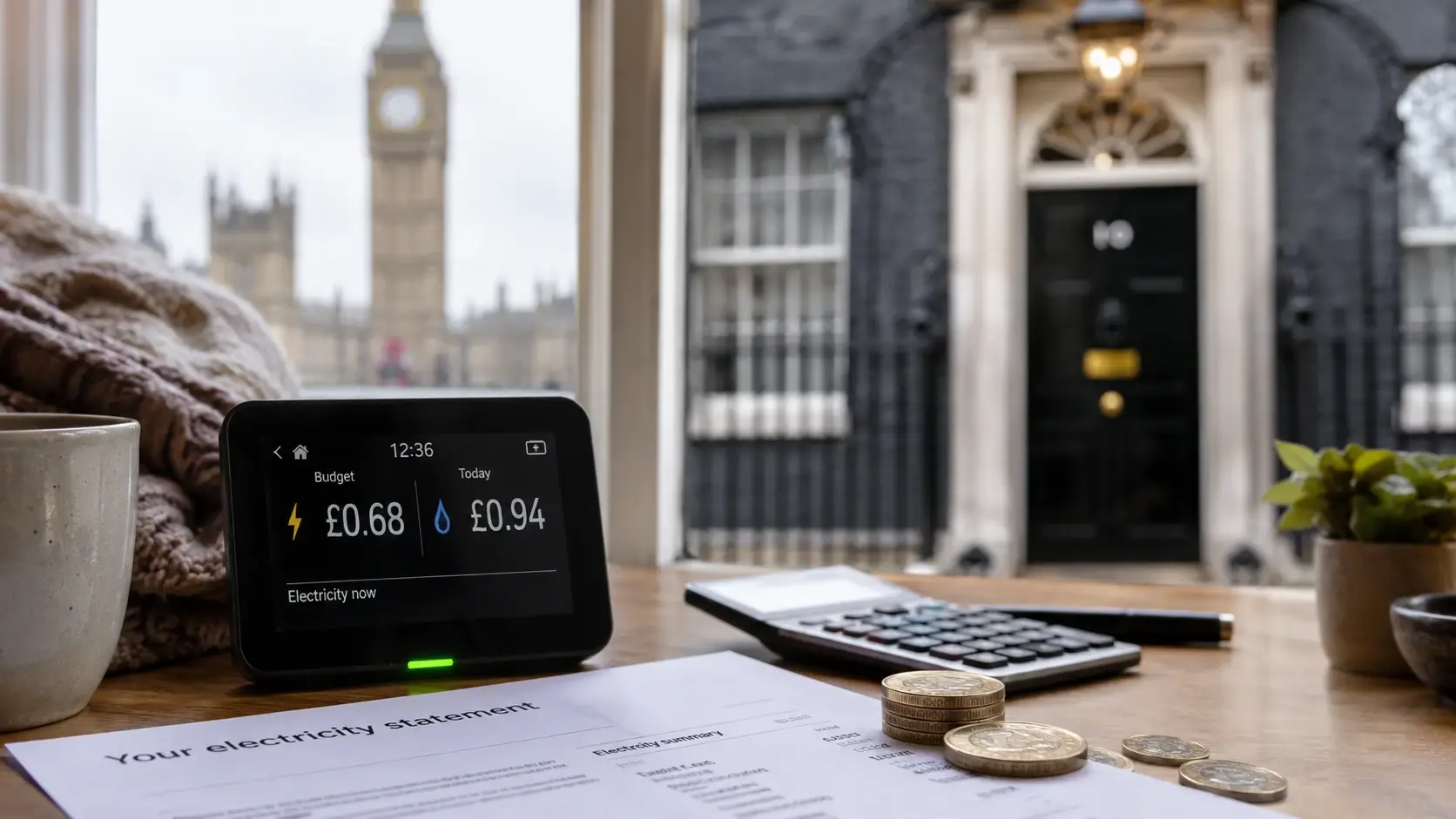
Prime Minister Andy Burnham has announced that VAT on domestic electricity bills in Great Britain will fall from 5% to 0% from 1 October 2026. The measure is expected to reduce the annual Ofgem price cap by around £45.
The announcement was made on 21 July, during Burnham’s second day as Prime Minister. The change is scheduled to take effect in time to influence the next Ofgem price cap and is funded for the remainder of the 2026–27 financial year.
The Treasury and Department for Energy Security and Net Zero will oversee the measure alongside Downing Street. Comparable funding will be provided to the Northern Ireland Executive because different VAT arrangements apply to electricity in Northern Ireland.
Government Removes VAT From Electricity Bills
The domestic electricity VAT rate will be reduced to zero from 1 October. The government said the timing would allow the change to affect household bills during the winter period.
The government expects electricity suppliers to pass the VAT reduction on to all customers, including households on fixed tariffs. This expectation also covers households on fixed tariffs, following the approach used when £150 of costs was removed from bills at the previous Budget.
- Current rate: Domestic electricity is charged VAT at 5%.
- New rate: The rate will fall to 0% from 1 October 2026.
- Implementation: Suppliers are expected to apply the reduction across domestic customer accounts.
Electricity VAT Change
| Indicator | Change | Context |
|---|---|---|
| VAT rate | 5% to 0% | Applies from 1 October |
| Annual saving | About £45 | Estimated price cap effect |
| Funding period | Remainder of 2026–27 | Longer-term policy not yet confirmed |
Household Savings and Eligible Customers
The government estimates that removing VAT will reduce the annual Ofgem price cap by approximately £45 from October. This reduction will be additional to the £150 of costs removed at the previous Budget.
The measure will also cover organisations that qualify for domestic energy VAT relief. These include certain small businesses not registered for VAT, eligible charities and residential care homes receiving the reduced rate.
Digital ID Programme Funds Tax Reduction
The cost of the measure during 2026–27 is estimated at around £850 million, based on projected electricity prices. Updated expenditure estimates will be published at the Budget.
Funding will come from cancelling the Digital ID programme, which had been expected to cost £1.8 billion over three years. The government said savings previously expected to fund Digital ID through reprioritisation of existing budgets will instead be redirected towards the electricity VAT measure.
Funding Periods and Cost Estimates
| Item | Estimated Value | Government Position |
|---|---|---|
| VAT measure | £850 million | Estimated 2026–27 cost |
| Digital ID programme | £1.8 billion over three years | Cancelled funding programme |
| Future measures | Not confirmed | Budget decision required |
Inflation and Cost-of-Living Impact
Government estimates indicate that the VAT reduction will lower Consumer Prices Index inflation by around 0.10 percentage points. Retail Prices Index inflation is expected to fall by approximately 0.14 percentage points.
Ministers said the measure would provide proportionately greater support to lower-income households because energy costs account for a larger share of their spending. The government linked the action to recent increases in energy prices and wider pressure on household finances.
Northern Ireland Support Arrangements
EU VAT rules continue to apply to goods in Northern Ireland under the UK’s post-EU arrangements, including electricity. Applying the same VAT reduction in Northern Ireland would require agreement from the European Union.
The Northern Ireland Executive will instead receive comparable funding to support households with living costs. The government said this approach was intended to deliver equivalent assistance across all parts of the UK without waiting for a change to the applicable VAT framework.
Longer-Term Energy Support Decisions
The announced tax reduction is funded for the current financial year. Decisions on extending the measure or introducing further support will be taken at the Budget alongside forecasts from the Office for Budget Responsibility.
The government said future measures would need to remain funded and consistent with its fiscal rules. No longer-term electricity VAT policy or additional household support package was confirmed in the announcement.
Prime Minister and Chancellor Comments
Andy Burnham, Prime Minister said:
“We’re taking immediate action to cut taxes on energy bills, put more money in people’s pockets and bring back hope.”
John Healey MP, Chancellor of the Exchequer said:
“Today’s energy tax cut will give families some breathing room on bills, and provide some reassurance this winter.”
The electricity VAT reduction will take effect in Great Britain on 1 October 2026 and is expected to lower the annual Ofgem price cap by around £45. Funding for 2026–27 will come from cancellation of the Digital ID programme, while Northern Ireland will receive comparable financial support. Further decisions on energy costs, future funding and any extension of the measure will be considered at the Budget.
Sources: Prime Minister’s Office, 10 Downing Street, HM Treasury, Department for Energy Security and Net Zero and The Rt Hon Andy Burnham MP.
Prepared by Ivan Alexander Golden, Founder of THX News, an independent news organisation delivering timely insights from global official sources. Combines AI-analysed research with human-edited accuracy and context.