
Fusion energy is being developed as a long-term source of clean, homegrown power that could support the UK’s energy security and industrial base. The technology is also linked to research, advanced engineering and regional investment across several parts of the country.
The Department for Energy Security and Net Zero and the UK Atomic Energy Authority have published the UK Fusion Strategy. The announcement sets out plans covering commercial fusion development, investment, skills, infrastructure and research support across the UK.
Introduction
The government published its Fusion Strategy on Monday 16 March, outlining how the UK intends to support commercial fusion energy development. The announcement was issued by the Department for Energy Security and Net Zero alongside the UK Atomic Energy Authority.
The strategy sets out funding, policy and delivery measures linked to fusion research, industrial growth and future electricity generation. It also confirms support for projects, skills programmes and investment activity tied to the UK fusion sector.
Launch of the UK Fusion Strategy
The strategy presents the government’s national plan for taking fusion energy from research and development towards commercial use. It describes fusion as part of the wider move toward clean, homegrown power and sets out actions intended to support jobs, investment and long-term energy resilience.
The announcement says Britain is the first country to set out a clear path to commercial fusion. It links the strategy to the government’s industrial plans and to support for regions involved in research, engineering and future plant development.
- National strategy published to guide commercial fusion development in the UK
- Plans linked to clean power, industrial growth and long-term energy security
- Support intended for jobs, investment and regional economic activity
Commercial Fusion Vision for the UK
The government says the strategy is designed to give industry and investors greater confidence in the UK fusion sector. It sets out a route intended to help move fusion from laboratory programmes towards future deployment on the grid.
The announcement states that the strategy could support more than 10,000 UK jobs by 2030. It also says the government wants the UK to offer a market framework for fusion electricity that supports private investment while protecting consumers.
STEP Prototype Fusion Power Plant
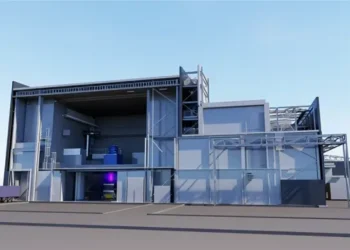
A central part of the strategy is support for STEP, the prototype fusion power plant planned for West Burton in Nottinghamshire. The government has announced a construction partner contract for the project, with plant construction expected to begin from 2030.
The strategy says STEP is backed by wider funding and is intended to help turn a former coal-powered area into a centre for fusion development. The announcement also links the project to associated research and development test facilities to support the programme in advance of full plant delivery.
Project Funding and Timelines
| STEP construction partner | Contract announced at £197 million for an initial term to 2029 |
| Plant location | West Burton, Nottinghamshire |
| Construction start | Expected from 2030 |
| Project completion | Due to be completed by 2040 |
| Company backing | UK Fusion Energy backed by £1.3 billion of funding |
Market Framework and Private Investment
The strategy includes plans for the UK to become the first country to offer a market framework for fusion electricity. According to the announcement, this is intended to reduce risk for private investors and support future commercial activity in the sector.
The government also says planning will be streamlined through fusion-specific rules and that engagement will take place with insurance markets on appropriate cover. The stated aim is to create conditions that support private investment while ensuring a fair outcome for consumers.
Research, Technology and AI Supercomputing
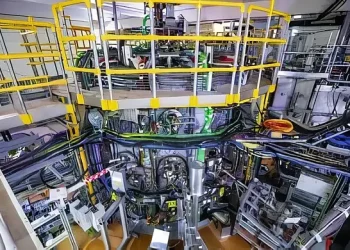
The strategy builds on the government’s wider fusion research and development funding and sets out further support for innovation. This includes investment in the Sunrise AI Supercomputer, which is described as the world’s most powerful fusion-dedicated AI supercomputer.
According to the announcement, the system is being developed by UKAEA in collaboration with the University of Cambridge. The government says it will be used to accelerate fusion design, modelling and operations as part of the wider national programme.
- £45 million allocated for the Sunrise AI Supercomputer programme
- Research support tied to design, modelling and operational development
- Fusion innovation linked to wider UK scientific and engineering capability
Skills Development and Regional Economic Impact
The government says the strategy includes a £50 million plan to strengthen fusion skills and innovation in the UK. It states that apprenticeships, training activity and an upcoming investment prospectus will support the aim of making Britain a base for fusion-related growth.
The announcement says the UK is aiming to train more than 2,000 people in fusion-related disciplines. It also highlights opportunities across Nottinghamshire, Cumbria, South Yorkshire and the Oxford-Cambridge Growth Corridor, presenting fusion as a career pathway for future scientists, engineers and innovators.
Regional and Skills Commitments
| Skills and innovation funding | £50 million package to support training, skills and sector development |
| Training ambition | Aim to train over 2,000 people in fusion-related disciplines |
| Regional focus | Nottinghamshire, Cumbria, South Yorkshire and the Oxford-Cambridge Growth Corridor |
| Job outlook | Strategy linked to supporting more than 10,000 UK jobs by 2030 |
Global Fusion Race and International Partnerships
The announcement places the UK strategy within wider international competition to develop fusion energy. It refers to activity in countries including the United States, China and Japan, and presents the UK as seeking a leading role in the future fusion market.
The strategy also refers to planned international cooperation and investment activity. This includes an agreement between UKAEA and Eni to establish a company to advance fusion energy technologies, as well as reference to the UK-US Tech Prosperity Deal and a UK-US Global Fusion Policy Summit due later this year.
The government says fusion-related breakthroughs are also supporting work in other sectors through UKAEA spin-off activity. These areas include AI design, medical imaging, advanced robotics and microwave systems.
Stakeholder Comments
Ed Miliband, Secretary of State for Energy Security and Net Zero said;
“From Nottinghamshire to Cumbria, and from the Oxford-Cambridge corridor to South Yorkshire, Britain has long been at the forefront of fusion energy.
With our Fusion Strategy, we’re going further – backing industry, supporting over 10,000 jobs, and paving the way for the ultimate long term energy security solution – clean, virtually limitless energy powered by British ingenuity and determination.”
Lord Vallance, Minister for Science, Innovation, Research and Nuclear said;
“We can be proud that Britain will lead the way on research, innovation and skills for a future of limitless fusion energy.
By backing our fusion industry, we are not only securing our future energy independence, but from innovation and research to engineers, we are also providing the skilled clean energy jobs of the future for British people.”
Dr Tim Bestwick, Group CEO of the United Kingdom Atomic Energy Authority, said;
“UKAEA fully supports the UK Government’s Fusion Strategy and its ambition to position the UK as a global leader in commercial fusion technology. UKAEA Group is focused on delivering across this important national strategy, including key capabilities in world-leading fusion technologies. Our ambitious programmes are progressing the field of fusion and are closely aligned with the Government’s priorities.”
Tristram Denton, UK Director of the Fusion Industry Association, said;
“Commercial fusion power is scheduled to be online in the 2030s, and today’s commitment to establish a strong market framework is another step towards the UK being at the very heart of this generational industrial opportunity.
The UK has world-class capabilities, and this industrially focused strategy means the sector can confidently view the UK as a great place for fusion development, deployment, and supply. We welcome the UK’s continuing leadership in the global drive to commercial fusion.”
Moving Forward
The UK Fusion Strategy sets out how the government intends to support commercial fusion energy through funding, infrastructure, market development, research and workforce planning.
The announcement combines support for the STEP programme, private investment measures and skills development with wider international engagement. Together, these measures are intended to strengthen Britain’s position in fusion development while supporting clean power, industrial activity and future energy resilience.
Sources: Department for Energy Security and Net Zero; UK Atomic Energy Authority; Ed Miliband; Lord Vallance.
Prepared by Ivan Alexander Golden, Founder of THX News, an independent news organisation delivering timely insights from global official sources. Combines AI-analysed research with human-edited accuracy and context.