A coalition of fragile and conflict-affected countries is sounding the alarm at COP30, warning that more than one billion vulnerable people are still excluded from meaningful climate finance. Their message highlights a growing gap between global commitments and real-world access to adaptation funding.
Introduction
At COP30 in Belém, leaders from fragile African states warned that the current climate finance system leaves conflict-affected regions behind. Despite severe climate risks, these countries face long approval processes, strict requirements, and limited support. The coalition urged reforms to ensure climate finance Africa reaches the regions that need it most.
A Critical Blind Spot in Global Climate Finance
More than one billion people live in countries grappling with conflict, violence, or weak governance. Yet despite their heightened climate exposure, these states received only 10% of global climate finance in 2022, according to new estimates.
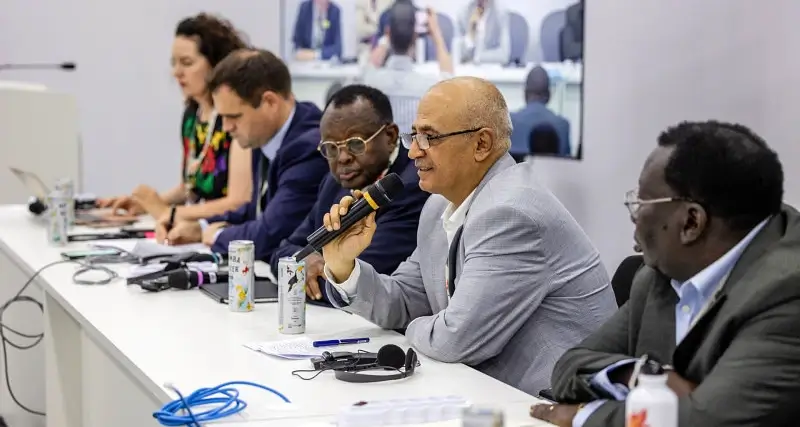
African ministers emphasize that navigating climate finance is often more complex than addressing immediate humanitarian needs. Yemen’s Minister of Water and Environment, Tawfiq Al-Sharjabi, explained that strict procedures and limited technical capacity undermine the ability of fragile states to secure adaptation funding.
Somalia’s experience illustrates the scale of the problem. Minister Bashir Mohamed Jama noted that Somalia receives just over $300 million in climate-related financing annually—less than 1% of what the country requires. In contrast, humanitarian aid exceeds $1.1 billion each year.
This imbalance, he said, reflects a system that rewards response more than prevention. It is easier to unlock money after disaster strikes than to secure investment in long-term climate resilience.
Escalating Pressure as COP30 Negotiations Advance
As global leaders negotiate a proposed $1.3 trillion climate finance target for COP30, the coalition of fragile states insists that ambition must translate into access.
Mauricio Vazquez of ODI Global called for equal urgency in ensuring that existing funds reach the people most at risk. The coalition warns that without structural reform, expanding climate finance volumes will not help the communities already being hit hardest by climate change.
Growing Membership Strengthens the Movement
Formed in 2024, the Improved and Equitable Access to Climate Finance Network continues to expand. Three new members—Mauritania, Papua New Guinea and South Sudan—joined this week, signalling rising global support for reform.
The Network is urging development banks and climate funds to adopt more flexible financing instruments, reduce unnecessary barriers, and invest in long-term programs that help fragile states build climate resilience rather than relying on post-disaster relief.
Mid-Article Snapshot of Climate Finance Challenges
Funding Gaps Across Climate-Exposed States
| Region | Climate Funding Received | Estimated Need | Primary Barrier |
|---|---|---|---|
| Somalia | $300M per year | 100x higher | Rigid application systems |
| Sahel states | Very limited access | Rapidly increasing | Fragility and conflict |
| Fragile coastal countries | Below global average | High vulnerability | Slow approval cycles |
Two Core Issues Identified by Fragile States
-
Long, technical, and inflexible funding requirements delay access.
-
Humanitarian aid remains easier to obtain than climate adaptation finance.
The Stakes for Africa and Conflict-Affected Regions
Experts warn that climate impacts and conflict dynamics are increasingly intertwined. Asif R. Khan from the UN Department of Political and Peacebuilding Affairs noted that most UN peace operations are deployed in climate-stressed areas.
In West Africa, for instance, shrinking water sources are intensifying tensions between herding and farming communities. These pressures heighten the risk of instability, displacement, and economic decline.
Khan argued that adaptation in fragile states requires more than physical infrastructure. Building resilience means creating partnerships across peacebuilding, development, and climate agencies, and aligning resources to support long-term stability. He said:
“For us, helping countries manage climate risks is part of a broader effort to prevent crisis. And that means more than planting trees or installing solar panels. It’s also involving all parts of society to pull in the same direction to build resilience and foster peace. That also means, in turn, joined-up risk analysis, sustained partnerships, and financing that reflects realities on the ground”.
A Holistic Approach Gains International Support
Ireland’s Minister of State, Neale Richmond, reaffirmed his country’s commitment to prioritizing the world’s most vulnerable communities. He emphasized a comprehensive and inclusive approach that strengthens peace, improves resilience, and reduces chronic humanitarian needs.
This aligns with a growing recognition across donor governments that climate adaptation must be integrated with peacebuilding and development support, especially in regions where climate shocks exacerbate existing tensions.
Why Action at COP30 Matters Now
Climate adaptation remains a core priority at COP30, where governments aim to finalize global indicators for the Global Goal on Adaptation.
However, fragile African states caution that progress will remain superficial unless funding structures reflect on-the-ground realities. Without reform, climate shocks will continue to worsen poverty, disrupt livelihoods, and erode development gains across Africa’s most vulnerable regions.
Closing Outlook
As negotiations advance in Belém, the message from fragile states is clear: climate finance Africa must be accessible, flexible, and designed for the world’s most at-risk populations. Their call for change underscores a growing global awareness that resilience, peace, and sustainable development are inseparable.
Sources: ODI Global.
Prepared by Ivan Alexander Golden, Founder of THX News™, an independent news organization delivering timely insights from global official sources. Combines AI-analyzed research with human-edited accuracy and context.