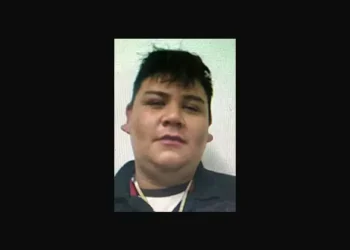

The Department of Homeland Security announced the ICE arrest of Harvard Law School visiting professor Carlos Portugal Gouvea after his J-1 visa was revoked over a BB-gun shooting outside a synagogue near Yom Kippur. After a guilty plea to illegal air-rifle use, he agreed to voluntary departure rather than formal deportation.
The case links a local public-safety incident to immediate federal immigration enforcement, highlighting DHS’s zero-tolerance posture toward non-citizens involved in antisemitic-related conduct. It also places renewed focus on how quickly visa status can change following even a single misdemeanor conviction.
DHS Announces ICE Arrest of Visiting Professor
DHS confirmed that ICE Boston Enforcement and Removal Operations took Gouvea into custody after the State Department revoked his J-1 visa on October 16. He is a Brazilian national who had been serving as a visiting professor at Harvard Law School at the time of the incident. Additionally, following ICE custody, he accepted voluntary departure from the United States in lieu of deportation proceedings.
The core claim from DHS is that visa privileges ended once the criminal matter was resolved. That claim rests on the verifiable fact of a November 13 guilty plea to illegal use of an air rifle. For local communities, the immediate effect was federal custody following a municipal-level case. Neutral synthesis: the sequence illustrates how criminal and immigration systems now operate in rapid succession for visa holders.
Quick View of the Incident
| Indicator | Recent Movement | Context |
|---|---|---|
| Incident Date | October 1–2, 2025 | BB gun fired outside synagogue near Yom Kippur |
| Visa Status | Revoked October 16 | J-1 visa terminated by State Department |
| Immigration Outcome | Voluntary departure | Accepted after ICE custody in December |
Timeline of the Synagogue Incident and Arrest
Local police arrested Gouvea on October 2, one day after he fired an air rifle outside a Boston-area synagogue, later identified as Temple Beth Zion in Brookline. He told authorities he was “hunting rats,” a claim noted by DHS because of the timing near a major Jewish holiday. Meanwhile, initial local charges included disturbing the peace, disorderly conduct, and vandalism.
On November 13, Gouvea accepted a plea deal in which only the illegal use of an air rifle charge remained. The other counts were dismissed as part of that agreement. For residents and synagogue members, the real-world effect was an early law-enforcement response followed by weeks of uncertainty. Neutral synthesis: the timeline shows a routine criminal case that later escalated into a federal immigration matter.
Legal Case and Immigration Consequences
The legal outcome centered on a single misdemeanor conviction for unlawful air-rifle use, but the immigration consequence proved far more significant. Once the visa was revoked, ICE acted under existing removal authorities for non-immigrant visa holders convicted of qualifying offenses. Additionally, by choosing voluntary departure, Gouvea avoided the long-term bar typically associated with a formal deportation order.
The DHS position is that working or studying in the United States is a privilege tied to lawful conduct. The data point is the revoked J-1 visa following the guilty plea. For foreign scholars, the lived-experience effect is heightened vulnerability to rapid status loss. Neutral synthesis: even minor convictions can trigger decisive immigration outcomes under current enforcement policy.
Federal Zero-Tolerance Framing on Antisemitic Violence
Assistant Secretary Tricia McLaughlin stated that there is “no room in the United States for brazen, violent acts of anti-Semitism,” framing the arrest as part of a broader public-safety posture. She emphasized that DHS has no obligation to continue admitting or hosting non-citizens who commit such acts. The department’s claim is supported by the visa revocation and ICE custody timeline.
For affected communities, the lived experience is a visible federal response to conduct near a house of worship. At the same time, Temple Beth Zion leaders noted the incident did not appear motivated by antisemitism based on police findings. Neutral synthesis: federal messaging emphasizes deterrence, while local assessments focus on motive and context.
Harvard’s Response and Campus Vetting Implications
Harvard Law School placed Gouvea on administrative leave shortly after his October arrest, according to a statement provided to media outlets by a university spokesperson. The school said it was “seeking further information” at the time and has not issued additional public statements following the plea deal or ICE action. Meanwhile, Harvard operates under heightened federal scrutiny related to international programs.
Since mid-2025, the university has expanded vetting for international faculty and visitors using third-party compliance screening tools. The verifiable data point is the introduction of mandatory pre-screening across events and research access involving foreign nationals.
For universities, the lived-experience effect is increased compliance burden across departments. Neutral synthesis: the incident underscores the reputational and operational exposure campuses face when immigration and criminal issues intersect.
Policy Implications for Foreign Scholars and Sponsors
The case signals that J-1 visa holders face immediate immigration risk following even limited criminal convictions. Sponsors, universities, and affiliated institutions must now account for faster interagency coordination between local police, the State Department, and ICE.
- Visa Exposure: Even non-violent misdemeanor convictions can trigger revocation.
- University Risk: Institutions face donor, federal, and public scrutiny after faculty arrests.
- Sponsor Liability: UK and U.S. organizations hosting scholars must strengthen compliance screening.
Bottom Line
The ICE arrest and voluntary departure of a Harvard Law visiting professor illustrate how quickly localized public-safety incidents can escalate into federal immigration actions. While DHS frames the case within a zero-tolerance posture toward antisemitic-related conduct, local findings complicate the narrative of motive.
As enforcement coordination tightens in 2025, the case offers a clear example of the heightened compliance environment facing foreign scholars and their sponsors.
Sources: Department of Homeland Security, U.S. Customs and Border Protection, The Harvard Crimson, New York Post.
Prepared by Ivan Alexander Golden, Founder of THX News™, an independent news organization delivering timely insights from global official sources.
Combines AI-analyzed research with human-edited accuracy and context.