
The United States announced new sanctions against individuals and companies supporting Nicolás Maduro’s regime in Venezuela, targeting relatives, business associates, and shipping operators involved in narcotics trafficking and oil-sector evasion. Officials said the action renews pressure after failed prior negotiations and continued criminal activity.
The updated sanctions reflect a broader U.S. effort to restrict financial networks sustaining Maduro’s rule, particularly those linked to drug trafficking and illicit oil shipments. They also reverse earlier delistings tied to diplomatic efforts that did not produce democratic reforms, signaling a return to stricter enforcement measures.
U.S. Resanctions Maduro’s Corrupt Network
The United States expanded its sanctions framework by targeting four individuals, including three nephews of Venezuelan First Lady Cilia Flores, and six shipping-related entities.
Officials said the action was taken under multiple authorities, including E.O. 13850, E.O. 13692, and E.O. 14059. Meanwhile, earlier efforts to ease sanctions in 2022 were tied to negotiations that ultimately failed.
However, the State Department stated that renewed sanctions were needed after two nephews returned to narcotics trafficking following their release in a 2022 prisoner exchange.
This return to criminal activity demonstrated, officials said, that financial leniency had not produced behavioral change among key regime insiders. Additionally, Maduro’s ties to the Cartel de los Soles, designated a Foreign Terrorist Organization in 2025, reinforced the justification for renewed pressure.
| Indicator | Recent Movement | Context |
|---|---|---|
| Sanctioned Individuals | 4 designated | Includes three nephews and a Maduro-linked businessman |
| Targeted Entities | 6 companies | Oil shipping operators tied to deceptive practices |
| Blocked Vessels | 6 vessels identified | Ships engaged in Venezuelan oil movements with falsified AIS data |
Sanctioned Nephews and Their Criminal Histories
Officials emphasized that two of the designated nephews—Efraín Antonio Campo Flores and Franqui Francisco Flores de Freitas—had been convicted of attempting to transport hundreds of kilograms of cocaine to the United States.
Both were released in 2022 during a U.S. prisoner exchange and later resumed trafficking activities, according to Treasury’s recent findings. These developments were cited as key evidence supporting their redesignation.
Carrying forward earlier concerns, Treasury also redesignated a third nephew, Carlos Erik Malpica Flores, a former PDVSA executive previously delisted to facilitate diplomatic talks.
However, U.S. officials said Maduro’s lack of progress on democratic conditions made continued leniency untenable. Meanwhile, civil society groups noted that sanctions on familiar political figures may shape public perceptions of corruption networks surrounding the Venezuelan presidency.
- Public sentiment: Venezuelan communities abroad expressed concern about ongoing corruption.
- Regional impact: Analysts cited drug flows as a continuing security challenge.
- Political trust: Observers highlighted skepticism toward regime-led reform efforts.
Oil Sector Evasion and Blocked Vessels
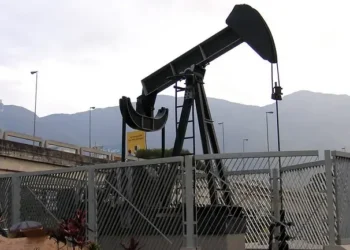
Treasury expanded sanctions to include companies and vessels engaged in deceptive movements of Venezuelan crude. According to OFAC, some ships manipulated AIS transmissions to obscure their location or appear outside Venezuelan waters. Meanwhile, U.S. officials linked these shipments to revenue streams sustaining Maduro’s governance structure.
However, maritime compliance experts noted that deceptive broadcasting practices complicate global monitoring and can create risks for insurers and ports. Additionally, analysts said reliance on shadow fleets underscores the scale of sanctions evasion within Venezuela’s oil sector.
Companies and Ships Involved in Sanctions Violations
Entities designated include operators in the Marshall Islands, British Virgin Islands, and the UK, each associated with vessels documented loading Venezuelan oil in 2025. Among them were the WHITE CRANE, KIARA M, H. CONSTANCE, LATTAFA, TAMIA, and MONIQUE—ships identified as blocked property under U.S. law. Officials said these companies enabled oil revenues that support the regime’s governance and security operations.
Additionally, Treasury referenced past actions against PDVSA as evidence of sustained policy continuity in the oil domain. However, shipping observers said evolving evasion tactics may require ongoing regulatory updates to maintain visibility and enforcement effectiveness.
Regional Security, U.S. Policy, and Hemispheric Impact
The sanctions align with U.S. objectives to counter narcotics trafficking, regional destabilization, and corruption across the hemisphere. Officials said Maduro’s leadership of the Foreign Terrorist Organization Cartel de los Soles underscores the national-security risks posed by Venezuela’s illicit networks. Meanwhile, analysts noted the sanctions’ alignment with broader U.S. strategies targeting transnational criminal organizations.
However, humanitarian groups cautioned that sanctions may have spillover effects on Venezuela’s already fragile economic environment. Additionally, regional governments continue to respond differently to the crisis, reflecting varied exposure to migration flows and security threats.
The Final Word
The resanctioning of Maduro’s nephews, associates, and shipping facilitators marks a renewed U.S. effort to limit financial channels supporting Venezuela’s regime. While officials assert these actions disrupt narcotics and oil networks, independent analysts highlight the broader regional challenges driving continued instability. The developments illustrate the complexities surrounding sanctions enforcement in a rapidly shifting geopolitical context.
Additionally, the expanded designations reflect an ongoing reassessment of previous diplomatic efforts and underscore Washington’s intent to maintain pressure as conditions evolve.
Sources: U.S. State Department, U.S. Treasury, and Reuters.
Prepared by Ivan Alexander Golden, Founder of THX News™, an independent news organization delivering timely insights from global official sources.
Combines AI-analyzed research with human-edited accuracy and context.