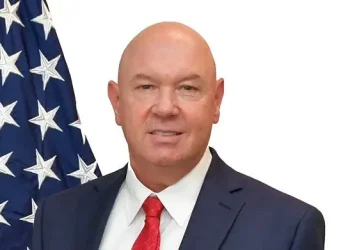
The U.S. Department of the Treasury announced new OFAC sanctions targeting family members and close associates of Venezuela’s Maduro regime to disrupt alleged narco-corruption networks. Treasury said the designations expand pressure on financial structures sustaining Nicolás Maduro’s government.
The action is part of Washington’s broader sanctions strategy against Venezuela, extending enforcement beyond senior officials to relatives and intermediaries accused of facilitating corruption, drug trafficking, and deceptive state-linked transactions.
Sanctioned Individuals and Networks
Family members linked to regime operations
According to the Office of Foreign Assets Control designated multiple relatives of Carlos Erik Malpica Flores, a former Venezuelan official and nephew of First Lady Cilia Flores. Treasury stated the individuals were sanctioned for their alleged roles in transactions connected to the Government of Venezuela.
Meanwhile, OFAC also designated immediate family members of Panamanian businessman Ramón Carretero Napolitano, whom Treasury has linked to extensive dealings with Maduro-associated entities. The agency said these family ties were used to move or hold assets connected to Venezuelan state projects.
Legal Authority and Sanctions Mechanics
Executive orders and blocking measures
The sanctions were issued under Executive Orders 13692 and 13850, authorities used by OFAC to target corruption and anti-democratic actions tied to Venezuela. Under these orders, Treasury said all property and interests in property of the designated individuals within U.S. jurisdiction are blocked.
Additionally, OFAC noted that entities owned 50 percent or more by one or more blocked persons are also subject to sanctions. Treasury emphasized that U.S. persons are generally prohibited from engaging in transactions involving designated individuals without specific authorization.
Policy Context and Objectives
Sanctions pressure and enforcement goals
Treasury framed the action as targeting the “narco-corruption structure” sustaining Nicolás Maduro’s regime, explicitly linking Venezuelan drug trafficking to U.S. security concerns. Secretary Scott Bessent stated that the administration intends to continue escalating sanctions to increase personal and financial costs on Maduro’s inner circle.
| Indicator | Recent Movement | Context |
|---|---|---|
| OFAC designations | Expanded scope | Treasury designated family members of Malpica Flores and Carretero under E.O. 13850, per OFAC announcement. |
| Sanctions authority | Reinforced use | Executive Orders 13692 and 13850 remain the primary legal basis for Venezuela-related sanctions, Treasury said. |
| Blocked assets | Immediate effect | All U.S.-linked property and interests of designated persons are blocked and reportable to OFAC. |
- Deterrence signal: Treasury said the designations warn relatives and intermediaries that family ties will not shield assets.
- Compliance risk: OFAC emphasized strict-liability penalties for sanctions violations by U.S. and foreign persons.
- Policy direction: The Trump administration described the move as resuming hard pressure after earlier sanctions easing.
In a Nutshell
The latest OFAC action broadens U.S. sanctions enforcement against Venezuela by targeting family-based financial networks tied to the Maduro regime. Treasury officials say the designations are intended to disrupt corruption, deter intermediaries, and reinforce the consequences of engaging with sanctioned actors.
Sources: U.S. Department of the Treasury, Office of Foreign Assets Control, CBC, Townhall, Elfarodelmorro (Spanish), and Federal Register.
Prepared by Ivan Alexander Golden, Founder of THX News™, an independent news organization delivering timely insights from global official sources.
Combines AI-analyzed research with human-edited accuracy and context.