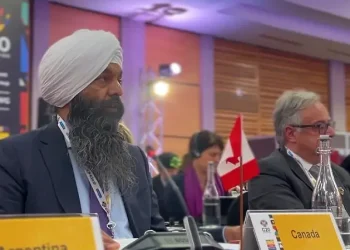
Foreign ministers from across Europe, Canada, the United Kingdom and allied nations have issued a stark warning over escalating violence in Sudan, condemning attacks on civilians and humanitarian operations as potentially constituting war crimes. The joint statement highlights mounting civilian deaths, destroyed aid supplies and worsening famine conditions in Darfur and Kordofan.
As drone strikes, aerial bombardment and ground fighting intensify, ministers say the conflict is pushing millions toward catastrophe while obstructing life-saving assistance. They are urging all parties — including the Sudanese Armed Forces and Rapid Support Forces — to cease hostilities and allow safe humanitarian access immediately.
The coordinated diplomatic intervention signals growing international alarm that Sudan’s war is entering a mass-atrocity phase, with civilians, women and children bearing the brunt of the violence.
Escalating Violence in Darfur and Kordofan
Recent fighting between the Sudanese Armed Forces (SAF) and the Rapid Support Forces (RSF) has intensified across central and western Sudan. Drone and rocket attacks have struck populated areas, including camps for internally displaced people, health facilities and transport routes used by humanitarian groups.
Moreover, ministers emphasized that aerial strikes on food warehouses and supply trucks are undermining the fragile aid network sustaining millions. In some areas, humanitarian organizations report that relief deliveries have slowed to a trickle.
According to international observers, entire communities are now isolated. Markets have collapsed, medical care is scarce and displacement continues to rise as families flee violence with little more than what they can carry.
Humanitarian Operations Under Threat
Aid agencies warn that the destruction of food supplies and medical infrastructure could accelerate famine conditions already emerging in parts of Sudan. The joint statement specifically highlights attacks on World Food Programme assets and health facilities, which have resulted in civilian casualties and loss of essential supplies.
Furthermore, humanitarian personnel themselves are increasingly at risk. International law requires protection of aid workers, yet incidents involving targeted strikes on relief convoys have become more frequent.
Humanitarian concerns include:
- Severe disruption of food distribution networks, increasing the risk of starvation in already vulnerable regions.
- Destruction of medical facilities and supply chains, leaving injured civilians without treatment options.
In practical terms, these attacks do more than destroy infrastructure — they erode the entire humanitarian response system.
Potential War Crimes and Legal Implications
Ministers warned that intentional attacks on civilians, humanitarian staff and relief supplies violate international humanitarian law. They noted that such actions may amount to war crimes or crimes against humanity if proven deliberate.
Additionally, the statement stresses that obstructing aid — whether through violence or administrative barriers — can constitute unlawful conduct during armed conflict. Legal experts say this language signals preparation for potential international investigations.
This framing elevates the conflict from a regional crisis to a matter of global legal accountability.
Alleged violations highlighted include:
- Deliberate targeting of civilian infrastructure and populated areas.
- Interference with humanitarian access and destruction of relief supplies.
By documenting these concerns, governments create a record that could support future prosecutions or sanctions.
Major Signatories to the Joint Statement
| Country / Organization | Representative | Position |
|---|---|---|
| Canada | Anita Anand | Minister of Foreign Affairs |
| United Kingdom | Yvette Cooper | Foreign Secretary |
| Germany | Johann Wadephul | Foreign Minister |
| France | Jean-Noël Barrot | Foreign Minister |
| European Commission | Hadja Lahbib | Commissioner for Crisis Management |
| New Zealand | Winston Peters | Foreign Minister |
Calls for Ceasefire and Civilian Protection
The ministers urged all parties to halt hostilities immediately and comply with international humanitarian law. They also called for safe passage for civilians fleeing violence and unimpeded delivery of food, medicine and essential supplies.
Women and girls were singled out as particularly vulnerable to sexual and gender-based violence. Therefore, the statement emphasizes the need for targeted protections and accountability for abuses.
For Canada and its allies, the message is clear: continued violations will not go unnoticed. While diplomatic statements alone cannot stop the fighting, they signal growing pressure that could translate into sanctions or international legal action.
Why This Matters for Canadians
Although Sudan lies far from Canada geographically, the crisis has global implications. Canada funds humanitarian operations through international agencies, meaning Canadian taxpayers directly support relief efforts in conflict zones.
Moreover, instability in Sudan affects migration patterns, regional security and global food markets. As history has shown, humanitarian crises can have ripple effects that reach well beyond their borders.
For many Canadians, the situation recalls past international emergencies where early warnings were followed by calls for stronger intervention. The joint statement suggests governments are trying to prevent such outcomes, even as conditions on the ground deteriorate.
Food for Thought
Sudan’s conflict shows no immediate sign of resolution. However, coordinated diplomatic pressure from a broad coalition of nations could influence future negotiations or humanitarian access agreements.
Ultimately, the fate of millions of civilians hinges on whether combatants respect international law and whether aid organizations can operate safely. Until then, the humanitarian situation is likely to remain one of the world’s most severe.
In a world already grappling with multiple crises, Sudan’s unfolding tragedy raises difficult questions about how — and when — the international community can effectively act to protect civilians.
Sources: Global Affairs Canada.
Prepared by Ivan Alexander Golden, Founder of THX News, an independent news organization delivering timely insights from global official sources. Combines AI-analyzed research with human-edited accuracy and context.