The United States has launched Project Freedom to restore Strait of Hormuz shipping, deploying more than 15,000 personnel and over 100 aircraft to protect commercial vessels.
The operation was announced on May 5, 2026, with US Central Command directing military assets to reopen the Strait of Hormuz following disruption to commercial shipping. Officials confirmed that more than 1,500 vessels carrying approximately 22,500 mariners have been affected by restricted transit conditions.
The US State Department has also proposed a United Nations Security Council resolution alongside Gulf partners including Bahrain, Saudi Arabia, the United Arab Emirates, Kuwait and Qatar. The proposal aims to require Iran to cease actions affecting maritime traffic and support efforts to restore safe navigation.
Strait disruption and global trade impact
Iran has restricted passage through the Strait of Hormuz, according to US officials, affecting cargo and tanker vessels and halting the flow of commerce in the region. The route accounts for around one-fifth of global oil consumption, placing pressure on international supply chains.
- Vessels affected: More than 1,500 ships currently unable to transit
- Mariners impacted: Approximately 22,500 personnel on board
- Trade route: Key passage for global oil transportation
- Disruption period: Ongoing for several weeks
Project Freedom military operation
Project Freedom has been established to reopen the strait and protect commercial shipping through a defined security framework. The operation is described as defensive, limited in scope and focused on restoring transit conditions.
The initiative operates independently of other military activities and is directed by US Central Command under presidential instruction.
- Mission scope: Protection of commercial vessels
- Operational duration: Temporary and focused
- Command structure: Led by US Central Command
- Operational approach: Defensive maritime security
Operational deployment and security measures
US forces have deployed naval, air and land assets to establish an enhanced security area on the southern side of the strait. The deployment includes guided missile destroyers, aircraft and coordinated surveillance systems operating continuously.
More than 100 aircraft are providing aerial coverage, while naval units are positioned to respond to threats including fast boats and unmanned systems.
Operational Deployment Overview
| Indicator | Recent Movement | Context |
|---|---|---|
| Personnel deployed | 15,000+ | US forces assigned to maritime protection duties |
| Aircraft in operation | 100+ | Providing continuous aerial coverage |
| Naval assets | Multiple destroyers | Escorting vessels and monitoring threats |
Current transit activity and shipping response
Initial movements have been reported, with US-flagged commercial vessels transiting the strait under escort. Additional ships are preparing to move through the route following coordination with operators and insurers.
Officials stated that international vessels are positioning to resume transit as security conditions stabilise.
Shipping Activity Snapshot
| Indicator | Recent Movement | Context |
|---|---|---|
| Initial transits | 2 vessels | US-flagged ships completed passage |
| Ships awaiting transit | Hundreds | Global vessels preparing to move |
| Insurance coordination | Ongoing | Engagement with operators and insurers |
International response and UN Security Council proposal
The United States has submitted a draft resolution to the UN Security Council to address actions affecting maritime navigation in the strait. The proposal calls for Iran to cease attacks, disclose mine locations and cooperate with removal efforts.
Gulf partner states have supported the resolution, which also includes provisions for humanitarian corridor arrangements linked to maritime safety.
Stakeholder Comments
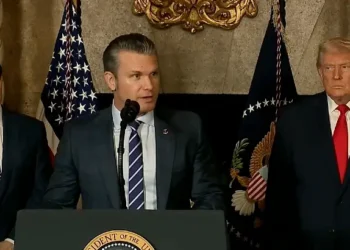
Pete Hegseth, US Secretary of War said;
“Project Freedom is defensive in nature, focused in scope, temporary in duration with one mission: protecting innocent commercial shipping from Iranian aggression.”
General Dan Caine, Chairman of the Joint Chiefs of Staff said;
“By obstructing one of the world’s most critical maritime checkpoints, Iran is weaponizing the global supply chain.”
Marco Rubio, US Secretary of State said;
“The United States looks forward to this resolution being voted on in the coming days and to receiving support from Security Council members.”
The United States has initiated coordinated military and diplomatic measures to restore shipping through the Strait of Hormuz. Project Freedom combines maritime security operations with international engagement through the United Nations. Early vessel transits and allied cooperation indicate movement towards reopening the route, while further developments depend on ongoing security conditions and international support for enforcement measures.
Sources: US Department of Defense; US Department of State.
Prepared by Ivan Alexander Golden, Founder of THX News, an independent news organisation delivering timely insights from global official sources. Combines AI-analysed research with human-edited accuracy and context.