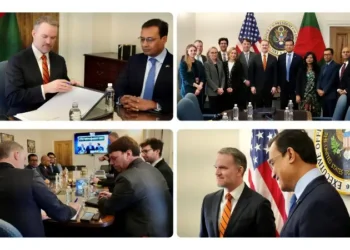

U.S. Secretary of State Marco Rubio and Indian External Affairs Minister S. Jaishankar outlined expanded U.S.-India cooperation on trade, energy, defense, technology, and Indo-Pacific security during talks in New Delhi on May 24, 2026. The announcement matters because both governments linked the discussions to supply chains, maritime commerce, critical minerals and broader economic and security coordination.
The State Department press availability at Hyderabad House followed bilateral talks during Rubio’s first visit to India as Secretary of State. Jaishankar said discussions covered defense, reciprocal trade, energy, nuclear cooperation, critical minerals, visas, counterterrorism, and regional conflicts, while Rubio framed India as a major global strategic partner.
U.S. and India Hold Strategic Talks
The State Department transcript shows Rubio and Jaishankar used the New Delhi meeting to present the U.S.-India strategic partnership as a framework supporting trade, security and supply-chain coordination. The claim was supported by named agenda items including defense, trade, energy, technology, maritime commerce, and the upcoming Quad meeting.
The discussions connected bilateral engagement to trade routes, supply-chain resilience and maritime security issues affecting wider regional commerce. Both officials described the meeting as part of continuing engagement rather than a completed policy package.
Some of the Meeting Priorities
| Indicator | Recent Movement | Context |
|---|---|---|
| Defense cooperation | 10-year framework renewed | India’s Ministry of External Affairs remarks cited renewal of the major Defense Partnership Framework Agreement |
| Underwater security | Roadmap signed | Jaishankar said a comprehensive Underwater Domain Awareness Roadmap had been signed |
| Trade negotiations | Interim text under discussion | Jaishankar said both sides discussed early conclusion of a reciprocal and mutually beneficial trade agreement |
| Energy trade | Recent expansion reported | Both officials referenced expanding energy trade and India’s need for diversified supplies |
Trade and Economic Cooperation
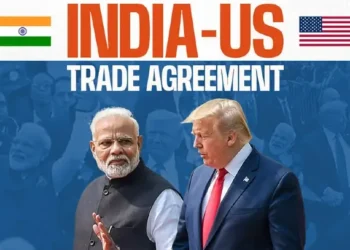
Jaishankar said both governments discussed concluding the final text of an interim agreement on reciprocal and mutually beneficial trade. The verifiable movement was the recent presence of an Indian team in Washington and an expected U.S. team visit to India.
The negotiations form part of a wider effort to develop a broader bilateral trade framework first discussed during Prime Minister Narendra Modi’s February 2025 visit. Rubio said Indian companies had invested more than $20 billion in the U.S. economy, giving the economic relationship a measurable investment base.
Bilateral Trade Progress
The trade discussion was not presented as a final agreement. Instead, the State Department transcript shows both sides describing continued negotiation, delegation activity, and the possibility of a more durable trade arrangement.
The discussions remained focused on ongoing negotiations rather than finalized commitments, indicating continued movement without a completed agreement. A neutral reading is that trade remains active but unfinished, with both governments framing the process as strategically important.
Energy and Critical Minerals Cooperation
Energy security was one of the clearest operational themes in the press availability. Jaishankar said India’s government has a responsibility to meet the energy needs of 1.4 billion people, while Rubio connected energy generation to data centers, artificial intelligence, and modern industrial growth.
The discussions highlighted shared priorities involving diversified energy supplies, maritime commerce and reduced dependence on concentrated supply sources. The transcript does not identify a new purchase commitment, so the strongest defensible claim is policy alignment rather than a new energy deal.
Energy and Supply Chain Overview
- Energy diversification: India’s Ministry of External Affairs remarks said diversified supplies are central to India’s energy security.
- Critical minerals: Jaishankar said India and the United States are cooperating bilaterally, through the Quad, and with like-minded partners.
- Technology supply chains: Rubio said overreliance on a single source for vital economic inputs is a major 21st-century challenge.
- Maritime commerce: Both officials supported safe and unimpeded commerce through international waters.
Defense and Technology Partnerships
The defense section of the meeting included the renewed 10-year major Defense Partnership Framework Agreement and the Underwater Domain Awareness Roadmap. Those details give the security discussion concrete policy markers rather than general diplomatic language.
The technology discussion covered artificial intelligence, semiconductors, and critical minerals. The discussions linked defense cooperation with supply-chain resilience, industrial capacity and emerging technology development.
Security and Innovation Initiatives
Jaishankar said India’s semiconductor and AI capabilities would make cooperation more prominent in the coming days. Rubio also described India as a technologically advanced partner with companies working on leading-edge fields.
The neutral synthesis is that both governments are using technology cooperation as part of industrial and security coordination. However, the transcript does not announce a single new AI or semiconductor contract, so the article should treat this as policy direction rather than procurement news.
Strategic Alignment in Global Affairs
The press availability placed the U.S.-India relationship inside wider global issues including the Gulf, Ukraine, East Asia, terrorism, and the Indo-Pacific. Jaishankar listed India’s principles as dialogue and diplomacy, maritime commerce, respect for international law, opposition to weaponized resources, and resilient supply chains.
The discussions covered coordination across trade activity, maritime commerce and supply-chain security priorities. Jaishankar also said India manages multiple relationships, including with the United States, Iran, Israel, Gulf states, Russia, Europe, and Ukraine.
Stakeholder Comments
Rubio said India is “one of our most important strategic partners in the world” and argued that the relationship is broader than a regional partnership. Jaishankar said the two countries share common interests and challenges, including terrorism, narcotics, energy security, supply chains, and maritime commerce.
The remarks showed both governments publicly emphasizing continued engagement despite trade negotiations, visa concerns and wider regional pressures. A neutral reading is that the meeting emphasized continuity and alignment while leaving several policy details unresolved.
The New Delhi discussions covered trade negotiations, energy cooperation, defense frameworks, technology initiatives and Indo-Pacific security priorities. The strongest news value lies in the concrete references to trade talks, defense renewal, underwater security, energy diversification, critical minerals, and Quad engagement.
The announcement did not finalize every policy area discussed. The discussions established an official record of ongoing cooperation involving supply chains, maritime commerce, defense coordination and wider economic activity.
Sources: U.S. Department of State, India Ministry of External Affairs, The White House.
Prepared by Ivan Alexander Golden, Founder of THX News, an independent news organization delivering timely insights from global official sources.
Research combines AI-assisted analysis with human-edited accuracy and context.