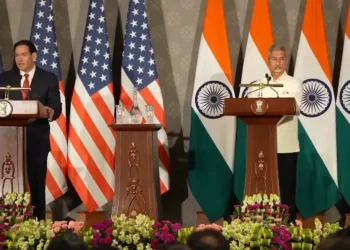
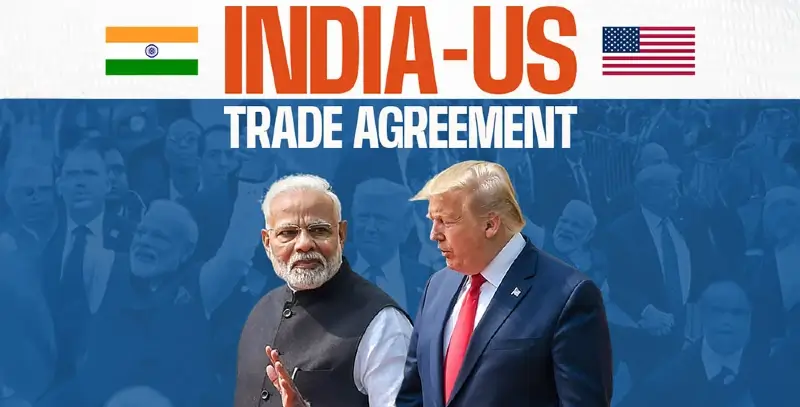
The White House announced a US–India trade deal framework last Friday that lowers certain US tariffs, expands Indian market access for American goods, and launches an interim reciprocal trade agreement pathway toward a full bilateral pact. The announcement followed a presidential joint statement and executive action tied to tariff adjustments and energy and security alignment commitments.
The announcement was published in a White House fact sheet and joint statement describing reciprocal trade measures between the United States and India. The framework sets interim terms while formal negotiations continue toward a broader Bilateral Trade Agreement between the two governments.
Opening Summary — Announcement and scope of the US–India trade deal
According to a White House fact sheet released with a presidential joint statement, the United States and India agreed to an interim reciprocal trade framework covering tariffs, market access, and digital trade rules. The White House states the deal is designed to expand access to India’s 1.4-billion-person market while reducing specific US tariff rates on Indian imports.
Meanwhile, the framework also links trade adjustments to energy purchasing and security alignment commitments. Taken together, the measures establish a structured path toward a full Bilateral Trade Agreement while keeping current terms provisional.
Interim Reciprocal Trade Framework — What leaders agreed
The White House joint statement reports that President Donald J. Trump and Indian Prime Minister Narendra Modi reached a framework for an Interim Agreement on reciprocal trade during a recent leadership call.
The fact sheet says both sides reaffirmed commitment to continued Bilateral Trade Agreement negotiations covering tariffs, non-tariff barriers, and regulatory practices. Additionally, the framework specifies reciprocal concessions rather than unilateral reductions. As a result, officials describe the arrangement as a staged negotiation structure rather than a final treaty outcome.
Tariff Changes and Executive Order — U.S. tariff adjustments on India
The White House states that the President signed an Executive Order removing an additional 25% tariff previously applied to certain imports from India. According to the same fact sheet, the reciprocal tariff rate on India is reduced from 25% to 18% under the new framework.
Meanwhile, the adjustment is explicitly tied in the White House document to India’s commitment to halt purchases of Russian Federation oil. Therefore, the tariff change combines a numeric rate reduction, a policy condition, and a defined executive authority action.
Market Access for American Exports — Industrial and agricultural goods
The White House fact sheet lists tariff elimination or reductions by India on all US industrial goods and a range of US agricultural products. Named categories include dried distillers’ grains, red sorghum, tree nuts, fruits, pulses, soybean oil, wine, and spirits.
Additionally, the document states India will address non-tariff barriers affecting priority US exports. In practical terms, lower tariff and barrier levels can reduce landed costs for exporters, while the reciprocal structure ties benefits to compliance on both sides.
Purchase and Investment Commitments — Energy, technology, and agriculture volumes
According to the White House, India committed to purchase over $500 billion in US goods across energy, information and communication technology, agriculture, and coal categories. The fact sheet frames this as a forward purchase commitment linked to reciprocal tariff treatment and broader economic security alignment.
Meanwhile, the same document connects these purchases to supply chain resilience and innovation cooperation. Consequently, the claim includes a dollar figure, named sectors, and a stated economic effect tied to export demand.
| Indicator | Recent Movement | Context |
|---|---|---|
| Reciprocal tariff rate on India | Reduced to 18% | White House fact sheet says rate lowered from 25% to 18% under interim framework |
| Additional tariff action | Extra 25% removed | White House states Executive Order removed added 25% tariff on Indian imports |
| US purchase commitments | Over $500B pledged | White House lists energy, ICT, agriculture, and coal in forward purchase commitments |
Digital Trade and Non-Tariff Barriers — Regulatory and tax changes
The White House fact sheet states that India will remove its digital services taxes as part of the interim arrangement. Additionally, both countries committed to negotiate bilateral digital trade rules that prohibit customs duties on electronic transmissions. The document also references action on discriminatory or burdensome digital practices and other non-tariff barriers. Therefore, the measure combines a specific tax removal, a rules commitment, and a defined regulatory effect on cross-border digital trade.
- Digital services tax removal: White House fact sheet says India agreed to remove digital services taxes as part of reciprocal trade framework
- Non-tariff barrier action: White House states India will address priority non-tariff barriers affecting US exports
- Rules of origin talks: White House confirms negotiations to ensure benefits accrue primarily to US and India producers
Rules of Origin and Supply Chains — Economic security alignment
The White House says both governments will negotiate rules of origin so that trade benefits accrue predominantly to US and Indian producers. Meanwhile, the fact sheet links the deal to economic security alignment and supply chain resilience measures.
It also references cooperation on export controls and inbound and outbound investment reviews under national security authorities. As a result, the framework ties trade preferences to origin verification, security screening, and resilience objectives.
Path to Full Bilateral Trade Agreement — Next negotiation stages
According to the White House, the interim framework will be implemented in the coming weeks while negotiations continue toward a full Bilateral Trade Agreement. The published roadmap lists additional topics including technical barriers to trade, customs facilitation, intellectual property, services, investment, labor, and environment provisions.
Additionally, the document references disciplines on state-owned enterprises and unfair trade practices. Consequently, the next stage is defined by named negotiation tracks and formal topic areas rather than open-ended talks.
Policy Context — Reciprocal trade and deficit policy background
The White House fact sheet references a presidential national emergency declaration issued in April 2025 regarding the US goods trade deficit and lack of reciprocity in certain trade relationships. The document states this authority was used to justify reciprocal tariff structures and barrier reductions.
Meanwhile, it cites high average Indian agricultural tariffs and elevated auto tariffs as context for negotiations. Therefore, the policy framing combines a dated executive action, numeric tariff context, and a stated economic rationale.
In Conclusion
The White House framework sets measurable tariff changes, purchase commitments, and regulatory actions within an interim US–India reciprocal trade structure. Each element is tied to named executive actions and published fact sheet terms rather than informal guidance.
Meanwhile, negotiations toward a full Bilateral Trade Agreement continue across defined subject areas, with both governments linking trade concessions to market access, security alignment, and supply chain resilience outcomes.
Sources: White House Fact Sheet and Joint Statement.
Prepared by Ivan Alexander Golden, Founder of THX News, an independent news organization delivering timely insights from global official sources.
Combines AI-analyzed research with human-edited accuracy and context.