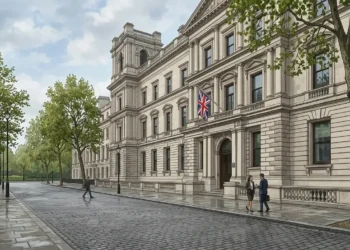
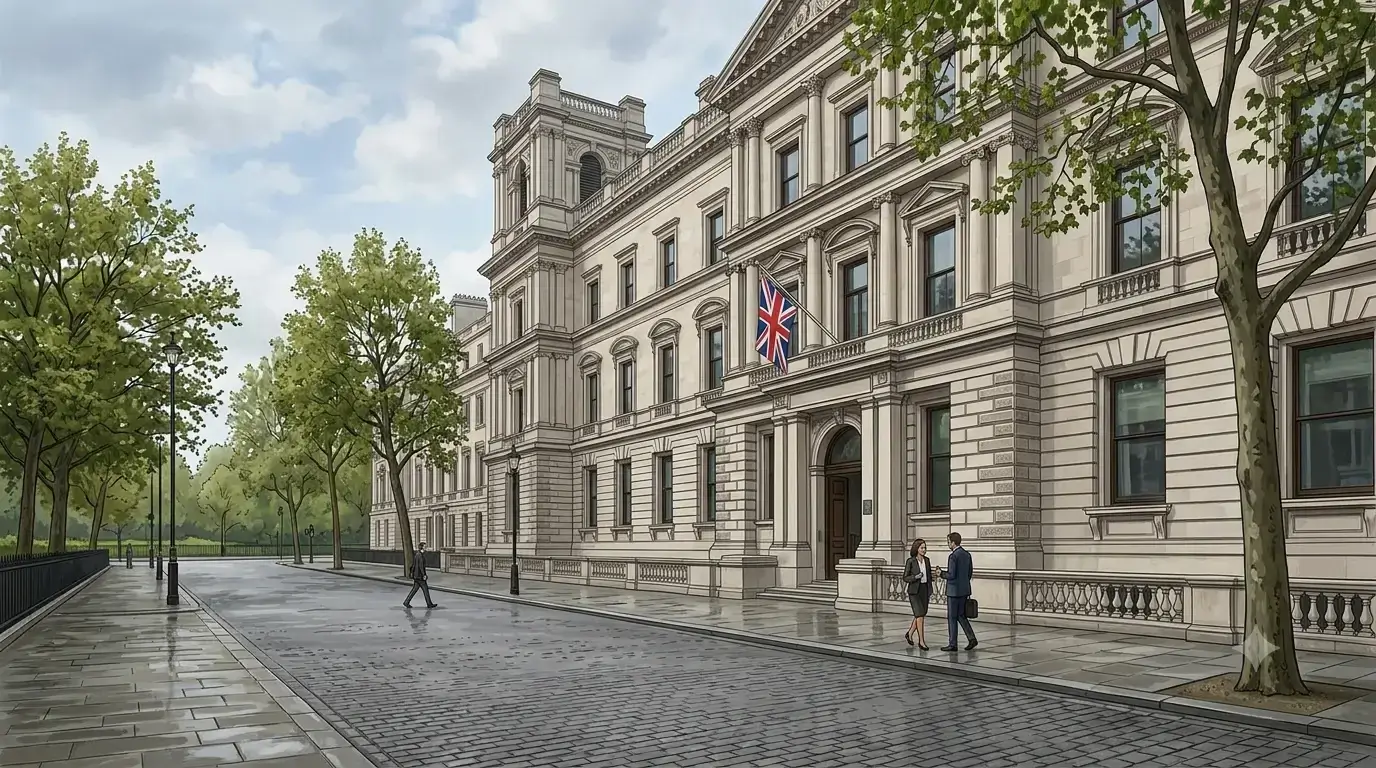
UK sanctions against seven individuals and two Russian scientific research institutes linked to chemical weapons activity on 6 July 2026.
The measures target individuals and organisations involved in the research, development and production of Novichok nerve agents and the toxic substance Epibatidine. The Foreign, Commonwealth & Development Office linked the activity to the poisonings of Alexei Navalny and Dawn Sturgess.
The announcement was made ahead of the NATO Summit in Ankara on 7–8 July and before the 112th Executive Council session of the Organisation for the Prohibition of Chemical Weapons in The Hague. The action forms part of its effort to expose and deter Russia’s illegal chemical weapons activity.
UK Targets Russian Chemical Weapons Network
The sanctions target seven individuals and two organisations connected to Russia’s undeclared chemical weapons programme. According to the Foreign, Commonwealth & Development Office, those designated were involved in developing toxic chemicals for purposes prohibited under the Chemical Weapons Convention.
The sanctions focus on activity linked to Novichok nerve agents and Epibatidine. The measures are aimed at scientific research centres, directors and technical specialists involved in the development and production of toxic chemicals.
- Individuals: seven Russian directors, scientists and technical specialists were named.
- Entities: two Russian scientific research institutes were sanctioned.
- Scope: the action covers activity linked to Novichok and Epibatidine.
Measures Link Navalny And Sturgess Poisonings
The UK linked the sanctions to toxic substances associated with the poisoning of Russian opposition activist Alexei Navalny and British national Dawn Sturgess. The government said the new measures expose Russia’s violation of the Chemical Weapons Convention.
The Foreign, Commonwealth & Development Office also referred to discussions with international partners at the Munich Security Conference in February regarding the circumstances surrounding Navalny’s death in Russian custody. The UK maintains that only the Russian state had the means, motive and opportunity to deploy the toxic substance used against him.
Chemical Weapons References
| Substance | Case Referenced | UK Position |
|---|---|---|
| Novichok | Dawn Sturgess | Linked to Salisbury poisoning |
| Epibatidine | Alexei Navalny | Linked to Navalny poisoning |
| Toxic chemicals | Russia programme | Prohibited purposes alleged |
Sanctions Ahead Of NATO Ankara Summit
The announcement comes ahead of the NATO Summit in Ankara, where allied leaders are expected to discuss continued support for Ukraine and wider European security. The UK said the sanctions reinforce its commitment to working with allies against hostile Russian activity.
The Foreign, Commonwealth & Development Office said the summit will include continued support for Ukraine and its defences. The UK also said NATO stands ready to defend its citizens against threats linked to Russia’s hostile activity.
- NATO Summit: the meeting takes place in Ankara on 7–8 July.
- Ukraine support: Allies will continue military assistance.
- Collective security: NATO will address Russia’s long-term threat.
Research Institutes And Specialists Named
The sanctions include directors and specialists working at leading Russian scientific research institutes. The Foreign, Commonwealth & Development Office said the targets were involved in the development, synthesis or production of toxic chemicals.
Among those designated are SC Signal and GNIII VM, the State Research Institute of Military Medicine. The announcement also references GosNIIOKhT, which was sanctioned by the UK in October 2020.
Sanctioned Institutes And Roles
| Name | Type | Context |
|---|---|---|
| SC Signal | Research institute | Russian state institute |
| GNIII VM | Military medicine institute | Sanctioned entity |
| GosNIIOKhT | Chemistry institute | Sanctioned in 2020 |
The individuals sanctioned include Artur Zhirov, Andrei Antokhin, Sergei Chepur, Vladimir Kondratyev, Aleksandr Makhlay, Ivan Kravstov and Viktor Taranchenko. The Foreign, Commonwealth & Development Office said the list includes directors, deputy heads, chief scientists and research department leaders.
Ministerial Comments
Yvette Cooper, Foreign Secretary said;
“Russia’s repeated use of chemical weapons is a sickening violation of international law and a direct threat to global security.”
“From the use of Novichok nerve agents in Salisbury to Epibatidine in Siberia, poisoning Dawn Sturgess and Alexei Navalny, Russia continues to use barbaric tools to inflict death and suffering on innocent civilians, including in Ukraine.”
“We will continue to call out Russia’s violations of the Chemical Weapons Convention, hold those responsible to account, and work with allies to deter further use of these dangerous weapons.”
Wider UK Sanctions Response To Russia
According to the government, more than 3,400 individuals and organisations have now been sanctioned. The UK has now sanctioned more than 3,400 individuals and organisations in response to Russia’s actions.
The government said it will continue to expose and combat Russian hostile activity. The announcement also comes just before the OPCW Executive Council session in The Hague from 7 July to 10 July.
The latest sanctions expand the UK’s response to Russia’s alleged chemical weapons programme by targeting scientists, institute leaders and research organisations linked to prohibited toxic substances. Ministers said the measures reinforce international efforts to uphold the Chemical Weapons Convention ahead of NATO discussions in Ankara and the forthcoming OPCW Executive Council meeting in The Hague.
Sources: Foreign, Commonwealth & Development Office and The Rt Hon Yvette Cooper MP.
Prepared by Ivan Alexander Golden, Founder of THX News, an independent news organisation delivering timely insights from global official sources. Combines AI-analysed research with human-edited accuracy and context.