The UK-India Free Trade Agreement entered into force on 15 July 2026, reducing or removing tariffs on 99% of Indian goods entering the UK and 90% of UK goods entering India.
The agreement took effect across the UK and India almost one year after it was signed on 24 July 2025. Total trade between the two countries was worth £48 billion in 2025.
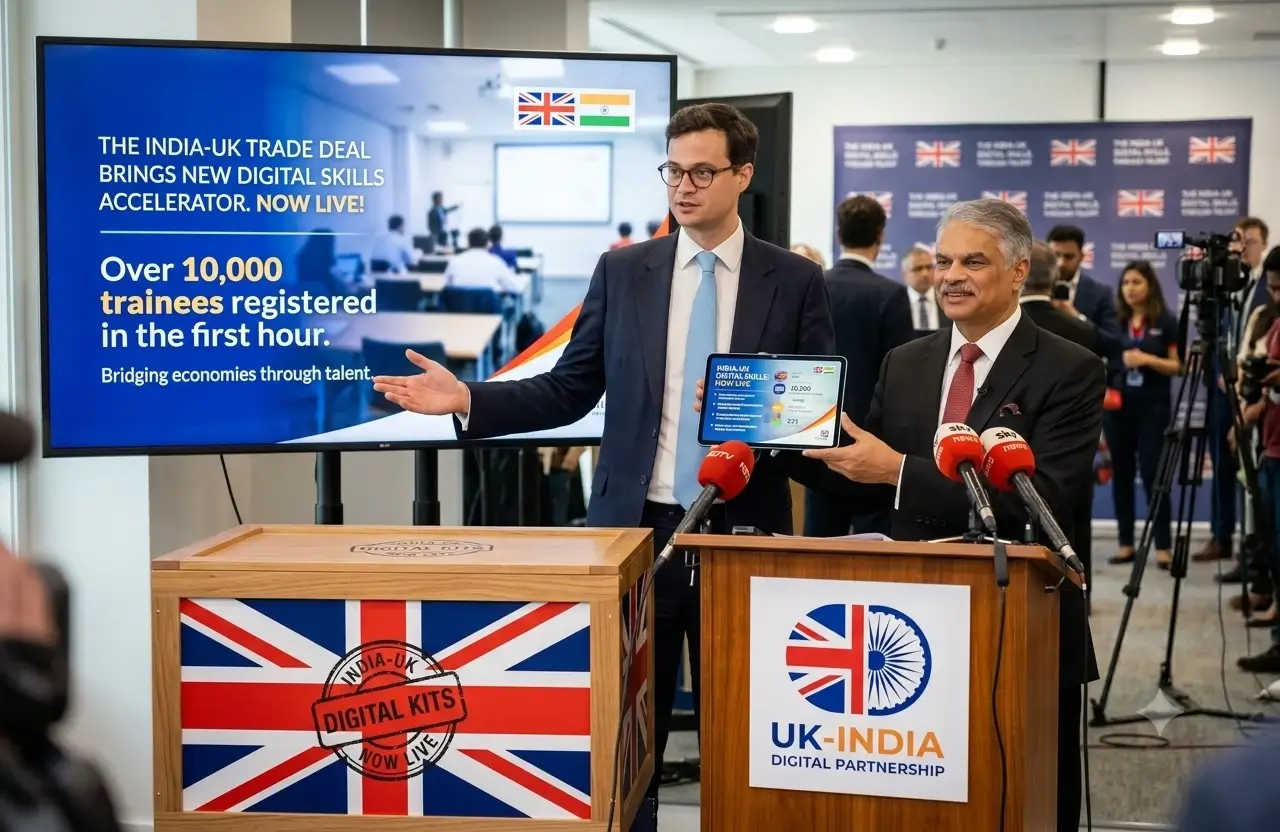
The start of the agreement was marked in Mumbai by the arrival of selected British products aboard a British Airways flight. Harjinder Kang, His Majesty’s Trade Commissioner for South Asia, and David Wright, British Airways’ General Manager in India, unveiled the shipment at the British Deputy High Commission.
UK India Trade Deal Takes Effect
The agreement establishes new trading arrangements covering goods and services moving between the two countries. It is intended to lower costs and make market access easier for businesses operating across the UK-India economic corridor.
The UK Government described the agreement as a major development in the bilateral economic partnership. It applies across a range of commercial sectors and introduces tariff reductions from its first day in force.
- Entry into force: The agreement took effect on 15 July 2026.
- Existing trade: UK-India trade was valued at £48 billion during 2025.
- Formal name: The agreement is also known as the Comprehensive Economic and Trade Agreement.
Tariff Reductions Begin Across Both Markets
Indian exporters now receive duty-free access for 99% of goods entering the UK. UK exporters will benefit from reduced or removed Indian tariffs covering 90% of goods.
The changes cover products including vehicles, manufactured goods, cosmetics, food and drink, creative-industry products and medical technology. Some tariff reductions apply immediately, while other reductions will be introduced over longer periods under the agreement.
British Products Mark Agreement’s First Day
Selected British cosmetics, food products and alcoholic beverages arrived in Mumbai aboard a British Airways flight as the agreement took effect.
The products represented sectors expected to benefit from lower Indian tariffs. The shipment served as a public launch event rather than a measure of the agreement’s wider trade impact.
Businesses Gain Wider Market Access
Businesses in both countries are expected to gain from lower tariffs, improved access to overseas customers and simpler trading arrangements. The agreement covers established industries as well as services, digital commerce and developing areas of technology.
UK companies will be able to pursue opportunities in Indian manufacturing, automotive production, consumer goods and medical technology. Indian businesses will gain broader access to UK customers across goods and services.
- Manufacturing: Reduced tariffs will support trade in machinery, equipment and industrial components.
- Consumer goods: British cosmetics, food and drink will become more competitive in India.
- Medical technology: Reduced trade barriers will support access to healthcare equipment and related products.
- Creative industries: Businesses in publishing, television, film, music and gaming will receive broader trading opportunities.
Agreement Expected to Increase Bilateral Trade
The UK Government estimates that the agreement could increase bilateral trade by £25.5 billion each year in the long term. The forecast reflects additional activity expected from tariff reductions and expanded access across both markets.
Annual UK gross domestic product is projected to rise by £4.8 billion over the long term. The corresponding estimate for India is an annual increase of £5.1 billion.
Long-Term Trade Projections
| Indicator | Projected Change | Context |
|---|---|---|
| Bilateral trade | £25.5 billion yearly | Long-term government forecast |
| UK GDP | £4.8 billion yearly | Estimated long-term increase |
| Indian GDP | £5.1 billion yearly | Estimated long-term increase |
UK and India Plan Trade Events
The UK Government will hold business receptions and promotional activities to mark the start of the agreement. Events are planned in New Delhi, Mumbai, Bengaluru and at Lancaster House in London.
The programme will bring together government representatives, businesses and organisations involved in trade between the two countries. It will also promote awareness of the new market-access arrangements available under the agreement.
Stakeholder Comments
Harjinder Kang, His Majesty’s Trade Commissioner for South Asia and British Deputy High Commissioner for Western India said;
“This is a watershed moment for the UK-India partnership. Our landmark trade deal is designed to benefit businesses and consumers from day one with cheaper, quicker and easier trade. We are all excited to take full advantage of it.”
David Wright, British Airways’ General Manager in India said;
“The UK-India Free Trade Agreement marks a major milestone in the relationship between the UK and India and reinforces the long-term potential of one of the world’s most dynamic international corridors. We are proud to support this landmark agreement and the opportunities it will create for trade, investment and tourism.”
The UK-India Free Trade Agreement entered into force on 15 July 2026, introducing immediate tariff changes across a trading relationship worth £48 billion in 2025. The agreement covers goods and services, with 99% of Indian goods entering the UK and 90% of UK goods entering India receiving duty-free or reduced-tariff treatment.
Its longer-term effect will depend on business use of the new market-access arrangements and the phased implementation of individual tariff commitments.
Sources: British Deputy High Commission Mumbai and British High Commission New Delhi and Foreign, Commonwealth & Development Office.
Prepared by Ivan Alexander Golden, Founder of THX News, an independent news organisation delivering timely insights from global official sources. Combines AI-analysed research with human-edited accuracy and context.