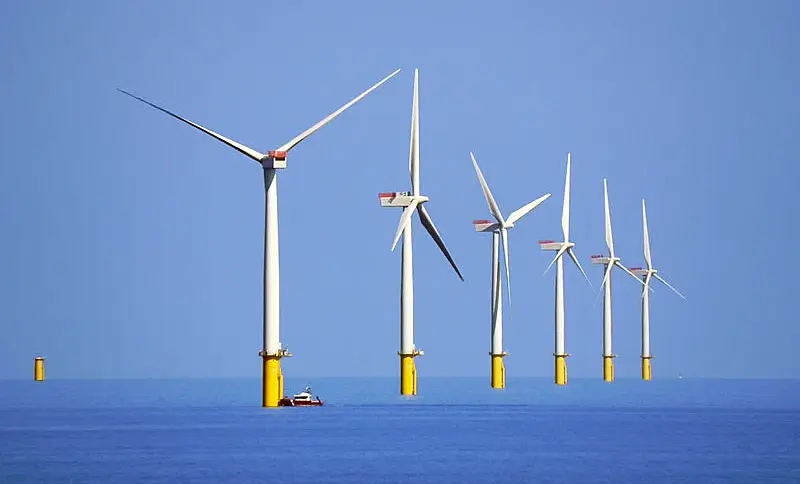
The UK’s offshore wind sector supports national energy supply and employment across ports, factories, and regional supply chains.
On 15 January 2026, the Department for Energy Security and Net Zero announced that the AR7 renewables auction, combined with the Clean Industry Bonus, has leveraged £3.4 billion in private investment from £204 million of public funding.
The announcement was made alongside the Prime Minister and the Energy Secretary and applies to offshore wind projects and associated domestic manufacturing across Britain.
Introduction
The government published the AR7 auction results outlining how the Clean Industry Bonus is being used to attract private investment into domestic manufacturing, ports, and supply chains linked to offshore wind development.
The measures are intended to support employment and regional industrial growth across the UK.
Announcement of Record Renewables Auction Results
The government confirmed that the AR7 auction secured a record level of offshore wind procurement and attracted £3.4 billion in private investment. The Department for Energy Security and Net Zero stated that £204 million of public funding was used to incentivise domestic supply chain development.
Additionally, the department reported that the auction leveraged an estimated £17 of private investment for every £1 of public funding. The results were presented as part of the government’s wider clean energy programme.
Investment in Ports, Factories, and Supply Chains
The government stated that investment will flow into manufacturing sites, port facilities, and supply chain infrastructure across Britain. The Department for Energy Security and Net Zero highlighted ports and factories involved in producing components such as foundations, blades, and cables.
Meanwhile, the department noted that the Clean Industry Bonus is intended to encourage developers to source infrastructure from within the UK. The approach is framed as support for domestic industrial capacity.
- Port infrastructure
- Manufacturing facilities
- Supply chain development
Employment Impact and Skills Demand
The government reported that industry estimates link the investment to support for up to 7,000 jobs in industrial regions. The Department for Energy Security and Net Zero stated that priority occupations include electricians, welders, and engineers.
Additionally, the department referenced longer-term expectations that the offshore wind sector could support up to 100,000 jobs by 2030. These figures were presented as part of the government’s clean energy mission.
- Job estimates
- Skilled trades demand
Scotland and Regional Industrial Benefits
The government stated that Scotland is expected to receive up to £1.1 billion in supply chain investment linked to the auction results. The Department for Energy Security and Net Zero referenced ports such as Nigg and Aberdeen and manufacturers of offshore wind equipment.
Additionally, the department reported that the investment is expected to support up to 2,400 clean energy jobs in Scotland. The figures were presented as part of broader regional development plans.
Scotland Investment Summary
| Supply Chain Investment | Up to £1.1 billion directed toward ports and manufacturers in Scotland, according to the Department for Energy Security and Net Zero. |
| Job Support | Up to 2,400 clean energy jobs projected in Scotland as part of the offshore wind supply chain expansion. |
Offshore Wind Capacity and Energy Security Context
The government reported that the AR7 auction secured 8.4 gigawatts of offshore wind capacity. The Department for Energy Security and Net Zero stated that this level of generation is equivalent to powering more than 12 million homes.
Additionally, the department noted that offshore wind, alongside solar and onshore wind, remains cheaper to build and operate than new gas infrastructure. The figures were presented within the context of rising energy demand and long-term energy security.
Stakeholder Comments
Ministerial Comments
Sir Keir Starmer, Prime Minister said;
“We promised to take back control of our energy with clean, homegrown power, and today we are delivering in a way that brings industrial jobs for communities across the country. Investment will flow into ports, factories, and supply chains to strengthen Britain’s energy future and support working people in our industrial heartlands.”
Ed Miliband, Secretary of State for Energy Security and Net Zero said;
“Our clean energy mission is creating good jobs in towns and cities across the UK, bringing opportunities for workers and supporting the country’s industrial base. This investment in clean, homegrown power will be felt for decades, backing manufacturing, ports, and the wider supply chain linked to offshore wind.”
In Conclusion
The January 2026 renewables auction results set out the scale of public and private investment tied to offshore wind and domestic manufacturing. The government reported that the Clean Industry Bonus has been used to leverage private funding for ports, factories, and supply chains.
Together, the measures are intended to support employment, expand renewable energy capacity, and strengthen the UK’s long-term energy security strategy.
Sources: Department for Energy Security and Net Zero, Prime Minister’s Office, 10 Downing Street.
Prepared by Ivan Alexander Golden, Founder of THX News, an independent news organisation delivering timely insights from global official sources. Combines AI-analysed research with human-edited accuracy and context.