
The Environment Agency confirmed that United Utilities Water Limited pleaded guilty to releasing more than 30,000 fish into Bessy Brook without a permit. The incident led to over 16,000 fish deaths and a £60,000 fine.
The release happened near Bolton during a scour valve test at High Rid Reservoir in December 2024. Officers were called to the site after reports of dead fish. They found no pollution but confirmed a large number of fish had been forced downstream.
This is the first prosecution under The Keeping and Introduction of Fish (England and River Esk Catchment Area) Regulations 2015. Investigators found the fish were pushed into unsuitable conditions, leading to mass fatalities.
Incident and regulatory breach
United Utilities carried out a routine valve test that released fish into a downstream brook without a permit. The flow forced them into an environment they could not survive in.
- Routine valve test triggered the release at High Rid Reservoir
- No permit was obtained for introducing fish into inland waters
- Fish entered Bessy Brook near Bolton
Impact on fish and local environment
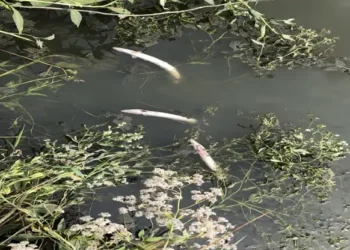
More than 16,000 fish died following the discharge. Many showed signs of physical trauma, with some found trapped in structures along the brook.
The Environment Agency classified the incident as Category 2 harm, reflecting a significant impact on animal health.
- Over 30,000 fish displaced downstream
- More than 16,000 confirmed dead
- Around 18,000 recovered and returned to the reservoir
Investigation and legal outcome
The investigation included water sampling and site inspections. No pollutants were found, but the agency confirmed the breach was the unpermitted release of fish.
The court issued a £60,000 fine, along with a £2,000 victim surcharge and more than £24,000 in costs. The case sets a precedent under the 2015 regulations.
Enforcement Outcome Overview
| Indicator | Recent Movement | Context |
|---|---|---|
| Fine issued | £60,000 | Court-imposed penalty following Environment Agency prosecution |
| Additional costs | £26,098 | Includes surcharge and investigation costs awarded in court |
| Regulatory milestone | First prosecution | Under 2015 fish introduction regulations |
Company response and mitigation measures
United Utilities said the fish may have entered pipework while trying to avoid predators. Contractors were brought in to recover and return fish where possible.
The company said a later valve test was completed successfully after new safeguards were introduced. It also made a voluntary £500,000 contribution towards environmental restoration.
Regulatory context and enforcement significance
The Environment Agency said the company failed to meet permit requirements for introducing fish into inland waters. Officials said the case sends a clear signal that water companies must follow environmental rules. Enforcement action will be taken where breaches cause harm.
Water Enforcement Activity Snapshot
| Indicator | Recent Movement | Context |
|---|---|---|
| Inspections completed | 10,000 | Environment Agency checks on water companies in current year |
| Improvement actions | 4,700+ | Required infrastructure and operational upgrades identified |
| Workforce expansion | 41 to 195 roles | Increase in enforcement personnel between 2023 and 2026 |
Wider enforcement activity and policy direction
The Environment Agency has increased inspections and expanded its enforcement workforce to strengthen oversight of water companies. Government reforms are expected to give regulators stronger inspection powers, aimed at preventing similar incidents and improving operational standards.
Stakeholder Comments
Andy Brown, Environment Agency water industry regulation manager for the North West said;
“With this regulatory first, we are letting water companies know they must abide by all legislative requirements. The Environment Agency expects full compliance from water companies and are committed to taking robust enforcement action when we see breaches like this.”
Emma Hardy, Water Minister said;
“This incident by United Utilities is shocking and should never have happened in the first place. The company has to be held responsible for its actions and this £60,000 fine does exactly that.”
In Conclusion
The case establishes a clear enforcement precedent under fish introduction regulations and highlights the consequences of operational failures. It reinforces the requirement for permits in environmental management and signals continued regulatory scrutiny of water companies to prevent further harm to wildlife and waterways.
Sources: Environment Agency.
Prepared by Ivan Alexander Golden, Founder of THX News, an independent news organisation delivering timely insights from global official sources. Combines AI-analysed research with human-edited accuracy and context.