
Iran has launched sustained missile and drone attacks across multiple countries in the Middle East, affecting civilian infrastructure and regional stability. The situation has raised concerns for foreign nationals, commercial transport hubs, and military personnel stationed across the Gulf. UK officials say the attacks risk widening conflict and endangering British interests abroad.
The UK government announced defensive military support to regional partners, updated travel guidance, and diplomatic engagement following the escalation.
The Prime Minister confirmed coordination with allies, acceptance of a US request to use British bases for limited defensive purposes, and urged British nationals to register with the Foreign Office. Officials emphasised the measures are focused on protecting British lives and supporting regional security.
Escalating Iranian attacks across the Middle East
UK officials report that Iranian missile and drone strikes have affected several countries, hitting civilian and commercial infrastructure and causing injuries. Airports, ports, hotels, and military facilities have been among the sites impacted, raising concerns about regional safety and economic disruption.
Leaders of the UK, France, and Germany issued a joint statement condemning the attacks as indiscriminate and calling for an immediate halt. They warned that continued escalation could threaten civilians, allied forces, and wider stability.
- Missile and drone strikes reported across multiple countries
- Civilian infrastructure including airports and hotels affected
- Service personnel and foreign nationals placed at risk
Risks to British nationals and personnel
The Prime Minister stated that at least 200,000 British citizens are currently in the region, including residents, travellers, and transit passengers. He noted that some attacks had struck locations where British nationals were present.
UK armed forces stationed across the Middle East are also exposed to risk, with one strike reported near a military base in Bahrain. Officials said the government’s priority is protecting British lives and personnel.
British Presence in the Region
| British citizens | Estimated 200,000 in affected countries |
| Military personnel | Deployed across regional bases |
| Civilian locations | Hotels, airports, and transit hubs impacted |
Updated travel advice and registration guidance
The Foreign, Commonwealth & Development Office urged British nationals in Bahrain, Israel, Kuwait, Palestine, Qatar, and the United Arab Emirates to register their presence. Registration allows officials to provide direct updates and assistance if conditions change.
Travellers are advised to follow local authority guidance and consult official UK travel advice for their specific location.
- Register presence with the UK government
- Follow local authority instructions
- Monitor official travel advice updates
UK defensive operations and military support
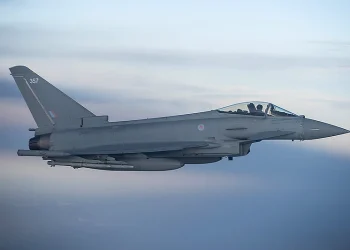
UK aircraft have been operating in the region as part of coordinated defensive missions, intercepting incoming drones and missiles. Officials said these actions are intended to protect allied countries and British interests without participating in offensive operations.
The government also confirmed it had accepted a US request to use British bases for a specific and limited defensive purpose aimed at preventing further missile launches.
Defensive Measures Announced
| Air operations | UK jets intercepting missiles and drones |
| Base access | Limited use of UK facilities by the United States |
| Technical support | Assistance to partners in counter-drone defence |
Diplomatic engagement with regional leaders
The Prime Minister held calls with leaders of Bahrain, Kuwait, Jordan, Cyprus, and Oman to discuss civilian safety and infrastructure damage. UK officials reiterated support for partners facing ongoing attacks and emphasised the need to prevent further escalation.
Discussions included the protection of civilians, stability of transport networks, and coordination of defensive measures across the region.
Cooperation with allies and E3 position
The UK, France, and Germany agreed to work with the United States and regional partners to respond to the situation. The joint statement indicated that defensive action could be necessary to counter missile and drone capabilities if attacks continue.
Officials emphasised that coordination aims to protect civilians and allied interests while avoiding wider conflict.
Legal basis for defensive action
The government stated that its actions are grounded in international law under the principle of collective self-defence. Support is being provided to regional allies who requested assistance in response to ongoing attacks.
Officials confirmed that the UK will notify the United Nations Security Council of relevant measures taken under Article 51 of the UN Charter and that the response is limited to addressing the immediate threat.
Ministerial Comments
Prime Minister Keir Starmer said;
“Over the last two days Iran has launched sustained attacks across the region at countries who did not attack them. This is a dangerous situation and our duty is to protect British lives, our armed forces, and our allies while working to prevent further escalation.”
In Conclusion
The UK government says it will continue monitoring the situation closely while maintaining defensive support to partners and updated guidance for British nationals.
Officials emphasise that measures are focused on protecting lives, supporting stability, and encouraging de-escalation through diplomatic channels. UK Citizens in the region are urged to remain vigilant, follow official advice, and stay registered for updates as conditions evolve.
Sources: UK Prime Minister’s Office, Foreign, Commonwealth & Development Office, Joint E3 Leaders’ Statement, gov.uk
Prepared by Ivan Alexander Golden, Founder of THX News, an independent news organisation delivering timely insights from global official sources. Combines AI-analysed research with human-edited accuracy and context.