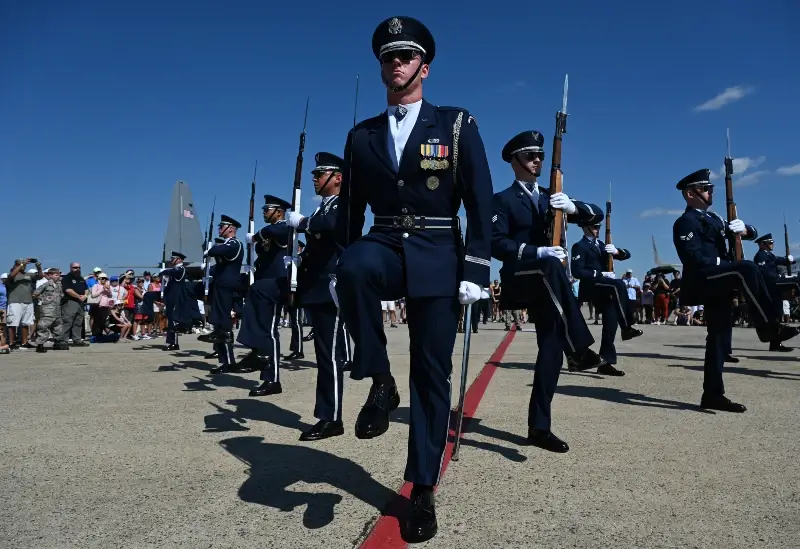
The U.S. Air Force is marking 75 years of its Honor Guard Drill Team, celebrating a legacy of precision, discipline and public service that has shaped its ceremonial identity since 1950. The team’s anniversary highlights a long-standing tradition of excellence carried forward by generations of airmen.
The Honor Guard Drill Team, formed at the dawn of the modern Air Force, continues to represent the service at ceremonies and public events worldwide. With rigorous training, mentorship programs and a commitment to flawless execution, the team stands as a symbol of dedication, technical mastery and Air Force values.
How the Drill Team’s Legacy Took Shape Over 75 Years
The U.S. Air Force Honor Guard Drill Team originated in 1950 to support ceremonial duties across the National Capital Region. Over time it evolved into a globally recognized demonstration unit, performing more than 100 exhibitions annually and showcasing the professionalism of American airmen to international audiences.
The Deep Roots of Precision and Discipline
From its earliest days, the team focused on mastering intricate rifle movements through repetition and technical refinement. This high standard of discipline remains central to its identity today, with airmen training full time to perfect a seven-minute routine that demands total synchronization and physical endurance.
The Drill Team’s Modern Mission and Public Engagement Role
Today’s Honor Guard Drill Team blends ceremonial duty with outreach, representing the Air Force at global events while honoring those laid to rest at Arlington National Cemetery. These combined roles preserve tradition while strengthening public trust in the service and showcasing the humanity behind the uniform.
The Team’s Performance Philosophy and Training Culture
The drill team’s training environment is built around mentorship, resilience and peer leadership. Airmen refine micro-movements, train under fatigue and develop the confidence required to perform in challenging conditions such as heavy rain and high winds—conditions they faced during the 2025 Royal Edinburgh Military Tattoo.
Performance Standards and Training Snapshot
| Indicator | Recent Movement | Context |
|---|---|---|
| Technical Precision | Strengthened | Expanded micro-movement training and evaluation cycles |
| International Engagements | Increased | More overseas exhibitions and joint demonstration events |
| Training Hours | High | Thousands of hours to perfect the seven-minute routine |
Honoring Service, Building Leaders and Inspiring the Public
Beyond ceremonial excellence, the drill team emphasizes mentorship and leadership development. Experienced members guide new performers through a structured “big-brother, big-sister” model that promotes personal responsibility and teamwork. These bonds shape confidence and reinforce the Air Force’s culture of accountability.
The Human Element Behind the Uniform
Airmen describe the heart of the drill team not in its movements but in its connection to people—both those honored at Arlington and the public who meet team members after performances. These interactions help demystify military service and inspire future generations by showing the relatable human beings behind the ceremonial precision.
Public Trust and Representation Snapshot
| Indicator | Recent Movement | Context |
|---|---|---|
| Public Engagement | Strengthened | More face-to-face interactions following exhibitions |
| Recruitment Influence | Increasing | Performances inspire interest among younger audiences |
| Ceremonial Demand | Consistently High | Ongoing commitments at Arlington and national events |
Why the Honor Guard Drill Team Still Matters Today
As military technology accelerates, the drill team’s value lies in its symbolic representation of discipline, heritage and public service. Its performances reinforce the Air Force’s ties to the American public while demonstrating that precision and professionalism remain central to the service’s identity.
Final shot
Marking 75 years of the Air Force Honor Guard Drill Team underscores how precision, ceremony and human connection still matter in a high‑tech military. As the team continues to honor the fallen, represent airmen on the world stage and mentor the next generation, its legacy goes beyond drill movements—reinforcing public trust, service values and the enduring bond between the Air Force and the people it serves.
Sources: U.S. Air Force, Department of Defense, and Airman Magazine.
Prepared by Ivan Alexander Golden, Founder of THX News™, an independent news organization delivering timely insights from global official sources. Combines AI-analyzed research with human-edited accuracy and context.