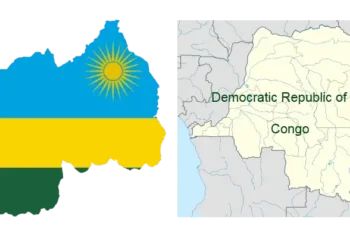

The U.S. Department of State confirmed progress in negotiations between the Democratic Republic of the Congo and AFC/M23 following meetings held April 13–17, 2026, in Montreux, Switzerland, focused on humanitarian access, ceasefire oversight, and prisoner releases.
The discussions form part of the Doha Framework for a Comprehensive Peace Agreement signed in November 2025, aiming to stabilise eastern Democratic Republic of the Congo through coordinated international mediation and structured commitments between the parties.
Negotiations Held in Switzerland
Representatives from the Government of the Democratic Republic of the Congo and AFC/M23 convened in Montreux alongside the United States, Qatar, the African Union, Togo, and Switzerland, according to the U.S. Department of State. The April 13–17 meetings focused on advancing protocols tied to the Doha Framework and reinforcing ceasefire implementation mechanisms.
Doha Framework Context
The Doha Framework, signed on November 15, 2025, established a roadmap for peace negotiations between the parties. Additionally, it defined structured protocols for humanitarian access, ceasefire monitoring, and detainee release, which remain central to the current negotiations.
Humanitarian Access Commitments
The parties agreed on measures to ensure life-saving humanitarian assistance reaches civilians in eastern DRC, as confirmed by the U.S. Department of State. These commitments include protecting aid delivery systems and ensuring non-discriminatory access to essential services such as food, healthcare, and shelter.
Scope of Humanitarian Assistance
Humanitarian assistance was defined to include food, nutrition, healthcare, water, sanitation, shelter, and civilian protection activities. The agreement emphasises compliance with international humanitarian and human rights law during ongoing conflict.
Ceasefire Monitoring Mechanism
The parties operationalised the Expanded Joint Verification Mechanism Plus (EJVM+), enabling the Ceasefire Oversight and Verification Mechanism (COVM) to begin monitoring compliance. According to the U.S. Department of State, this includes surveillance, reporting, and verification of ceasefire adherence across affected regions.
Role of International Partners
International actors, including the African Union Commission and MONUSCO, will support verification missions through logistical and operational assistance. Additionally, the involvement of these organisations provides structured oversight and increases transparency in ceasefire implementation.
Prisoner Release Agreement
The parties agreed to release detainees within ten days under an existing mechanism signed in September 2025, as reported by the U.S. Department of State. This step is intended to build confidence and reduce tensions between the parties during ongoing negotiations.
Confidence-Building Measures
The release process will follow procedures supported by the International Committee of the Red Cross, which provided detainee lists. Meanwhile, this action is expected to support trust-building, with direct effects on negotiation stability and continuity.
Protection of Civilian Infrastructure
The agreement includes commitments to protect infrastructure essential for civilian survival, including food systems, water supplies, healthcare facilities, and telecommunications networks. According to the U.S. Department of State, parties must refrain from actions that would damage or disrupt these services.
Restrictions on Conflict Actions
| Indicator | Recent Movement | Context |
|---|---|---|
| Humanitarian access | Expanded | Parties agreed to facilitate safe and unimpeded aid delivery, according to the U.S. Department of State |
| Ceasefire monitoring | Operationalised | EJVM+ enables COVM to begin verification missions with international support |
| Prisoner releases | Scheduled | Commitment to release detainees within ten days under existing mechanism |
- Humanitarian compliance: Parties committed to international humanitarian law obligations, as stated by the U.S. Department of State
- Infrastructure protection: Agreements prohibit attacks on food, water, and healthcare systems critical to civilians
- Operational transparency: Monitoring mechanisms introduce structured oversight with international participation
Stakeholder Comments
Officials from the Democratic Republic of the Congo, AFC/M23, and supporting international partners expressed commitment to maintaining momentum in the peace process. According to the U.S. Department of State, further negotiations will focus on completing remaining protocols and implementing agreed measures.
The negotiations in Switzerland mark progress in implementing the Doha Framework, with agreed steps on humanitarian access, ceasefire monitoring and detainee releases. These measures reflect coordinated international engagement between the parties.
Further negotiations are expected to focus on completing remaining protocols and implementing agreed mechanisms for verification and humanitarian access.
Sources: U.S. Department of State.
Prepared by Ivan Alexander Golden, Founder of THX News, an independent news organization delivering timely insights from global official sources.
Research combines AI-assisted analysis with human-edited accuracy and context.