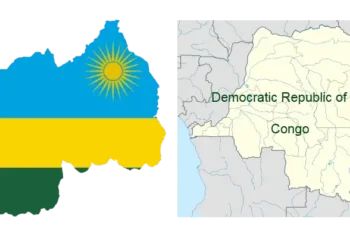
The International Contact Group for the Great Lakes issued a joint statement on 5 March 2026 expressing concern over ceasefire violations in the eastern Democratic Republic of the Congo and urging all parties to return to negotiations.
The statement was released by the governments of the United States, Belgium, Denmark, France, Germany, the Netherlands, Sweden, Switzerland, the United Kingdom and the European Union, chaired by Sweden.
The statement addresses ongoing security tensions in eastern Democratic Republic of the Congo following commitments to cease hostilities under the Washington Accords signed on 4 December 2025 and the Doha commitments of 19 July 2025.
Governments in the International Contact Group for the Great Lakes said renewed diplomatic engagement is necessary to stabilise the region.
International Contact Group issues joint statement on eastern DRC
The International Contact Group for the Great Lakes released its statement through participating governments including the United States and the European Union.
Meanwhile, the governments involved said the statement was intended to reaffirm commitments to diplomatic engagement and peace processes already underway. The group said the objective remains a durable political settlement supported by regional and international partners.
Ceasefire commitments referenced by the International Contact Group
| Indicator | Recent Movement | Context |
|---|---|---|
| Washington Accords | Ceasefire commitments signed December 2025 | The International Contact Group cited the Washington Accords of 4 December 2025 as a framework for halting hostilities. |
| Doha commitments | Permanent ceasefire pledged July 2025 | The group referenced commitments made in Doha on 19 July 2025 to establish a permanent cessation of hostilities. |
| UN Security Council resolutions | Resolutions 2773 and 2808 referenced | The International Contact Group urged compliance with UN Security Council resolutions concerning the conflict in eastern DRC. |
Concerns over ceasefire violations and renewed hostilities
The International Contact Group said it remains concerned about continued violations of ceasefire commitments in eastern DRC. According to the joint statement issued by participating governments, recent incidents include the use of drones in military attacks that pose risks to civilian populations.
Additionally, the statement emphasised that these developments undermine commitments previously made in diplomatic agreements. The group said all parties should urgently recommit to halting hostilities and return to negotiations.
Call for return to negotiations and diplomatic process
The International Contact Group said all parties should recommit to ceasefire obligations and return to diplomatic negotiations. The joint statement said peace efforts should continue through established mediation processes and dialogue mechanisms.
However, the group emphasised that a political solution requires engagement by regional actors and international partners. It also noted that compliance with UN Security Council resolutions remains part of the framework guiding diplomatic efforts.
- Mediation leadership: The statement said mediation is being conducted by AU-appointed mediator Faure Gnassingbé, President of the Council of the Republic of Togo.
- International facilitation: The International Contact Group referenced mediation support from the United States and Qatar.
- Regional institutions: The statement cited involvement of the International Conference on the Great Lakes Region and the UN peacekeeping mission MONUSCO.
Support for international mediation efforts
The joint statement acknowledged mediation initiatives led by the African Union and regional facilitators. According to the International Contact Group, AU-appointed mediator Faure Gnassingbé has been working with a panel of facilitators to support dialogue.
Meanwhile, the statement also recognised mediation conducted by the United States and Qatar. The governments involved said diplomatic engagement remains central to efforts aimed at stabilising eastern DRC.
Humanitarian access and protection of civilians
The International Contact Group said all parties must respect international humanitarian law and ensure safe humanitarian access. The statement called for full and unimpeded assistance to reach populations affected by conflict.
Additionally, the governments involved said humanitarian operations depend on secure access routes and functioning infrastructure. The statement emphasised that civilian protection remains a central concern in eastern DRC.
Humanitarian developments referenced by the International Contact Group
| Indicator | Recent Movement | Context |
|---|---|---|
| Border reopening | DRC–Burundi border reopened | The International Contact Group welcomed the reopening as improving humanitarian access. |
| Goma airport | Used during MONUSCO visit | The UN peacekeeping mission MONUSCO used Goma airport during a visit by Special Representative Bruno Lemarquis van de Perre. |
| EU engagement | Visit by EU Commissioner Lahbib | The statement noted diplomatic engagement supporting improved humanitarian access. |
Measures aimed at improving humanitarian access
The International Contact Group welcomed developments intended to improve humanitarian access in eastern DRC. According to the statement, recent steps include the reopening of the border between the Democratic Republic of the Congo and Burundi.
Meanwhile, the statement also referenced the use of Goma airport during a visit by MONUSCO Interim Head and Special Representative of the Secretary-General Bintou Keita van de Perre. The group said sustained humanitarian flights could support relief operations.
- Border reopening: The DRC–Burundi border reopening was cited by the International Contact Group as improving humanitarian logistics.
- Airport operations: The statement said the use of Goma airport during a MONUSCO visit could enable humanitarian flights.
- Humanitarian coordination: Governments involved said cooperation with international partners remains necessary for aid delivery.
Stakeholder Comments
International Contact Group for the Great Lakes said;
“There can be no military solution to the conflict.”
In Conclusion
The joint statement from the International Contact Group for the Great Lakes outlines diplomatic and humanitarian priorities for eastern Democratic Republic of the Congo. Participating governments reaffirmed ceasefire commitments, mediation efforts and humanitarian access as central elements of ongoing peace initiatives.
Meanwhile, the group emphasised that renewed negotiations and compliance with existing agreements remain necessary for stability in the region.
Sources: U.S. Department of State, UK Foreign, Commonwealth & Development Office, European External Action Service.
Prepared by Ivan Alexander Golden, Founder of THX News, an independent news organization delivering timely insights from global official sources. Combines AI-analyzed research with human-edited accuracy and context.