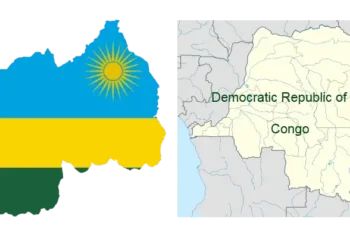

The International Contact Group for the Great Lakes, including the United States and several European governments, issued a joint statement on May 22 supporting ongoing peace negotiations and humanitarian coordination efforts in the eastern Democratic Republic of the Congo.
The group welcomed progress under the Washington Accords and Doha Framework Agreement while urging all parties to maintain ceasefire monitoring, humanitarian access and outbreak-response coordination amid worsening conflict conditions and a newly declared Ebola emergency.
The statement followed meetings held on May 20–21 involving representatives from Belgium, Denmark, the European Union, France, Germany, the Netherlands, Sweden, Switzerland, the United Kingdom, and the United States. The discussions focused on ceasefire coordination, civilian protection, humanitarian access and regional mediation efforts linked to the eastern Congo conflict.
International Contact Group Reviews Eastern Congo Conflict
The International Contact Group for the Great Lakes said continued fighting in eastern Democratic Republic of the Congo remains a threat to ceasefire implementation, humanitarian operations and regional security coordination. The group reaffirmed support for diplomatic initiatives involving Qatar, the United States, the African Union-appointed mediator Faure Gnassingbé, and regional partners engaged in negotiations.
The group specifically welcomed progress under the Washington Accords between the Democratic Republic of the Congo and Rwanda, as well as the Doha Framework Agreement involving the Alliance Fleuve Congo/March 23 Movement, also known as AFC/M23. According to the statement, the negotiations are intended to support ceasefire implementation, humanitarian coordination and regional mediation efforts in eastern Congo.
Washington Accords and Doha Framework Progress
The International Contact Group highlighted meetings held in Montreux, Switzerland, between April 13 and April 19, where representatives from the Democratic Republic of the Congo and AFC/M23 supported humanitarian operations and committed to prisoner releases. Meanwhile, the group also referenced the April 23 Joint Oversight Committee meeting in Washington DC involving the Democratic Republic of the Congo and Rwanda.
| Indicator | Recent Movement | Context |
|---|---|---|
| Washington Accords negotiations | Joint Oversight Committee convened | The International Contact Group said DRC and Rwanda met in Washington DC on April 23 to reaffirm commitments |
| Doha Framework discussions | Humanitarian commitments expanded | The ICG cited April meetings in Montreux supporting prisoner releases and ceasefire monitoring mechanisms |
| Regional mediation efforts | International diplomatic coordination continued | The U.S. Department of State statement referenced mediation support from Qatar, the African Union, and regional partners |
Ceasefire Commitments and Humanitarian Concerns
The International Contact Group urged all parties involved in the conflict to maintain ceasefire commitments and continue negotiations under existing agreements. Additionally, the group stated that political progress must result in measurable humanitarian improvements on the ground, particularly in eastern Congo’s North and South Kivu regions.
According to the statement, humanitarian personnel require safe and unrestricted access to affected communities under international humanitarian law obligations. Meanwhile, the ICG called for sustained reopening efforts involving Goma and Kavumu airports, along with the establishment of humanitarian corridors and simplified administrative procedures.
Humanitarian Access and Airport Reopening Measures
The International Contact Group said humanitarian operations require stronger liaison procedures between military actors and relief agencies operating in conflict-affected areas. The statement emphasized the importance of notification procedures and pre-identification mechanisms designed to reduce risks to humanitarian infrastructure.
- Humanitarian Corridors: The International Contact Group called for secure aid access routes in North and South Kivu.
- Airport Access: The ICG supported sustained reopening efforts for Goma and Kavumu airports to improve humanitarian logistics.
- Civil-Military Coordination: The statement urged stronger liaison and notification procedures to reduce civilian and infrastructure risks.
Drone Escalation and Civilian Protection Risks
The International Contact Group stated that increased drone usage by multiple actors, including state actors, has contributed to rising civilian casualties in eastern Democratic Republic of the Congo. Additionally, the group condemned violations of international humanitarian law and called for stronger notification, coordination and civilian-risk reduction procedures.
According to the statement, all parties must comply with obligations under international humanitarian law while avoiding actions that endanger civilian populations and humanitarian personnel. The ICG reiterated that the conflict does not have a military solution and should instead be addressed through negotiations and regional diplomacy.
Civilian Impact and Oversight Mechanisms
The International Contact Group referenced the Ceasefire Oversight and Verification Mechanism supported by the International Conference on the Great Lakes Region and the United Nations Organization Stabilization Mission in the Democratic Republic of the Congo, known as MONUSCO. The statement said these mechanisms are intended to monitor ceasefire implementation and support humanitarian operations.
The ICG also emphasized the need for broader inter-Congolese negotiations alongside existing ceasefire and verification mechanisms. According to the statement, consultations led by the Republic of Angola remain part of broader regional diplomatic efforts intended to support long-term stability.
Ebola Outbreak Adds Pressure to Cross-border Conflict Stabilization
The International Contact Group said the humanitarian situation in eastern Congo has become more fragile following the recent Ebola outbreak. According to the statement, the World Health Organization declared the outbreak a Public Health Emergency of International Concern on May 17, while Africa CDC declared a Public Health Emergency of Continental Security on May 18.
The statement said the Ebola outbreak adds operational pressure to already strained humanitarian conditions across eastern Democratic Republic of the Congo. The ICG urged all parties involved in the conflict to facilitate outbreak-response access, medical logistics and cross-border health coordination efforts.
Public Health Emergency Data Table
| Indicator | Recent Movement | Context |
|---|---|---|
| WHO Ebola declaration | Public Health Emergency declared May 17 | The International Contact Group cited WHO emergency action linked to the eastern Congo outbreak |
| Africa CDC emergency declaration | Continental security emergency declared May 18 | The ICG said Africa CDC elevated the outbreak due to regional humanitarian risks |
| Humanitarian coordination pressure | Regional response requirements increased | The statement linked Ebola containment efforts to broader conflict-related humanitarian challenges |
International Partners Support Long-Term Regional Stability
The International Contact Group stated that long-term peace in the Great Lakes region depends on inclusive governance, accountability, and protection of rights. Additionally, the group said regional cooperation remains necessary to address underlying drivers of instability affecting eastern Democratic Republic of the Congo.
According to the statement, the Peace, Security and Cooperation Framework for the Democratic Republic of the Congo continues to guide regional diplomatic engagement. Meanwhile, the ICG said international partners will continue supporting negotiations and regional coordination efforts intended to reduce conflict risks and support shared prosperity.
Stakeholder Comments
The International Contact Group collectively stated that all parties should remain committed to negotiations and avoid renewed military escalation. Furthermore, the statement emphasized that political progress should translate into practical humanitarian improvements affecting civilians in conflict-affected areas.
The group also reiterated support for international mediation efforts involving regional governments, the African Union, and multilateral partners. According to the statement, continued ceasefire monitoring, humanitarian coordination and regional mediation efforts remain central to reducing conflict risks in eastern Congo.
The International Contact Group’s latest statement reflects continued international involvement in efforts to stabilize eastern Democratic Republic of the Congo through diplomacy, ceasefire monitoring, and humanitarian coordination. The discussions also highlighted increasing concern over civilian protection and the growing operational impact of the Ebola outbreak.
The group said future progress will depend on sustained ceasefire monitoring, humanitarian access coordination and continued implementation of regional mediation and oversight mechanisms.
Sources: U.S. Department of State, MONUSCO, World Health Organization.
Prepared by Ivan Alexander Golden, Founder of THX News, an independent news organization delivering timely insights from global official sources.
Research combines AI-assisted analysis with human-edited accuracy and context.