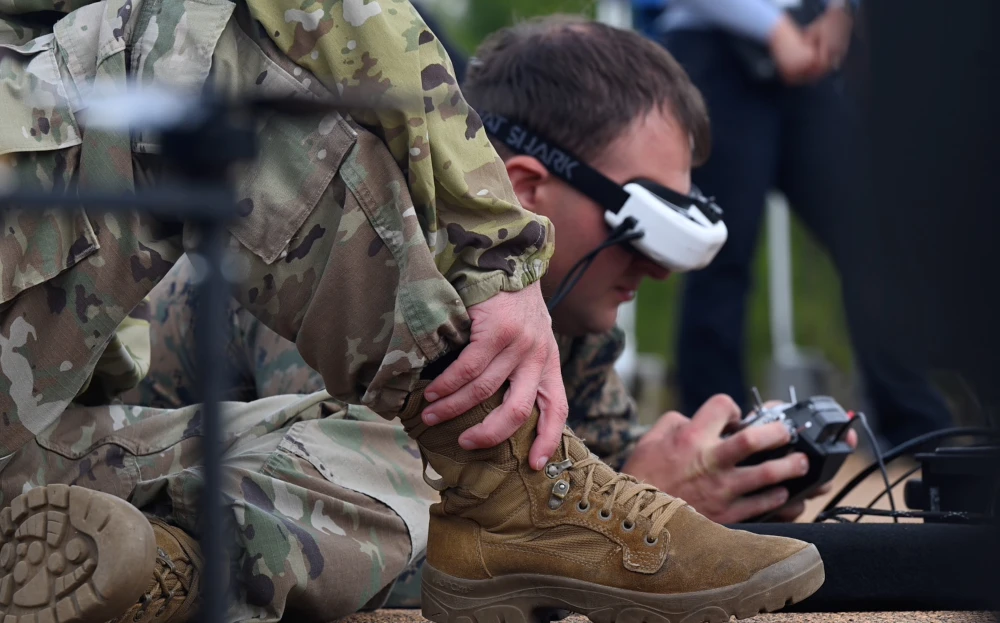
The Defense Innovation Unit said the Drone Dominance Program has completed Gauntlet Phase II qualifiers at Camp Grayling, Michigan, and received its first drone batch under a wider U.S. military procurement effort announced on June 17, 2026.
The program matters because the War Department says it is intended to accelerate low-cost U.S.-made drone production for combat units as battlefield demand for unmanned systems increases.
The announcement places drone procurement, domestic production and battlefield adaptation inside one fast-moving acquisition program. The Defense Innovation Unit said the $1.1 billion, two-year effort is linked to Executive Order 14307 and is designed to move selected drone technologies into larger-scale production.
Drone Dominance Program Moves Forward
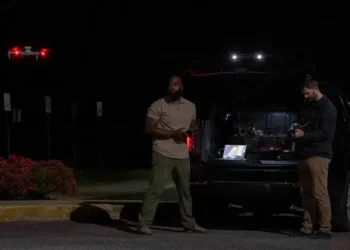
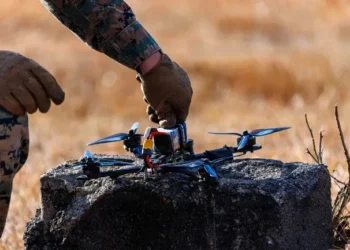
The Defense Innovation Unit said Drone Dominance Program Gauntlet Phase II qualifiers concluded last week at Camp Grayling, Michigan. The qualifier tested 49 companies and 79 unique unmanned aerial systems under mission scenarios that included long-range strikes and close-quarters tactical assaults.
Additionally, the Defense Innovation Unit said each company brought 20 drones to the qualifier event. The real-world effect is that companies were assessed under structured battlefield-style conditions before the next phase begins, rather than through a paper-only procurement process.
The War Department announcement described the event as part of a wider acquisition shift toward challenge-based testing. In neutral terms, the program is being used to connect technical performance, production capacity and battlefield requirements before larger orders are made.
Camp Grayling Testing Details
| Indicator | Recent Movement | Context |
|---|---|---|
| Companies tested | 49 companies | The Defense Innovation Unit said 49 companies participated in Gauntlet Phase II qualifiers at Camp Grayling, Michigan. |
| Unmanned systems assessed | 79 unique systems | The Defense Innovation Unit said 79 unmanned aerial systems were tested under demanding mission scenarios. |
| Drones brought per company | 20 drones each | The Defense Innovation Unit said each company brought 20 drones to the qualifier event. |
| Next phase requirement | 120 drones per entrant | The War Department announcement said Gauntlet II will require entrants to bring 120 drones as testing expands. |
Program Built Around Fast Acquisition
The War Department said the Drone Dominance Program is a $1.1 billion, two-year effort to execute President Donald J. Trump’s Executive Order 14307. The release said the order articulated an urgent need for the department to procure, integrate and train with low-cost, high-performing drones manufactured in the United States.
Meanwhile, the Office of the Secretary of War sponsors the program, with the Defense Innovation Unit and Test Resource Management Center jointly administering it. The practical effect is a procurement structure designed around six-month sprints rather than slow, multiyear cycles.
The Defense Innovation Unit said the program uses four gauntlet phases to identify resilient and effective drone platforms. The neutral synthesis is that the department is pairing competitive testing with production decisions to reduce the gap between prototype selection and delivery to military users.
Acquisition Model And Program Sponsors
- Program sponsor: The War Department announcement said the Office of the Secretary of War sponsors the Drone Dominance Program.
- Program administrators: The Defense Innovation Unit and Test Resource Management Center jointly administer the program, according to the official release.
- Acquisition model: The Defense Innovation Unit said the program shifts from slow multiyear cycles to agile six-month sprints.
- Operational purpose: The War Department said selected technologies are fast-tracked for large-scale production after each phase.
Drone Orders And Production Goals
The Defense Innovation Unit said the first batch of drones was accepted, with nearly 2,000 additional units shipped to the services and thousands more ramping up for fulfillment. Additionally, the release said Phase I led to the purchase of 30,000 drones.
Travis Metz, DIU deputy director, said the department has ordered 30,000 drones that are being delivered now and will order 60,000 more in September. The announcement signals a shift from prototype evaluation toward large-scale delivery for operational units.
The War Department announcement said the department aims to scale production from 30,000 to 150,000 units per phase. It also said the target unit cost is expected to fall from $5,000 to about $3,000, creating a measurable cost and volume benchmark for later assessment.
Drone Quantity And Cost Targets
The Defense Innovation Unit said the program’s goal is to rapidly arm combat units with a scalable fleet of low-cost, expendable one-way attack drones. The release also said the effort is expected to increase private capital flow into the U.S. industrial base while driving down costs.
However, those targets remain tied to competitive events and production performance. The neutral conclusion is that the program’s effectiveness will depend on whether selected vendors can deliver large quantities on schedule while meeting battlefield and supply-chain requirements.
Gauntlet II Expands Testing Demands
Gauntlet II will begin later this summer, according to the War Department announcement. The release said entrants must bring 120 drones as the competition expands into night operations and more complex urban and confined environments.
Additionally, the move from 20 drones per company during qualification to 120 drones in the next phase creates a practical production test. The real-world effect is that companies must demonstrate not only prototype performance but also their ability to supply larger quantities for competitive assessment.
The Defense Innovation Unit said the program is using demanding, realistic challenges to identify effective drone platforms. In neutral terms, the next phase increases both operational complexity and production pressure for participating companies.
Phase II Requirements
The War Department announcement said Gauntlet II will test drones in night operations, urban settings and confined environments. These conditions matter because small unmanned systems may be required to operate in dense, contested and close-range battlefield settings.
Meanwhile, the 120-drone requirement gives the department a clearer view of manufacturer readiness. The neutral synthesis is that Gauntlet II is designed to test whether companies can combine technical performance, supply-chain maturity and operational relevance at greater scale.
Officials Link Program To Battlefield Threats
DIU Director Owen West said adversaries are rapidly expanding their drone capabilities and industrial capacity. The program is intended to accelerate U.S. development of low-cost attack drones and strengthen both offensive and defensive unmanned systems capabilities.
The department said the initiative forms part of a wider effort to field more than 200,000 AI-enabled drones by 2027.
The neutral synthesis is that the department is presenting drone procurement as both an industrial-base challenge and an operational readiness requirement. The article does not independently assess the military claims beyond the Defense Innovation Unit and War Department statements.
Stakeholder Comments
Owen West, DIU director, said;
“This is an urgent matter.”
“Our adversaries are scaling their UAS technology, tactics and industries at an alarming rate.”
“Following Secretary of War [Pete] Hegseth’s orders, we are acting decisively to develop new defensive and offensive capabilities to match these threats.”
Travis Metz, DIU deputy director, said;
“As directed by President Trump and Secretary Hegseth, we have begun to equip our warfighters with the best drones in the world. We have ordered 30,000, which are being delivered now and will be ordering 60,000 more in September, all based on competitive events and moving supply chains to the United States as we progress.”
Those comments are significant because they connect procurement numbers, supply-chain policy and battlefield readiness in one official account. However, the public release does not provide vendor-level delivery performance, independent cost validation or combat-use assessment.
The Drone Dominance Program announcement shows the War Department and Defense Innovation Unit moving drone procurement into a larger, faster and more competitive production model. The core figures are clear: 49 companies tested, 79 systems assessed, 30,000 drones ordered and a stated 2027 goal of more than 200,000 AI-enabled drones.
The next test will be whether Gauntlet II can translate expanded requirements into reliable production and fielding outcomes. For now, the official record shows a procurement program built around speed, scale, domestic supply chains and battlefield demand.
Sources: U.S. Department of War, Drone Dominance Program, Defense Innovation Unit Portfolio.
Prepared by Ivan Alexander Golden, Founder of THX News, an independent news organization delivering timely insights from global official sources. Research combines AI-assisted analysis with human-edited accuracy and context.