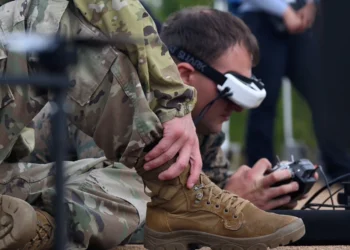

The Department of War announced its Post Quantum Cryptography Strategy on June 23, 2026, setting a force-wide plan to move military systems toward quantum-resistant cryptography. The strategy is intended to protect communications, command-and-control systems, satellite links, weapons platforms and defence industrial networks from future quantum computing threats.
The strategy places post quantum cryptography inside a wider U.S. security transition as federal agencies prepare for quantum computers that could weaken current encryption. It sets deadlines, migration requirements and industry expectations for systems that support military operations.
War Department Announces Quantum Security Strategy
The Department of War Chief Information Officer, Kirsten Davies, announced the Post Quantum Cryptography Strategy as an enterprise-wide cybersecurity plan for military systems. The Department of War said the strategy addresses communications, data, command-and-control systems and future quantum computing risks.
Additionally, the announcement links the strategy to Executive Order 14409, “Securing the Nation Against Advanced Cryptographic Attacks.” The Department of War said the move supports a national mandate to protect high-value government systems from advanced cryptographic attacks.
Why Post Quantum Cryptography Matters
Post quantum cryptography matters because current public-key encryption can be vulnerable to future cryptographically relevant quantum computers. The Department of War strategy says cryptography supports nearly all military systems, including mission communications, authentication, software updates and command functions.
The strategy identifies risks including harvested encrypted data, forged authentication, compromised software and firmware updates, and potential access to command-and-control systems.
| Indicator | Recent Movement | Context |
|---|---|---|
| Deployment deadline | 2030 support target | The Department of War strategy says all DoW systems must support PQC by December 31, 2030, or be phased out. |
| Full-use deadline | 2031 migration target | The Department of War strategy says all DoW systems must use PQC by December 31, 2031, unless otherwise noted. |
| National alignment | Executive action referenced | The Department of War release links the strategy to Executive Order 14409 on advanced cryptographic attacks. |
Strategy Sets Force-Wide Migration Deadlines
The strategy sets two main deadlines for Department of War systems. The Department of War strategy says systems must support post quantum cryptography by December 31, 2030, and must use it by December 31, 2031, unless another rule applies.
Meanwhile, the document states that National Security Systems must support Commercial National Security Algorithm Suite 2.0 for PQC. That gives the migration a defined technical reference point while leaving implementation to system owners, acquisition teams and technical authorities.
Migration Requirements
The Department of War strategy requires the identification of vulnerable legacy cryptography, prioritisation of systems by mission criticality, and migration planning across military networks and platforms.
Additionally, the strategy calls for new high-assurance cryptographic units, embedded cryptographic modules and commercial technologies where they can meet military requirements. The neutral synthesis is that the Department of War is treating PQC as a force-wide modernization task rather than a narrow software update.
Five Lines Of Effort Guide Implementation
The Department of War strategy organises implementation around five lines of effort. These cover governance, inventory, development, commercial integration and deployment of quantum-resistant devices.
- Governance: the Department of War strategy calls for central oversight to guide policy, resources and stakeholder responsibility.
- Inventory: the Department of War strategy calls for baselining cryptographic technologies used across DoW systems.
- Development: the Department of War strategy calls for analysis of CRQC-resistant algorithms, protocols and solutions.
- Commercial integration: the Department of War strategy calls for approved NIST and NSA post quantum algorithms in DoW systems.
- Deployment: the Department of War strategy calls for quantum-resistant devices across weapons systems and IT networks.
Strategy Framework
The framework connects policy oversight with technical migration. The Department of War strategy says governance is needed because current mechanisms were built around routine cryptographic development rather than a rapid force-wide migration.
However, the strategy also warns against introducing new security risks during the transition. It says solutions that provide only confidentiality without PQC authentication will not be considered fully post quantum cryptographic protection.
Industry And Commercial Systems Included
The Department of War release says the strategy includes collaboration with the Defense Industrial Base and commercial technology providers. The Department of War said this includes commercial-off-the-shelf PQC-enabled solutions, software, firmware and tools that can support a unified defence posture.
Additionally, the strategy points to upcoming Federal Acquisition Regulation cryptographic compliance. The strategy indicates that industry partners will face new expectations as defence contracts, systems and supply chains move toward quantum-resistant security.
Defence Industrial Base Role
The Defense Industrial Base is treated as part of the migration environment, not as a separate outside supplier. The Department of War release says industry collaboration is intended to improve efficiency, reduce testing duplication and accelerate the adoption of PQC-enabled solutions.
Meanwhile, the strategy’s commercial solutions track gives industry a defined role where approved technologies can meet defence requirements. The migration will involve both government-operated systems and the commercial vendors that support military networks and platforms.
Military Systems Face Broad Security Upgrade
The strategy describes a broad operational footprint. It identifies risks to terrestrial, space, radio frequency and other network infrastructure, while also referring to software and firmware updates, authentication systems and command-and-control functions.
Additionally, the Department of War release specifically refers to satellite communications and command systems. The upgrade applies across communications networks, satellite systems, software and firmware updates, command-and-control systems, weapons platforms and tactical devices.
Stakeholder Comments
“Empowering the warfighter is the relentless objective that drives every program,” said Hon. Davies.
“To deliver on Secretary Hegseth’s vision of the most lethal and dominant military force in the world, our networks must be impenetrable. This strategy secures our tactical edge and the safety of our satellite communications and command systems (SATCOM). It builds the interoperability required to rapidly upgrade our cryptography today while ensuring we can adapt at the speed of innovation to counter the threats of tomorrow.”
The Department of War Post Quantum Cryptography Strategy sets a formal path for moving military systems toward quantum-resistant security by 2030 and 2031. Its significance comes from the scale of affected systems and the link between encryption, command functions, satellites, software integrity and defence industry compliance.
The strategy does not claim that the quantum threat has already broken current systems. Instead, it sets deadlines and implementation lines for a long transition intended to keep military communications and operational systems secure as quantum computing capability develops.
Sources: Department of War Release, Department of War Post Quantum Cryptography Strategy, and Reuters Quantum Executive Orders Report.
Prepared by Ivan Alexander Golden, Founder of THX News, an independent news organization delivering timely insights from global official sources. Research combines AI-assisted analysis with human-edited accuracy and context.