EU High Representative Kaja Kallas said the European Union wants to move quickly on Moldova’s path toward EU membership while expanding practical security assistance for the country. Her remarks came during a visit to Chișinău ahead of Europe Day celebrations and amid continued concern over Russian influence operations and the war in neighbouring Ukraine.
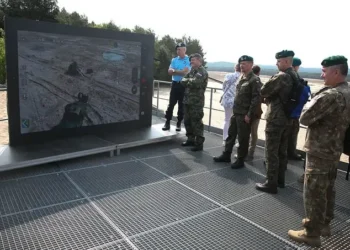
Kallas confirmed that a new EU-funded radar system has arrived in Moldova to improve detection of Russian drones and airspace violations. She also proposed increasing annual European Peace Facility assistance, while warning that political opportunities for Moldova’s EU accession process may not remain open indefinitely.
EU Signals Continued Support for Moldova
Speaking alongside Moldovan President Maia Sandu in Chișinău, Kallas described Moldova as one of Europe’s closest partners and said the European Union wanted to press ahead with the country’s accession process.
She praised Moldova’s recent reform efforts and described the country’s progress as sustainable and beneficial for citizens.
Additionally, Kallas stated that the EU did not want the unresolved Transnistria issue to become an obstacle to Moldova’s European future.
“The EU wants to press ahead to get Moldova into the Union,” Kallas said during the joint press conference.
“We should move while nobody is against Moldova.”
Kallas said future political changes across Europe could affect enlargement discussions.
Watch the official EU video: European External Action Service video from Chișinău.
Security Assistance Expands Amid Hybrid Threat Concerns
Kallas said Moldova continues to face pressure from what she described as Russia’s hybrid war activities, including drone incursions, pressure on infrastructure, and disinformation campaigns.
Meanwhile, the European Union has increased operational support for Moldova’s resilience and security systems.
- A new radar system has been delivered to Moldova through EU funding.
- European Peace Facility support has already reached €200 million.
- Additional annual funding of €120 million has been proposed.
- EU institutions continue supporting Moldova’s resilience against foreign interference.
Kallas stated that the proposed increase in European Peace Facility funding would become the largest assistance measure provided to any beneficiary country after Ukraine.
Furthermore, she referenced previous EU support efforts involving energy supply assistance and emergency responses after attacks linked to the wider regional conflict.
EU Support Measures for Moldova
| Support Area | Details |
| Radar Assistance | EU-funded radar system delivered to Moldova |
| European Peace Facility | €200 million already provided |
| Proposed Annual Funding | Increase to €120 million annually |
| Institutional Support | EU Partnership Mission assisting resilience and security efforts |
Moldova’s EU Accession Momentum Continues
Kallas said the EU and Moldova would soon hold their second joint summit in Brussels as accession discussions continue.
She acknowledged that no formal timetable had been established for Moldova’s entry into the European Union. However, she repeatedly stressed the importance of using the current political momentum.
At the same time, Kallas warned that future elections across Europe could alter the political landscape surrounding enlargement support.
“The opportunity windows we have might also close,” Kallas said.
Kallas said future elections across Europe could affect political support for enlargement.
Ukraine War and Regional Stability Remain Central
The ongoing war in Ukraine remained a central theme throughout the discussions in Chișinău.
Kallas criticised Russia’s proposed temporary ceasefire surrounding military parade events in Moscow, describing the offer as insincere. Additionally, she argued that Ukraine had demonstrated greater willingness to support genuine ceasefire efforts.
She also confirmed that European foreign ministers continue discussing future sanctions policy and broader negotiations involving Russia.
Furthermore, Kallas stated that the withdrawal of Russian troops from Transnistria should eventually form part of wider European discussions connected to regional security.
The visit focused on Moldova’s EU accession process, security cooperation, and regional stability linked to the war in Ukraine.
Sources: European External Action Service (EEAS).
Prepared by Ivan Alexander Golden, Founder of THX News, an independent news organization delivering timely insights from global official sources. Research combines AI-assisted analysis with human-edited accuracy and context.