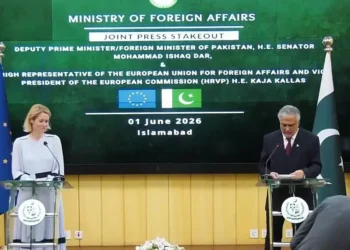
EU High Representative Kaja Kallas confirmed a new EU Ghana security partnership during talks with Vice President Opoku-Agyemang in Accra. The agreement marks a first of its kind with an African country. Cooperation will expand across counterterrorism, cybersecurity, and conflict prevention. Security links between Europe and Africa were described as closely connected. The announcement highlights a broader shift towards joint responses to shared threats.
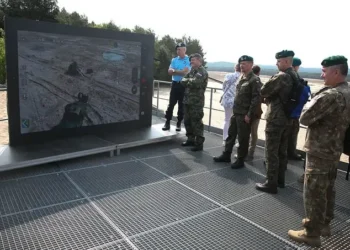
Kallas also pointed to tangible support under the EU Ghana security partnership, including drones, anti-drone systems, and motorcycles delivered to Ghana. The €50 million package has been provided since 2023.
The partnership also reflects growing concerns about instability across West Africa. Both sides emphasised coordinated action on border and maritime security. The agreement expands cooperation across European and African partners.
New phase in EU–Ghana cooperation
The EU Ghana security partnership introduces a structured framework for cooperation across defence, security, and policy coordination. Moreover, it represents a notable step in extending European security engagement beyond the continent. The agreement allows both sides to align efforts on counterterrorism and digital threats.
Additionally, the agreement reflects a broader strategy of working with regional partners to address shared risks. The focus on cybersecurity and conflict prevention shows a move towards more integrated responses. As a result, cooperation is expected to extend beyond traditional defence support into intelligence and operational coordination.
Operational support and security priorities
The the agreement is supported by practical measures, including equipment deliveries and military cooperation. Meanwhile, EU support to Ghana’s northern regions continues, particularly in response to instability in neighbouring areas. The Gulf of Guinea remains a central focus due to maritime security concerns.
- Counterterrorism cooperation expanded through joint engagement
- Border security support focused on northern regions
- Maritime security coordination in the Gulf of Guinea
Furthermore, the partnership aims to strengthen regional resilience. The emphasis on upstream threat management shows a shift towards preventing instability before it spreads. In addition, coordinated engagement with West African partners supports wider regional security frameworks.
Equipment and funding support
The EU Ghana security partnership includes a €50 million support package delivered since 2023. Moreover, this includes surveillance drones, anti-drone systems, and mobility equipment. These tools are intended to enhance operational capacity on the ground.
As a result, the partnership combines policy coordination with direct support. However, no detailed breakdown of operational outcomes or deployment results was provided in the statement.
EU–Ghana Cooperation Overview
| Area | Focus |
| Security | Counterterrorism and conflict prevention |
| Technology | Cybersecurity and surveillance systems |
| Regional Stability | Gulf of Guinea and West Africa support |
| Funding | €50 million package since 2023 |
Wider geopolitical context
The EU Ghana security partnership also reflects broader geopolitical pressures. Moreover, both sides acknowledged ongoing conflicts in Ukraine, Sudan, and the Sahel. These developments continue to influence security conditions across regions.
Additionally, Kallas highlighted concerns about the recruitment of African nationals linked to Russia’s war in Ukraine. This issue connects economic conditions with global security risks. As a result, the EU Ghana security partnership is positioned within a wider international context.
Kallas said,
“Russia’s war on Ukraine is an existential threat for Europe, but it also has consequences that are felt beyond our borders; also here in Ghana.”
“Your citizens should not be lured into a war that is not theirs.”
Economic links and future cooperation
The EU Ghana security partnership is supported by strong economic ties. Meanwhile, the EU’s Global Gateway initiative continues to deliver projects in Ghana. These include a vaccine centre and a pharmaceutical hub, alongside trade-related support.
Furthermore, Ghana’s upcoming chairmanship of the African Union is expected to deepen cooperation. The partnership may therefore expand into broader political and economic coordination. However, no forward timelines or measurable targets were outlined.
In addition, the partnership reflects a shared interest in long-term stability. The emphasis on trusted cooperation highlights alignment in policy direction. As a result, both sides are positioning the the framework as a central element of future engagement.
In Conclusion
The EU Ghana security partnership signals a deeper alignment between European and African security priorities. However, detailed operational data and future benchmarks remain limited in the current statement.
Sources: European External Action Service (EEAS).
Prepared by Ivan Alexander Golden, Founder of THX News, an independent news organization delivering timely insights from global official sources. Research combines AI-assisted analysis with human-edited accuracy and context.