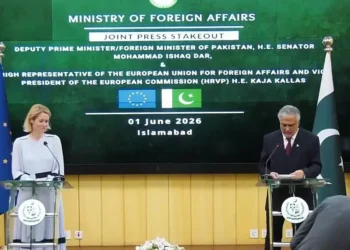
The European Union has signalled expanded sanctions targeting Russia’s oil revenues and shadow fleet while reaffirming a €90 billion financial support package for Ukraine, alongside new legal accountability mechanisms, during an informal meeting of EU foreign ministers in Kyiv on 31 March 2026.
European Union foreign policy leadership used the Kyiv meeting to outline coordinated economic, legal, and security measures aimed at sustaining pressure on Russia while reinforcing Ukraine’s financial and institutional resilience.
EU Signals Expanded Russia Sanctions Strategy
Shadow Fleet and Oil Revenues Identified as Core Targets
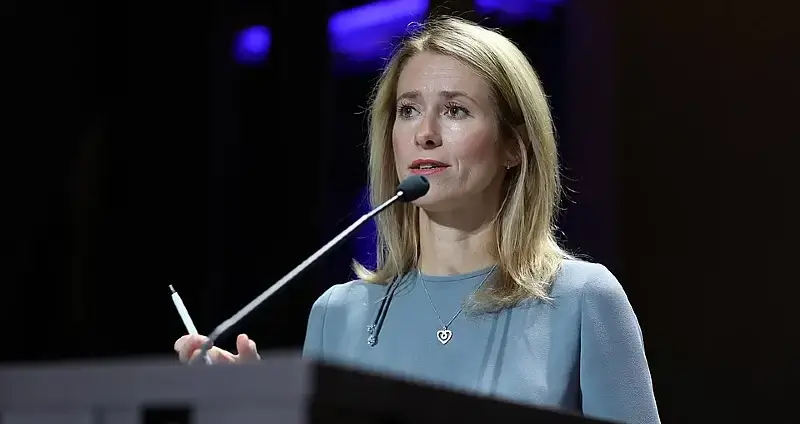
The European Union, through remarks delivered by High Representative/Vice-President Kaja Kallas at the 31 March 2026 informal EU Foreign Ministers meeting in Kyiv, identified Russia’s oil revenues as a central pressure point for future sanctions.
Specifically, the EU signalled intent to further restrict activities linked to Russia’s so-called “shadow fleet,” which has been used to sustain energy exports under existing sanctions regimes.
Meanwhile, the EEAS framing links sanctions escalation directly to limiting Russia’s capacity to finance ongoing military operations. The emphasis on maritime enforcement reflects broader EU efforts to tighten compliance around oil transport networks operating outside standard regulatory visibility.
| Indicator | Recent Movement | Context |
|---|---|---|
| Russia oil revenues | Targeted for further restriction | European External Action Service (31 March 2026) identified energy income as a key sanctions focus |
| Shadow fleet activity | Expanded enforcement focus | EU foreign ministers referenced maritime networks enabling sanctions evasion during Kyiv meeting |
| Sanctions escalation | Additional measures signalled | EEAS outlined intent to increase pressure on Russia and associated enablers |
The combined approach signals a shift toward more targeted enforcement mechanisms rather than broad sector-wide measures. As a result, the EU is positioning maritime and financial compliance as primary levers to constrain Russian revenue flows.
Financial Support Measures for Ukraine
€90 Billion Package and Ongoing Assistance Framework
The European Union confirmed continued financial support to Ukraine, including reference to a €90 billion assistance package discussed during the Kyiv meeting. According to the European External Action Service, the funding is intended to sustain Ukraine’s economic stability while supporting ongoing defence and infrastructure requirements.
Additionally, EU leadership framed the financial commitment as part of a wider effort to prevent economic destabilisation during prolonged conflict conditions. The scale of the package indicates sustained multi-year support designed to offset both direct war costs and secondary economic disruption.
- EU financial support: €90 billion package referenced by the European External Action Service to maintain Ukraine’s economic and operational capacity
- Stability objective: Funding aims to mitigate economic disruption linked to prolonged conflict conditions, as outlined in EU foreign ministers’ discussions
- Operational continuity: Financial assistance supports defence, infrastructure, and energy sector resilience according to EEAS framing
The financial package reflects a coordinated EU approach linking economic support with sanctions pressure. Consequently, the EU strategy combines resource provision for Ukraine with simultaneous revenue constraints on Russia.
Legal and Strategic Measures
Tribunal Plans and Broader Security Linkages
The European Union is advancing legal accountability mechanisms, including plans for a Special Tribunal to prosecute crimes related to Russia’s invasion of Ukraine, as outlined by the European External Action Service on 31 March 2026. In parallel, the EU is supporting development of a Claims Commission intended to enable compensation processes for damages resulting from the conflict.
Meanwhile, the EU also highlighted broader security linkages, including references to Iranian drone technology used by Russia, as noted during the Kyiv meeting. This framing connects the Ukraine conflict to wider regional security dynamics, including developments in the Middle East.
The combined legal and strategic approach reflects an effort to institutionalise long-term accountability alongside immediate economic and military measures. As a result, EU policy is extending beyond short-term conflict response toward structured post-conflict enforcement and restitution mechanisms.
In Conclusion
The European Union’s latest signals indicate a coordinated strategy combining targeted sanctions, large-scale financial support, and formal legal accountability structures.
While enforcement actions focus on restricting Russia’s revenue streams, parallel measures aim to sustain Ukraine’s economic capacity and establish long-term mechanisms for justice and compensation.
Sources: European Union.
Prepared by Ivan Alexander Golden, Founder of THX News, an independent news organization delivering timely insights from global official sources.
Research combines AI-assisted analysis with human-edited accuracy and context.