The U.S. Department of the Treasury announced new Iran oil sanctions on May 11 targeting 12 individuals and entities accused of helping the Islamic Revolutionary Guard Corps sell and transport Iranian oil to China through front companies and shadow shipping networks. Treasury’s Office of Foreign Assets Control said the action is intended to disrupt revenue streams linked to weapons programs, regional proxy operations and sanctions evasion activities connected to the IRGC.
The sanctions action forms part of the Treasury Department’s “Economic Fury” campaign, which is designed to increase economic pressure on Iran through financial restrictions, shipping enforcement and secondary sanctions authorities. The measures were issued under Executive Order 13224, the counterterrorism authority previously used against the IRGC and the National Iranian Oil Company.
Treasury Expands Economic Fury Sanctions
The Treasury Department said the latest sanctions package targets individuals and companies operating across Iran, Hong Kong, the United Arab Emirates and Oman. According to the Office of Foreign Assets Control, the designated network allegedly facilitated oil shipments worth tens of millions of dollars using front companies, sanctioned tankers and overseas financial arrangements.
Treasury Secretary Scott Bessent said the measures are intended to reduce the Iranian government’s access to funding connected to weapons development, regional proxy groups and nuclear-related activities. Additionally, that enforcement actions under the Economic Fury campaign have already disrupted projected oil revenue streams and frozen hundreds of millions of dollars linked to Iranian financial networks.
Officials Describe Maximum Pressure Strategy
According to the Treasury Department, the sanctions were issued pursuant to Executive Order 13224, which was amended to target terrorist organizations and entities supporting acts of terrorism. The IRGC was designated under the authority in October 2017 by the U.S. government for supporting the Islamic Revolutionary Guard Corps-Qods Force.
| Indicator | Recent Movement | Context |
|---|---|---|
| New Sanctions | 12 individuals and entities designated | Treasury Department action targeting IRGC-linked oil operations and financial networks |
| Oil Revenue Pressure | Billions in projected revenue disrupted | Treasury Department said Economic Fury measures reduced Iranian oil-related financial flows |
| Cryptocurrency Enforcement | Nearly $500 million frozen | Treasury officials linked frozen assets to Iranian regime-connected financial activity |
IRGC Oil Operations and Front Companies
The Treasury Department said the IRGC continued using overseas shell companies and intermediaries to coordinate oil sales and receive payments outside Iran. Officials identified the IRGC’s Shahid Purja’fari Oil Headquarters as a central coordinating structure within the network.
According to OFAC, Iran-based Ahmad Mohammadi Zadeh, Samad Fathi Salami and Mohammadreza Ashrafi Ghehi managed financial and commercial operations connected to the IRGC’s oil activities. The individuals worked through cover companies, including Golden Globe, to resolve oil-related debts and coordinate overseas financial transfers.
Companies Linked To Iranian Oil Shipments
Treasury officials identified Hong Kong Blue Ocean Limited and Hong Kong Sanmu Limited as companies allegedly involved in arranging Iranian oil shipments to overseas buyers during 2025. The department said the companies handled shipments carried aboard sanctioned vessels including GAGAN, CANGJIE and HASNA.
Meanwhile, OFAC also designated Dubai-based Ocean Allianz Shipping LLC, Sharjah-based Atic Energy FZE and Oman-based Zeus Logistics Group for allegedly helping arrange transportation and logistics linked to Iranian oil cargoes. The companies worked with tankers already sanctioned under U.S. restrictions.
- Shipping Oversight: Treasury officials said multiple sanctioned tankers were allegedly used in coordinated Iranian oil shipment operations during 2025.
- Financial Structuring: OFAC stated overseas front companies were used to process transactions and manage revenue flows linked to Iranian oil exports.
- Secondary Sanctions Risk: Treasury warned foreign financial institutions could face restrictions for knowingly facilitating significant transactions involving designated entities.
Shipping Networks Supporting Iranian Oil Exports
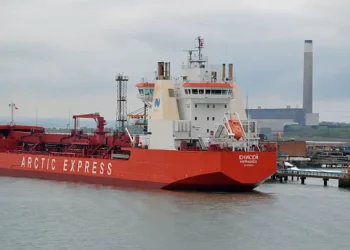
According to the Treasury Department, several tankers connected to the alleged network had previously been sanctioned under U.S. restrictions targeting Iran’s shadow fleet operations. Officials identified vessels including HANSON, OTLA, SCALER, BELLA 1 and ANDROMEDA V as part of the transport infrastructure used during 2025.
The vessels allegedly operated through covert shipping arrangements intended to obscure the origin and destination of Iranian oil cargoes. However, the department did not release shipment volume totals connected to the designated companies beyond describing several cargoes as worth tens of millions of dollars.
Vessel Activity And Oil Transport Routes
The sanctions action also targeted companies allegedly involved in arranging cargo transport to buyers connected to China’s independent refinery sector. Additionally, OFAC warned that airlines, shipping operators and foreign firms supporting illicit Iranian commerce could face future enforcement actions under existing sanctions authorities.
The Treasury Department also stated that any property or interests in property belonging to the designated individuals or companies within U.S. jurisdiction are blocked. Financial institutions facilitating prohibited transactions could face correspondent banking restrictions or secondary sanctions exposure under U.S. law.
Individuals Targeted By Treasury Measures
OFAC designated three Iranian nationals described as senior officials within the IRGC’s Shahid Purja’fari Oil Headquarters. The individuals managed commercial negotiations, foreign currency transactions and debt resolution involving overseas oil buyers.
According to the department, the sanctions action also targeted companies in Hong Kong and Dubai that allegedly purchased millions of barrels of Iranian oil or coordinated related shipping arrangements. Treasury linked several of the transactions to vessels previously identified on the Specially Designated Nationals and Blocked Persons List.
IRGC Oil Headquarters Leadership Roles
Treasury officials stated the sanctions were intended to expose how the IRGC allegedly uses overseas companies to conceal financial operations tied to Iranian oil sales. Additionally, OFAC said the measures were designed to restrict resources available to organizations previously designated under U.S. counterterrorism authorities.
The department emphasized that violations of U.S. sanctions can result in civil or criminal penalties for U.S. and foreign persons. Treasury also noted that OFAC maintains a process allowing sanctioned individuals or companies to petition for removal from the Specially Designated Nationals list if legal requirements are met.
Sanctions Enforcement And Financial Restrictions
The sanctions action blocks property and financial interests belonging to the designated parties within U.S. jurisdiction. That entities owned 50 percent or more by sanctioned persons may also become subject to blocking restrictions under OFAC regulations.
Meanwhile, Treasury warned that foreign banks knowingly facilitating significant transactions connected to designated entities could face restrictions on correspondent or payable-through accounts in the United States. Officials said enforcement efforts will continue targeting both traditional sanctions evasion mechanisms and the use of digital assets connected to Iranian financial activity.
Stakeholder Comments
- Treasury Department: Secretary Scott Bessent said the Economic Fury campaign would continue targeting funding streams linked to Iranian military and proxy operations.
- OFAC Enforcement Position: Treasury stated the sanctions framework is intended to disrupt financial networks while allowing designated parties to petition for removal under OFAC procedures
- Financial Sector Warning: OFAC cautioned foreign financial institutions about potential secondary sanctions exposure tied to prohibited transactions.
The Treasury Department’s latest Iran oil sanctions expand U.S. pressure on shipping companies, financial intermediaries and overseas entities accused of supporting IRGC-linked oil exports. The action forms part of a broader campaign using counterterrorism authorities, financial restrictions and secondary sanctions tools against Iranian revenue networks.
Treasury said the measures are intended to disrupt Iranian oil revenue networks using existing U.S. counterterrorism and sanctions authorities.
Sources: U.S. Department of the Treasury, Office of Foreign Assets Control, Federal Register.
Prepared by Ivan Alexander Golden, Founder of THX News, an independent news organization delivering timely insights from global official sources.
Research combines AI-assisted analysis with human-edited accuracy and context.