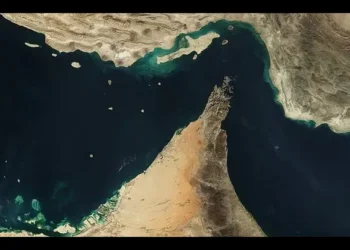

The United States Department of State and the United States Department of the Treasury announced coordinated sanctions on May 28 targeting shipping companies, vessels, and petrochemical traders accused of supporting Iran’s oil economy and financing the Islamic Revolutionary Guard Corps (IRGC). The measures form part of the Trump administration’s maximum pressure campaign aimed at restricting Iranian petroleum revenues linked to regional military activity and sanctioned networks.
The sanctions action expands U.S. efforts to disrupt Iranian oil exports and related shipping operations operating across Asia and the Middle East. According to the State Department and Treasury Department, the designated entities allegedly facilitated the movement of Iranian petroleum and petrochemical products through tanker fleets, trading companies, and ship-to-ship transfer networks.
Expansion of Iran Oil Sanctions
The State Department said the sanctions package targeted numerous entities, individuals, and vessels involved in transporting Iranian-origin petroleum and petrochemical products. Additionally, the Department of the Treasury announced parallel sanctions against Hong Kong-based companies accused of supporting Iranian oil sales networks that generated billions of dollars in revenue for the IRGC and Iran’s Armed Forces General Staff.
According to the State Department, eight entities and eight vessels were identified as blocked property under Executive Order 13846, while additional companies and one executive were sanctioned for petrochemical trading activities. The sanctions were announced as part of the administration’s Economic Fury campaign and National Security Presidential Memorandum 2 focused on maximum economic pressure against Iran.
Entities and Vessels Designated
| Indicator | Recent Movement | Context |
|---|---|---|
| Shipping Companies | Eight entities sanctioned | State Department said firms were involved in transporting Iranian petroleum and petrochemical products. |
| Blocked Vessels | Eight vessels identified | According to the State Department, vessels were designated as blocked property under Executive Order 13846. |
| Petrochemical Traders | Three companies sanctioned | State Department linked the firms to Iranian-origin petrochemical trade operations. |
| Individual Executive | One person blocked | The State Department identified an Indian national connected to a sanctioned petrochemical trading company. |
IRGC Revenue and Oil Trade Networks
The Treasury Department stated that the sanctioned oil sales network facilitated the movement of tens of millions of barrels of Iranian crude oil. According to Treasury, the proceeds supported the IRGC, Iran’s Armed Forces General Staff, and related military operations tied to IRGC-linked military and maritime operations.
The State Department linked Iranian petroleum exports to shipping networks and financial systems operating across multiple jurisdictions. The department linked the country’s petroleum exports to broader military financing efforts and cited deceptive shipping practices involving tanker fleets operating across multiple jurisdictions.
Oil Sales and Shipping Operations
The State Department identified several vessels accused of conducting ship-to-ship transfers and transporting Iranian crude oil or petrochemical cargoes between 2024 and 2026. These activities reportedly involved companies registered in Hong Kong, the United Arab Emirates, the Marshall Islands, Singapore, Qatar, and India.
According to the State Department fact sheet, some tankers allegedly disabled tracking systems or engaged in “dark activity” while moving cargoes linked to Iranian petroleum exports. The department stated that such operations increased maritime trade risks and complicated sanctions enforcement efforts.
- Shipping Activity: The State Department reported multiple sanctioned vessels conducted Iranian oil transfers in East Asia between 2025 and 2026.
- Financial Impact: Treasury stated the targeted network moved billions of dollars’ worth of Iranian oil supporting IRGC-linked operations.
- Legal Authority: Executive Order 13846 was cited by the State Department as the primary sanctions authority for petroleum-related designations.
International Companies and Trade Routes
The sanctions package included firms operating across several international trade hubs connected to Iran’s oil and petrochemical exports. According to the State Department, companies based in Hong Kong, Singapore, Qatar, India, and the United Arab Emirates were allegedly involved in purchasing, transporting, or marketing Iranian-origin products.
Additionally, the State Department highlighted several tanker operators accused of facilitating ship-to-ship crude oil transfers involving previously sanctioned vessels. The department stated these transfers represented an important component of Iran’s broader shadow tanker network.
Sanctioned Companies and Trade Activity Table
| Indicator | Recent Movement | Context |
|---|---|---|
| ALT CAPITAL PTE. LTD. | Sanctioned in May 2026 | State Department said the Singapore-based company exported Iranian-origin petrochemical products. |
| RISHABH TRIEXIM LLP | $54.6 million imports cited | State Department linked the India-based company to Iranian petrochemical imports during 2024. |
| CLASSY PANSY TRADING | More than $1 million exports | According to the State Department, the Qatar-based trader exported Iranian-origin petrochemicals during 2023 and 2024. |
| RCELEBRA Tanker | Three ship-to-ship transfers | State Department alleged the tanker transferred Iranian-origin crude oil in East Asia between 2025 and 2026. |
Executive Orders and Enforcement Measures
The sanctions actions were implemented under Executive Order 13224 and Executive Order 13846. According to the Treasury Department, Executive Order 13224, originally issued in September 2001 and subsequently amended, targets terrorist organizations and their supporters through financial restrictions and asset blocking measures.
Meanwhile, the State Department stated Executive Order 13846 authorizes sanctions targeting Iranian petroleum and petrochemical activities. Under the measures, all property and interests belonging to designated entities within U.S. jurisdiction are blocked and must be reported to the Treasury Department’s Office of Foreign Assets Control.
Sanctions Compliance and Asset Blocking
The Treasury Department said U.S. persons are prohibited from engaging in transactions involving sanctioned entities unless authorized through specific licensing procedures. Additionally, the department noted that entities owned 50 percent or more by blocked persons may also become subject to sanctions restrictions.
According to the Rewards for Justice program administered by the State Department, the U.S. government is offering up to $15 million for information disrupting financial mechanisms connected to the IRGC. The IRGC was designated as a Foreign Terrorist Organization by the State Department in April 2019 under Section 219 of the Immigration and Nationality Act.
Sanctions Enforcement and Oil Revenue Restrictions
The sanctions package expands U.S. efforts targeting shipping companies, tanker operators and petrochemical traders involved in Iranian oil-export activity. According to the State Department and Treasury Department, the measures focus on commercial networks accused of facilitating the movement, sale and financing of Iranian petroleum products.
Treasury officials said entities participating in Iranian oil or petrochemical trade may face additional sanctions exposure regardless of location. The enforcement effort combines financial restrictions, asset blocking measures and maritime trade oversight authorities administered through existing sanctions programs.
Stakeholder Comments
The State Department stated the United States “will not hesitate to take action against anyone, anywhere” supporting Iran’s illicit oil trade. Treasury officials similarly described the targeted shipping and sales network as a critical revenue source for the IRGC and Iran’s military apparatus.
The Rewards for Justice program said it would continue seeking information regarding financial systems supporting IRGC operations. According to the State Department, the reward offer forms part of broader efforts to disrupt transnational funding networks tied to sanctioned Iranian entities.
The latest sanctions package expands U.S. restrictions targeting Iran’s petroleum shipping infrastructure, petrochemical traders, and associated financial networks. According to the State Department and Treasury Department, the measures aim to reduce revenue flows linked to the IRGC and broader Iranian military operations.
The measures expand U.S. enforcement activity targeting tanker operations, petrochemical trade networks and maritime sanctions evasion systems linked to Iranian oil exports.
Sources: U.S. Department of State, U.S. Department of the Treasury, Rewards for Justice.
Prepared by Ivan Alexander Golden, Founder of THX News, an independent news organization delivering timely insights from global official sources.
Research combines AI-assisted analysis with human-edited accuracy and context.