
Sanctions enforcement and maritime security remain central to the UK’s response to international conflicts, particularly where global shipping routes are used to transport restricted goods. Efforts to monitor and restrict these activities have involved coordination with international partners and increased oversight of vessels operating in European waters.
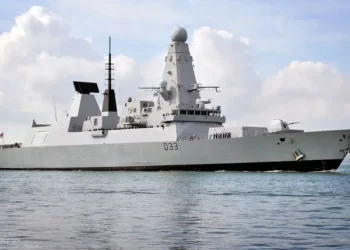
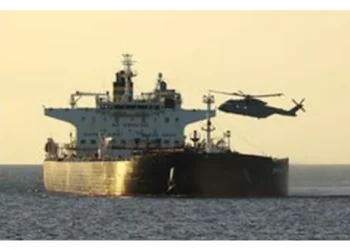
The UK government has announced that British military and law enforcement will be authorised to board sanctioned vessels linked to Russia’s shadow fleet while transiting UK waters, as part of strengthened sanctions enforcement measures.
Announced by the Prime Minister alongside defence authorities, the policy targets ships involved in transporting Russian oil under sanctions. The measure is intended to strengthen maritime enforcement, support international coordination, and restrict operations linked to Russia’s energy exports.
Government announces shadow fleet enforcement powers
The government confirmed that UK Armed Forces and law enforcement officers will be able to board and interdict sanctioned vessels transiting UK waters. The move expands existing monitoring and enforcement activity.
The policy is designed to strengthen the application of sanctions and increase oversight of maritime activity linked to restricted operations.
Role of UK military and law enforcement
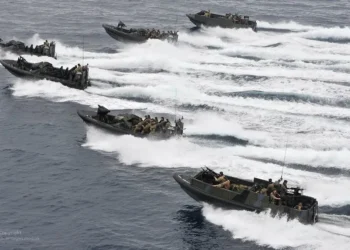
British military and enforcement personnel will be responsible for carrying out interdictions where vessels are identified as sanctioned. Operations may involve boarding, detention, and further investigation.
The approach builds on recent operational preparations and coordination between military and law enforcement agencies.
- Boarding of sanctioned vessels
- Coordination between military and law enforcement
- Operational readiness for multiple scenarios
- Use of intelligence and tracking systems
Coordination with international partners
The UK’s approach aligns with activities carried out by Joint Expeditionary Force partners, including operations in the Baltic and Mediterranean regions. Allied coordination has supported tracking and enforcement against suspected vessels.
The policy reflects ongoing cooperation to manage maritime activity linked to sanctions enforcement.
- Joint Expeditionary Force collaboration
- Shared monitoring of vessel movements
- Operations across European waters
- Support for allied enforcement actions
Enforcement and Legal Measures
| Boarding authority | UK forces authorised to interdict sanctioned vessels in UK waters |
| Operational scope | Applies to vessels identified under UK sanctions frameworks |
| Legal consequences | Potential criminal proceedings against owners, operators, and crew |
| Decision process | Individual assessment by enforcement and specialist teams |
Strategic importance of maritime security
The UK highlighted the importance of maritime routes for national security and economic stability. Shipping lanes support essential supplies, including energy and data infrastructure.
The policy reinforces oversight of these routes and seeks to address risks linked to sanctioned maritime activity.
Legal framework and operational process
Each vessel identified for enforcement action will be assessed by law enforcement, military, and specialist teams before any operation proceeds. Decisions will be based on sanctions compliance and operational considerations.
Following detention, legal proceedings may be pursued under UK sanctions legislation.
Operational Process Overview
| Identification | Vessels tracked and assessed based on sanctions status |
| Assessment | Review by military, law enforcement, and specialists |
| Interdiction | Boarding and potential detention carried out |
| Legal action | Possible proceedings under UK sanctions laws |
Ministerial Comments
Keir Starmer, Prime Minister said;
“We are living in an increasingly volatile and dangerous world, facing threats from different fronts across the world every day. As Prime Minister, my first duty is to keep this country safe and protect British interests here and abroad.”
“That’s why we’re going after his shadow fleet even harder, not just keeping Britain safe but restricting profits linked to the war in Ukraine. We will always defend our sovereignty and stand with Ukraine.”
The Takeaway
The introduction of new enforcement powers allows the UK to take a more active role in monitoring and interdicting sanctioned vessels within its waters. By aligning military and law enforcement capabilities with international partners, the policy aims to strengthen sanctions compliance and maritime oversight. The approach reflects broader efforts to manage security risks and maintain the integrity of global shipping routes.
Sources: Prime Minister’s Office, 10 Downing Street, Ministry of Defence and The Rt Hon Sir Keir Starmer KCB KC MP.
Prepared by Ivan Alexander Golden, Founder of THX News, an independent news organisation delivering timely insights from global official sources. Combines AI-analysed research with human-edited accuracy and context.