
The U.S. Department of Homeland Security announced that the United States Coast Guard offloaded 3,825 pounds of cocaine worth $28.7 million at Base Miami Beach on Thursday, following two interdictions in the Eastern Pacific Ocean under Operation Pacific Viper. The operation targets transnational drug trafficking networks and aims to prevent narcotics from reaching U.S. communities.
The interdiction highlights ongoing maritime enforcement efforts led by federal agencies to disrupt narcotics supply chains originating in Central and South America. The interdiction forms part of ongoing maritime enforcement operations led by federal agencies targeting drug trafficking routes in the Eastern Pacific.
Overview of the cocaine offload operation and its scale.
Summary of the seizure amount, value, and location of the offload.
The United States Coast Guard reported that approximately 3,825 pounds of cocaine were seized and offloaded at Base Miami Beach, with an estimated street value exceeding $28.7 million. According to the U.S. Coast Guard, the quantity represents a significant interdiction outcome tied to two separate operations conducted in international waters of the Eastern Pacific Ocean.
The U.S. Department of Homeland Security stated that the volume seized could have potentially impacted more than 1.4 million individuals if distributed domestically. This estimate reflects the broader public health and security implications tied to narcotics trafficking and interdiction outcomes.
Details of Operation Pacific Viper and interdictions.
The interdictions were carried out under Operation Pacific Viper, a counter-narcotics initiative led by the United States Coast Guard with coordination from the Joint Interagency Task Force South. According to the U.S. Coast Guard, the two interdictions occurred in international waters within a major transit zone for narcotics shipments originating in Central and South America.
Additionally, the operation builds on a sustained enforcement model that integrates surveillance, interdiction, and law enforcement authority once vessels are identified. The U.S. Coast Guard confirmed that maritime interdictions account for a majority of U.S.-bound drug seizures, reinforcing the operational focus on offshore disruption.
Agencies and assets involved in the operation.
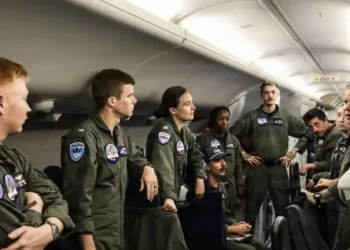
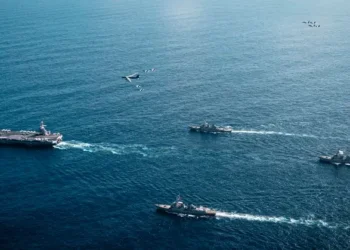
The operation involved multiple federal assets, including the Coast Guard Cutter Tampa and aviation support from the Coast Guard Helicopter Interdiction Tactical Squadron. According to the U.S. Coast Guard, coordination also included the Joint Interagency Task Force South, along with watchstanders from both the Southeast and Southwest Districts.
| Indicator | Recent Movement | Context |
|---|---|---|
| Cocaine seized | 3,825 pounds | U.S. Coast Guard reported seizure during two Pacific interdictions under Operation Pacific Viper |
| Estimated value | $28.7 million | U.S. Department of Homeland Security valuation based on interdicted narcotics |
| Operational partners | Multi-agency coordination | Joint Interagency Task Force South and Coast Guard districts supported interdiction efforts |
The multi-agency coordination reflects a layered enforcement approach combining maritime patrol, aerial surveillance, and rapid response units. The U.S. Coast Guard emphasized that such coordination enables real-time detection and interdiction across expansive maritime zones.
Broader counter-narcotics strategy and operational impact.
Operation Pacific Viper forms part of a broader U.S. counter-narcotics strategy aimed at disrupting transnational criminal organizations. According to the U.S. Coast Guard, more than 215,000 pounds of cocaine have been seized since the operation began in early August, alongside the apprehension of approximately 160 suspected traffickers.
Additionally, the U.S. Coast Guard reported that around 80% of U.S.-bound drug interdictions occur at sea, underscoring the operational importance of maritime enforcement. This data point highlights how offshore interdictions reduce downstream distribution risks within domestic markets.
- Operational scale: The U.S. Coast Guard reported over 215,000 pounds of cocaine seized since August under Operation Pacific Viper.
- Maritime focus: Approximately 80% of interdictions occur at sea, according to the U.S. Coast Guard, reinforcing offshore enforcement strategy.
- Interagency coordination: Joint Interagency Task Force South oversees detection and monitoring operations from Key West.
Meanwhile, sustained interdiction efforts are designed to limit revenue streams for trafficking networks while preventing large-scale narcotics inflows. The U.S. Coast Guard stated that these operations contribute to broader efforts to protect U.S. communities from drug-related harm.
Statistical overview of recent interdiction efforts.
Data points on total seizures, arrests, and operational outcomes (table eligible).
Recent operations have produced record-setting results, including a reported 200,000-pound cocaine seizure in February, according to the U.S. Coast Guard. This reflects an escalation in operational tempo and the scaling of enforcement resources across key maritime corridors.
Additionally, cumulative seizures exceeding 215,000 pounds since the operation’s launch indicate sustained disruption of trafficking networks. The U.S. Coast Guard stated that these outcomes have denied criminal organizations significant illicit revenue while limiting the availability of narcotics entering U.S. supply chains.
Stakeholder Comments – Statements from Coast Guard leadership on mission effectiveness.
Cmdr. Joshua DiPietro, commanding officer of the Coast Guard Cutter Tampa, stated that the crew’s performance over a 74-day patrol demonstrated high levels of operational coordination and effectiveness. According to the U.S. Coast Guard, the mission included aviation qualifications and complex interdiction operations conducted alongside partner agencies and international allies.
The U.S. Coast Guard emphasized that interagency cooperation remains central to mission success, enabling coordinated responses to evolving trafficking tactics across maritime environments.
The offload of 3,825 pounds of cocaine reflects the operational scale and coordination of ongoing U.S. maritime counter-narcotics efforts. Data from the U.S. Coast Guard indicates that sustained interdictions continue to disrupt trafficking networks and reduce the flow of illicit drugs toward U.S. communities.
Sources: U.S. Department of Homeland Security, U.S. Coast Guard, U.S. Southern Command.
Prepared by Ivan Alexander Golden, Founder of THX News, an independent news organization delivering timely insights from global official sources.
Research combines AI-assisted analysis with human-edited accuracy and context.