The Pentagon disclosed Monday that Operation Southern Spear has conducted 21 kinetic strikes killing 82 suspected narco-terrorists, while reaffirming that U.S. Special Operations Command leader Admiral Frank Bradley—not Secretary of War Pete Hegseth—ordered the controversial September 2 double-tap boat strike.
Pentagon Press Secretary Kingsley Wilson emphasized that each strike targets designated terror organizations in defense of U.S. national interests. The update follows mounting congressional scrutiny over whether a second strike against survivors clinging to wreckage complied with the Law of Armed Conflict.
From Unacknowledged Boat Strikes to Named Campaign
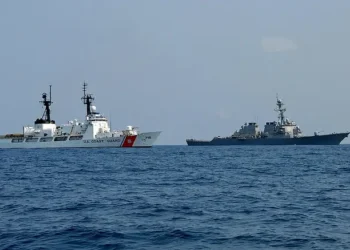
Operation Southern Spear emerged from escalating U.S. military action in the Caribbean and Pacific that began in early September. The Trump administration designated Venezuelan networks including Tren de Aragua as terrorist entities, creating what officials describe as legal authority for lethal targeting under counter-terrorism frameworks rather than traditional drug interdiction.
Secretary Hegseth formally announced the operation in mid-November, giving public structure to strikes that had already killed several dozen people across roughly 20 boat attacks. The campaign represents a significant departure from previous counter-narcotics operations, which typically involved vessel seizures and arrests rather than immediate destruction.
Wilson stressed that all operations undergo legal review by military and civilian attorneys throughout the chain of command. However, the administration’s assertion that drug traffickers constitute legitimate wartime targets has drawn criticism from legal scholars who question whether international law permits such broad application of armed conflict authorities.
Why Command Authority Over the Double-Tap Matters
The September 2 incident crystallizes tensions between operational necessity and legal constraints. After the initial strike left two survivors on debris, Admiral Bradley ordered a follow-up attack that killed the remaining individuals and sank the vessel completely. Investigative reporting suggested Hegseth may have directed a no-survivors outcome, prompting the White House to explicitly state that Bradley made the tactical decision independently.
This distinction carries legal and political weight. If a cabinet secretary ordered targeting of shipwreck survivors, it could constitute a violation of protections for combatants rendered hors de combat. By placing decision authority with Bradley under “long-standing authorities,” the administration frames the second strike as a field commander’s judgment about persistent threats rather than a policy directive from civilian leadership.
Nevertheless, critics question whether individuals clinging to wreckage retain combatant status justifying lethal force. The administration maintains that destroying the vessel and eliminating potential survivors served legitimate security interests, but bipartisan lawmakers have requested additional briefings on the legal analysis supporting the operation.
Pentagon Defends Legal Framework Amid Congressional Questions
Wilson’s briefing emphasized that Southern Spear operates under both U.S. and international law, with compliance certified at multiple command levels. The administration argues that designating certain Venezuelan actors as terrorists provides the same targeting authority traditionally applied in counterterrorism operations in the Middle East and Africa.
The campaign has accelerated significantly since September. By late November, independent media counts identified at least 80 deaths from boat strikes across U.S. Southern Command’s area of operations, closely matching the Pentagon’s official December 1 figure of 82 killed across 21 strikes.
Each strike reportedly follows individual authorization based on intelligence indicating narcotics trafficking linked to designated terrorist organizations. Officials maintain that rules of engagement align with Law of Armed Conflict principles, though they have not publicly released the legal memoranda supporting these operations.
Operational Tempo and Strategic Messaging
The data reveals sustained intensity in U.S. military action against suspected drug trafficking vessels. Twenty-one strikes resulting in 82 deaths suggests an average of nearly four fatalities per interdiction, consistent with small boat operations carrying crews of four to twelve individuals.
Operation Southern Spear by the Numbers
| Indicator | Recent Movement | Context |
|---|---|---|
| Kinetic Strikes | 21 total operations | Conducted across Caribbean and Pacific since September 2 |
| Casualties | 82 suspected narco-terrorists killed | Average of 3.9 fatalities per strike |
| First Strike Date | September 2, 2025 | Venezuelan boat in international waters, 11 on board |
| Command Authority | Admiral Frank Bradley | SOCOM commander authorized September double-tap independently |
| Legal Framework | Counter-terrorism authorities | Based on terrorist designations of Venezuelan networks |
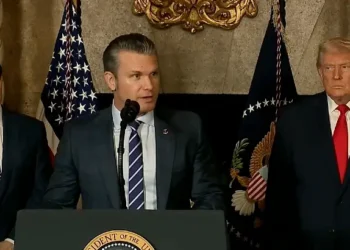
Hegseth’s statement that “when it comes to killing narco-terrorists, we have only just begun” signals the administration’s intention to sustain or expand operations. This messaging aligns with broader policy positioning that frames drug trafficking from designated groups as a direct national security threat rather than a law enforcement matter.
The Pentagon’s emphasis on defending Admiral Bradley also serves strategic purposes. By highlighting his credentials and decision-making authority, officials seek to insulate both the operation and civilian leadership from accusations that political considerations drove tactical choices in the September incident.
What This Signals About U.S. Policy in the Hemisphere
Operation Southern Spear represents the militarization of counter-narcotics policy in Latin America and the Caribbean. The campaign’s scope—21 lethal strikes in three months—exceeds the pace of acknowledged military action in several active counterterrorism theaters.
For Americans, the operation reflects the administration’s approach to border security and drug interdiction: treating certain trafficking networks as military targets rather than criminal organizations. This shift carries implications for international cooperation, as traditional law enforcement partnerships give way to unilateral military action in international waters.
The ongoing congressional scrutiny and legal questions suggest Operation Southern Spear will remain politically contentious. Wilson’s commitment that “this department will defend our homeland” frames the debate as fundamentally about security rather than legal procedure, though critics argue that ensuring military action complies with international law serves U.S. interests equally.
In Conclusion
Operation Southern Spear marks a fundamental shift in how the United States addresses drug trafficking from Latin America, moving from interdiction and prosecution to direct military elimination. The Pentagon’s transparency about casualty figures reflects confidence in the legal framework, yet congressional questions about the September double-tap reveal ongoing tension between operational aggressiveness and international law constraints.
As the administration signals continued escalation, the campaign will test both the practical effectiveness of militarized counter-narcotics strategy and the boundaries of lawful targeting in maritime operations.
Sources: U.S. Department of Defense, White House, U.S. Southern Command and U.S. Special Operations Command.
Prepared by Ivan Alexander Golden, Founder of THX News™, an independent news organization delivering timely insights from global official sources. Combines AI-analyzed research with human-edited accuracy and context.