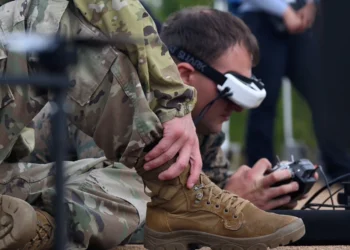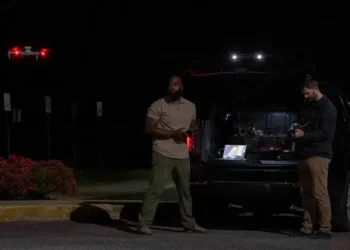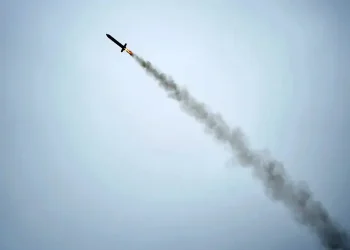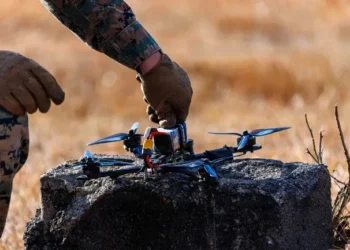

Joint Interagency Task Force 401 is expanding counter drone training across U.S. military installations and strategic locations, using a train-the-trainer model centered at Fort Sill’s Joint Counter-Small Unmanned Aircraft System University to address the growing threat from weaponized unmanned aircraft systems at home and abroad.
As small unmanned aircraft systems become cheaper and more accessible, U.S. defense planners increasingly view them as a persistent security challenge. The initiative focuses on building enduring defensive skills across the joint force while integrating detection and mitigation procedures into routine base operations.
Counter Drone Training Expands Across Military
Joint Interagency Task Force 401, led by the U.S. Army, is scaling instruction through the Joint Counter-Small Unmanned Aircraft System University (JCU) at Fort Sill, Oklahoma. According to the U.S. Department of Defense, the program is shifting toward a train-the-trainer model, enabling graduates to return to their units and establish local counter-UAS capability.
Army Brig. Gen. Matt Ross, task force director, stated in the DoD release that unmanned systems represent a defining threat due to rapid technological evolution and widespread accessibility.
By decentralizing expertise, the military aims to accelerate readiness across installations without relying solely on centralized courses. The approach is intended to create a sustainable training ecosystem as threats continue to evolve.
Fort Sill Training Model
The JCU develops and validates curriculum for the Department of Defense while serving as a hub for mobile training teams and technical integration. According to the DoD, the university continues to offer specialized planner courses focused on protecting critical infrastructure and military bases from drone incursions.
Lt. Col. John Peterson, JCU director, said instructors are adapting course material to reflect operational lessons learned and emerging technologies. Training is delivered both in classroom settings and through field deployments, ensuring service members can apply procedures in real-world conditions. This dual approach is designed to build both theoretical understanding and practical competence.
Overseas Deployment and Homeland Defense
Task force instructors recently deployed to Guam, a U.S. territory in the Indo-Pacific that hosts significant military infrastructure. According to the Department of Defense, JCU personnel provided hands-on instruction to Task Force Talon and Guam National Guard security forces, integrating counter-UAS procedures into daily security operations.
Ross emphasized in the DoD release that defending Guam is considered part of homeland defense due to its strategic importance. The deployment reflects a broader shift toward treating overseas bases as extensions of domestic security, particularly in contested regions. Real-world training on operational airfields allows personnel to practice detection and response under realistic conditions.
| Indicator | Recent Movement | Context |
|---|---|---|
| Training Model | Shift to train-the-trainer approach | Department of Defense announcement on JIATF-401 strategy |
| Deployment Activity | Mobile teams sent to Guam | DoD report on Task Force Talon and National Guard training |
| Curriculum Focus | Expanded counter-UAS instruction | JCU mission to protect installations and infrastructure per DoD |
The data indicates a move toward distributed readiness rather than reliance on specialized units alone. As drone threats proliferate globally, this approach allows commanders to integrate countermeasures into routine security planning.
Equipment, Authorities, and Integration
Ross noted in the Department of Defense statement that hardware alone is insufficient to counter drone threats effectively. Successful defense requires trained personnel, coordination with interagency partners, and clearly defined rules of engagement.
Building full capability also involves sustainment planning, maintenance support, and integration into daily operations. Without these elements, even advanced detection systems may fail to deliver consistent protection. The emphasis on governance and coordination reflects lessons learned from previous deployments.
Growing Threat From Weaponized Drones
The Department of Defense identifies small unmanned aircraft as increasingly accessible to nonstate actors and individuals. Low cost and commercial availability allow adversaries to deploy surveillance or attack capabilities with minimal resources, creating new vulnerabilities for fixed installations.
JIATF-401’s strategy aims to ensure service members can detect, disrupt, and defeat these threats before they reach critical infrastructure. The focus extends from continental U.S. bases to forward positions in the Indo-Pacific, reflecting the global nature of drone proliferation.
- Threat Characterization: DoD states small drones are inexpensive and rapidly evolving, increasing risk to installations
- Operational Goal: Training designed to enable detection and mitigation across the joint force per JIATF-401
- Strategic Scope: Coverage includes domestic bases and overseas territories such as Guam, according to DoD
The combination of training expansion and forward deployment suggests a long-term institutional response rather than a temporary initiative. As drone technology advances, defense planners anticipate continued adaptation of tactics and procedures.
Wrapping Up
Joint Interagency Task Force 401’s expanded counter drone training reflects the U.S. military’s effort to address a rapidly evolving security challenge. By decentralizing expertise and deploying instructors to strategic locations, the program aims to build enduring defensive capability across the force.
The Department of Defense frames the initiative as essential for protecting installations and personnel against increasingly accessible unmanned systems. Continued training, coordination, and integration into daily operations are expected to remain central as drone threats develop further.
Sources: U.S. Department of Defense.
Prepared by Ivan Alexander Golden, Founder of THX News, an independent news organization delivering timely insights from global official sources.
Combines AI-analyzed research with human-edited accuracy and context.