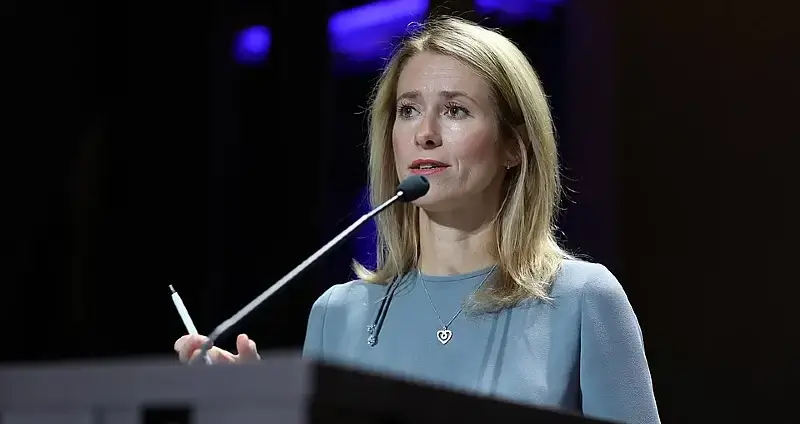
Kaja Kallas addressed Europe’s concerns about Syria’s fragile security landscape as renewed political and military shifts continue to shape life across the country.
Meanwhile, European institutions have focused on how ceasefires can reduce violence and create space for inclusive governance. Moreover, regional stability has remained central to discussions among EU member states and international partners. Additionally, the protection of civilians and minority communities has featured prominently in recent diplomatic exchanges.
Kaja Kallas, the EU’s High Representative, announced the EU’s position on the ceasefire between Syria’s interim authorities and the Syrian Democratic Forces. Furthermore, she called for an immediate halt to all military activity and full respect for de-escalation commitments.
As a result, the statement reaffirmed support for an inclusive political transition, the safeguarding of Kurdish rights, and continued cooperation within the Global Coalition to counter ISIS.
European response to the ceasefire
The European Union welcomed the ceasefire as a step toward stabilising Syria’s political and security environment after a period of intensified clashes in the northeast. Moreover, officials stressed that restraint by all armed actors is essential to prevent renewed displacement and to allow civilian life to resume in areas affected by the fighting.
In addition, Brussels framed the ceasefire as part of a wider effort to move Syria away from parallel systems of governance and toward unified state structures that can deliver security, public services, and political participation across different regions and communities.
Ceasefire priorities outlined by Brussels
- Immediate halt to military activity
- Protection of civilians and minority communities
- Respect for de-escalation commitments
Main elements of the EU statement
| Ceasefire support | Backing an end to hostilities between interim authorities and the SDF to reduce instability and protect civilians |
| Political transition | Encouraging inclusive governance and the integration of military, security, and civilian institutions |
| Counterterrorism | Reaffirming cooperation within the Global Coalition to prevent an ISIS resurgence |
Shift toward unified state structures
The EU’s statement placed strong emphasis on the integration of military and civilian institutions into a single national framework. Additionally, Brussels linked this goal to the idea that fragmented authority can leave communities vulnerable and complicate the delivery of basic services and security.
Moreover, European officials have presented institutional unification as a foundation for rebuilding trust between local authorities and central government structures. In this context, the ceasefire is seen as a practical step toward reducing overlapping chains of command and encouraging coordinated governance across formerly contested areas.
Focus on Kurdish rights and political inclusion
Kallas underlined that the full protection of Kurdish rights remains an essential element of any long-term settlement in Syria. Furthermore, the EU highlighted the importance of meaningful political and local participation, particularly in regions that have experienced years of separate administration and conflict.
Meanwhile, Brussels has connected these commitments to broader European support for minority protections and inclusive governance models. As a result, the ceasefire has been framed not only as a security measure but also as a pathway toward greater representation within national institutions.
Territorial changes and local governance
The ceasefire comes at a time when Syria’s interim authorities have expanded their control over key infrastructure and administrative centres in the northeast. Moreover, the SDF is transitioning from a largely autonomous governing role toward closer integration within national security structures.
In addition, European officials have noted that this shift places increased importance on clear lines of authority and the maintenance of local participation mechanisms. The EU has stressed that stability depends on ensuring that communities retain a voice in governance while national institutions assume responsibility for borders, resources, and public security.
Security concerns and the ISIS threat
The High Representative reiterated Syria’s renewed commitment to counterterrorism cooperation within the Global Coalition. Furthermore, the EU warned that any lapse in coordination or civilian protection could create conditions for extremist groups to exploit security vacuums.
As a result, European officials have emphasised the need for continued international engagement to support stability in areas undergoing transition. Meanwhile, the statement linked the integration of security forces to the goal of sustaining pressure on ISIS and preventing the re-emergence of organised militant activity.
Regional security context
| Global Coalition | International framework supporting counterterrorism coordination and operations in Syria |
| Transition zones | Areas affected by the ceasefire and institutional integration process |
EU diplomatic and humanitarian engagement
The EU has continued to engage with Syrian stakeholders and international partners to support a peaceful and inclusive transition. Moreover, Brussels has indicated that political dialogue and economic cooperation will remain linked to progress on civilian protection, minority rights, and institutional reform.
In addition, European institutions have maintained a focus on humanitarian access and the safe, voluntary return of displaced populations. As a result, the ceasefire is being viewed as an opportunity to expand aid delivery and rebuild confidence in areas that have faced prolonged instability.
Stakeholder Comments
Ministerial Comments
Kaja Kallas, EU High Representative said;
“The ceasefire between the Syrian interim authorities and the SDF is a vital step to prevent the country from sliding back into turmoil and to consolidate state functions. All military activities must cease immediately, civilians must be protected, and de-escalation commitments must be fully respected.”
“The EU remains committed to an inclusive political transition and continued cooperation within the Global Coalition to counter any ISIS resurgence.”
Closing Thoughts
The EU’s statement positioned the ceasefire as a foundation for broader political inclusion and regional stability in Syria. European officials underscored the importance of unified institutions, the safeguarding of Kurdish rights, and sustained counterterrorism cooperation.
The High Representative’s remarks reflected a continued commitment to diplomatic engagement and humanitarian support as the country moves through a period of institutional transition and security realignment.
Sources: European Union, Aljazeera, Wikipedia, and the BBC.
Prepared by Ivan Alexander Golden, Founder of THX News, an independent news organization delivering timely insights from global official sources. Combines AI-analyzed research with human-edited accuracy and context.