As Europe faces its most significant security crisis in decades, the question of steadfast support for Ukraine remains pressing.
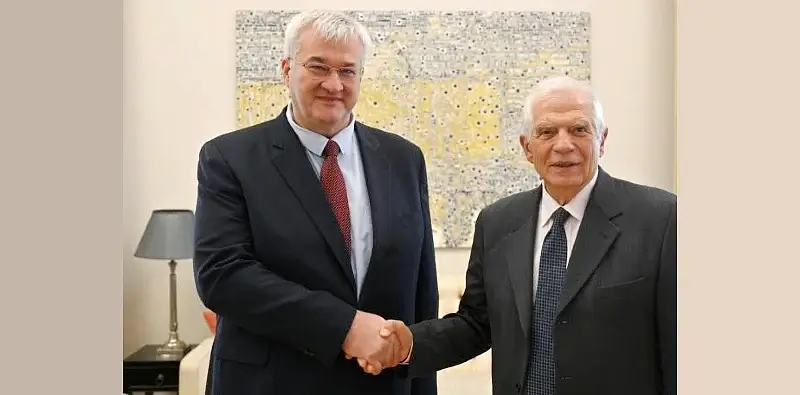
Josep Borrell, the EU High Representative, recently reinforced Europe’s commitment to Ukraine in his latest press remarks after meeting Ukraine’s Foreign Minister, Andrii Sybiha.
Borrell’s visit underscores the EU’s robust stance against Russia’s aggression, now in its thousandth day of intensified conflict.
Available Translations: Français
EU’s Ongoing Commitment to Ukraine
In his remarks, Borrell highlighted Europe’s clear purpose: standing alongside Ukraine. The EU’s assistance, totaling €122 billion to date, reflects both financial and military contributions to fortify Ukraine’s defenses.
Notably, Borrell emphasized that 47% of global aid to Ukraine originates from the EU, positioning the European Union as Ukraine’s most substantial backer.
European support goes beyond military aid; it encompasses economic and diplomatic backing, with a focus on maintaining a just peace in Ukraine. According to Borrell, any negotiation terms will be decided solely by Ukraine, a stance the EU upholds amid broader calls for diplomatic resolutions.
Increasing Military and Diplomatic Efforts
-
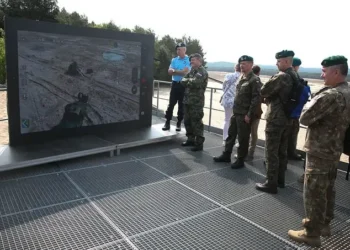
Training Support: The EU Military Assistance Mission provides training to Ukraine’s armed forces within EU member states.
-
Equipment Provision: Member states provide equipment for lethal and non-lethal purposes to Ukraine’s armed forces, funded by the European Peace Facility.
-
Financial Support: The EU commits €106.7 million to support Ukraine for an initial two-year period.
Addressing Russian Sanctions and Energy Attacks
EU sanctions on Russia, now in their 15th round, aim to stymie Russia’s military capabilities by restricting access to foreign technology essential to its defense industry. The EU has also contributed €2 billion to help stabilize Ukraine’s electricity grid.
Borrell reiterated that Europe’s connection of Ukraine’s grid to its own strengthens Ukraine’s resilience against Russia’s attempts to disrupt essential services.
Globalization of the Conflict: North Korea’s Involvement
In a concerning escalation, North Korea has reportedly deployed soldiers to Russia, marking an unsettling expansion of international involvement in the conflict. Borrell, who recently visited South Korea, described this development as the “globalization of the war.”
The EU, through diplomatic channels, seeks to dissuade further North Korean involvement, which could compound Ukraine’s challenges.
A Path Toward EU Membership
Borrell underscored that Ukraine’s journey toward EU membership represents Europe’s ultimate commitment to the country. He emphasized that Ukraine’s candidate status solidifies its place within the European community.
This path, while laden with rigorous reforms, serves as a security assurance for Ukraine and aligns its future with the EU.
The EU’s Role in a Shifting Global Order
Borrell’s visit and statements reflect the EU’s resolve to bolster Ukraine not only militarily but also economically and diplomatically. Next week, consequently, Borrell will chair a crucial meeting of EU defense and foreign ministers, where Ukraine’s security needs will undoubtedly take center stage.
Moreover, in his concluding words, Borrell highlighted the broader implications of the Ukraine-Russia conflict, emphasizing that European peace and security are inextricably linked to Ukraine’s resilience.
Meanwhile, as winter settles over Ukraine, the EU remains steadfast and determined to support its eastern neighbor, thereby reinforcing Europe’s unity and commitment amid increasingly complex global challenges.
Sources: THX News & European Union.